
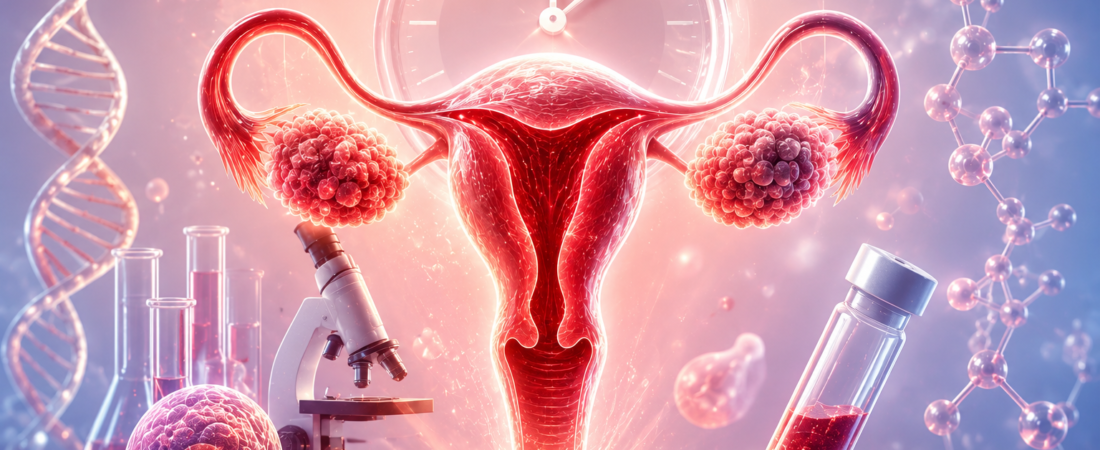
Ovarian longevity research asks whether reproductive aging can be modified, rather than merely measured. Rapamycin, metabolic pathways and experimental ovarian interventions attract attention, but promising laboratory findings are not proven fertility treatments. Extending ovarian function safely in humans remains a research question.
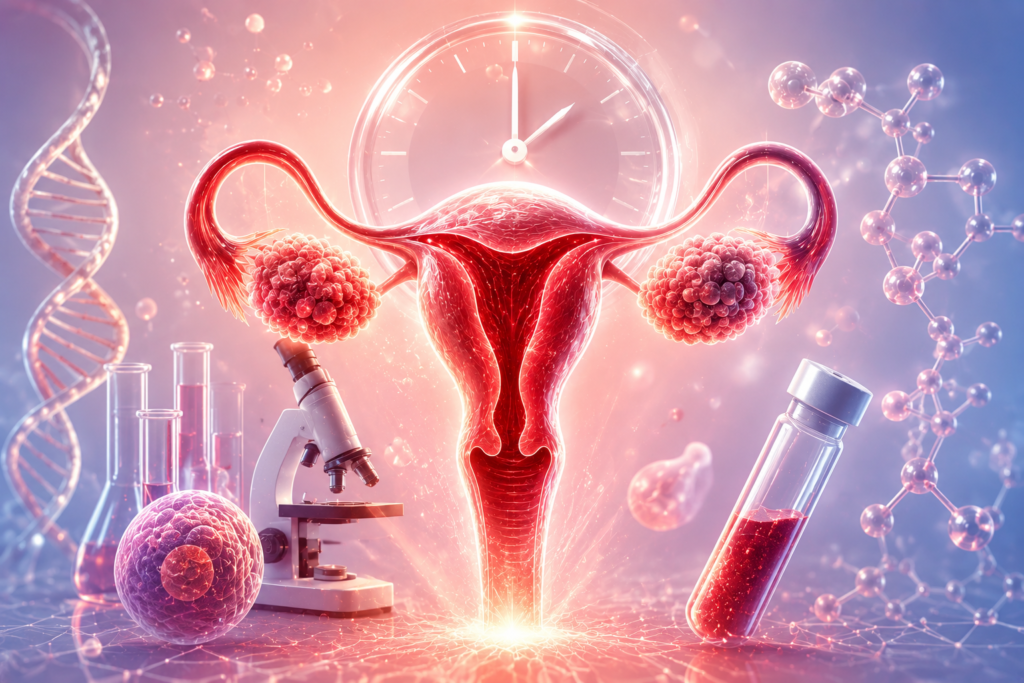
Aging is inevitable, but modern medicine is now shifting its focus from merely managing decline to actively delaying it. While the field of “longevity medicine” has historically focused on the brain, heart, and skin, a quiet revolution is taking place in reproductive health. Researchers are now targeting the organ that ages faster than any other: the human ovary.
The Paradigm Shift: From Selection to Preservation
For decades, IVF technology has been a game of selection—extracting a cohort of eggs and choosing the “best” among them to maximize success rates. However, the next generation of reproductive science is pivoting toward “Ovarian Longevity.” The goal is no longer just to find a healthy egg; it is to keep the ovary itself healthy for longer.
Ovarian reserve and egg-related reproductive potential change with age, but they are distinct. The pace and clinical consequences vary between individuals.
Beyond reproduction
Ovarian hormones have important effects on multiple systems. That does not establish that experimentally prolonging ovarian activity would improve every long-term health outcome.
Emerging Therapeutic Frontiers
While still in the early stages of research, several groundbreaking strategies are currently being explored:
- Rapamycin: Ovarian-aging research is not a recommendation for self-treatment; human reproductive benefits and risks need evaluation.
- Fibrosis pathways: Preclinical approaches require validation before claims about human fertility.
- NAD-related interventions: Laboratory mechanisms do not establish egg rejuvenation or live-birth benefit in humans.
- Light-based approaches: Marketing claims about ovarian rejuvenation exceed established clinical evidence.
The Path Forward: Caution and Scientific Rigor
It is vital to temper excitement with clinical reality. None of these interventions are currently validated as standard-of-care treatments for reversing human ovarian aging. We are at the dawn of a new frontier, and the jump from experimental models to clinical practice is significant. The medical community emphasizes that we must verify not only the efficacy of these treatments but also their safety, including potential long-term genetic and epigenetic impacts.
Conclusion: A New Era of Women’s Health
We are witnessing a fundamental change in reproductive medicine. We are moving from an era of “picking the best egg” to one of “protecting the ovary.”
A research frontier, not a timetable
The prospect of extending ovarian function is scientifically interesting. Whether an intervention safely improves human reproductive outcomes requires clinical evidence; no imminent breakthrough should be promised.
Disclaimer: This report is for informational purposes. These therapeutic approaches are currently under investigation and are not standard medical treatments. All reproductive health decisions should be discussed with a board-certified reproductive endocrinologist.
Do not confuse reserve testing with rejuvenation
Ovarian-reserve measurements help estimate response. A change in a marker would not alone establish extended reproductive lifespan. ASRM ovarian-reserve guidance (2020).
Related reading
Egg Rejuvenation Research: A Time Machine for IVF—or an Early Laboratory Signal?