

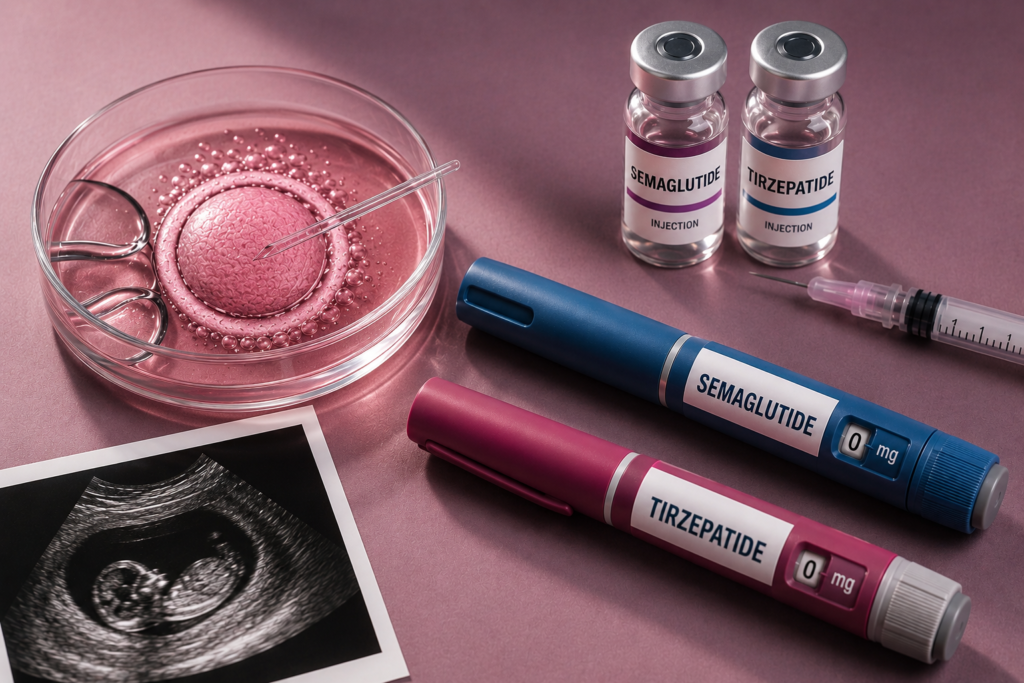
For many patients, the goal of achieving a healthy weight and the goal of conceiving often collide. With the rise of potent weight-loss medications like Wegovy (semaglutide) and Mounjaro (tirzepatide), patients are increasingly asking: “Can I use these while undergoing IVF?”
The short answer is yes, IVF is possible—but the timing and strategy are everything.
The Potential Benefit: Optimizing the Metabolic Environment There is currently no evidence that these medications directly damage oocytes or impair ovarian reserve. In fact, for patients struggling with obesity or Polycystic Ovary Syndrome (PCOS), the metabolic benefits of significant weight loss—often 10–20 kg—can be transformative. Weight reduction can restore ovulation and create a more favorable internal environment for embryo implantation, potentially improving overall IVF success rates.
The Critical Safety Window: Pregnancy The primary concern is not the stimulation phase, but the pregnancy itself. The safety profiles of semaglutide and tirzepatide in human pregnancy have not been established. Animal studies have indicated potential risks to fetal development, leading manufacturers to issue strict recommendations to discontinue these drugs prior to conception.
A Strategic Approach to IVF Cycles Reproductive specialists are now developing “staged strategies” for patients on these medications:
- The Weight-Loss Phase: Utilize these medications to achieve a healthier BMI and metabolic baseline before beginning stimulation.
- The Retrieval Phase: If the patient is already on these drugs, some clinicians may advise a temporary cessation prior to egg retrieval, particularly because these drugs delay gastric emptying. This can pose an aspiration risk during the conscious sedation used for egg collection.
- The Implantation Window (Crucial): All clinical consensus points to one rule: Discontinue before embryo transfer. The medication must be cleared from the system well before the embryo is placed in the uterus.
The “Wash-out” Period Because these drugs have long half-lives and persist in the body for weeks, international guidelines generally recommend:
- Wegovy: Discontinue at least 2 months before planned conception.
- Mounjaro: Discontinue at least 1 month before planned conception.
The Clock Still Ticks While weight loss is a powerful tool, it is not a substitute for time. Especially for women over 35, there is a delicate balance to strike. Relying solely on weight loss for several months can lead to a natural decline in ovarian reserve. The most effective strategy is not to choose between weight loss and IVF, but to synchronize them.
Conclusion: Precision Timing Wegovy and Mounjaro are powerful instruments, not fertility drugs themselves. They do not reverse ovarian aging; they simply reduce one significant risk factor—obesity.
The ultimate goal is not just weight loss, but a safe and successful pregnancy. Success depends on a well-planned “wash-out” strategy. If you are considering these medications, the most important question for your physician is not whether they are “allowed,” but when you must stop to ensure your body is ready for the window of implantation.
Sources: Clinical guidelines from ASRM (American Society for Reproductive Medicine) and ESHRE (European Society of Human Reproduction and Embryology); pharmaceutical safety data regarding GLP-1 receptor agonists in pregnancy.
Disclaimer: This report is for informational purposes. The use of weight-loss medications in the context of fertility treatment must be managed under the strict supervision of a reproductive endocrinologist.