
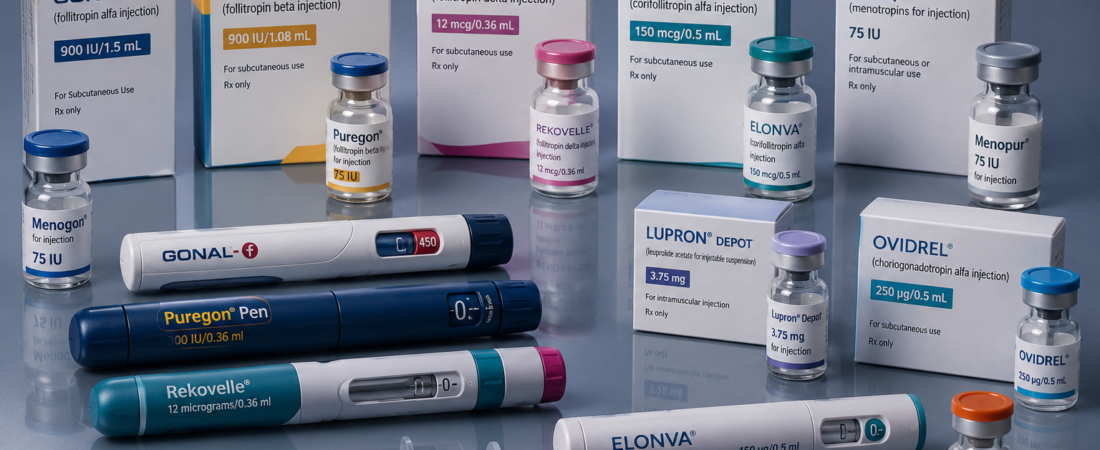
IVF stimulation has evolved through hormone purification, recombinant medicines, safer protocols and new decision-support tools. Urinary-derived products still have a role, while AI-assisted dosing remains a developing field. Progress should be measured by useful outcomes and safety, not by how futuristic a treatment sounds.
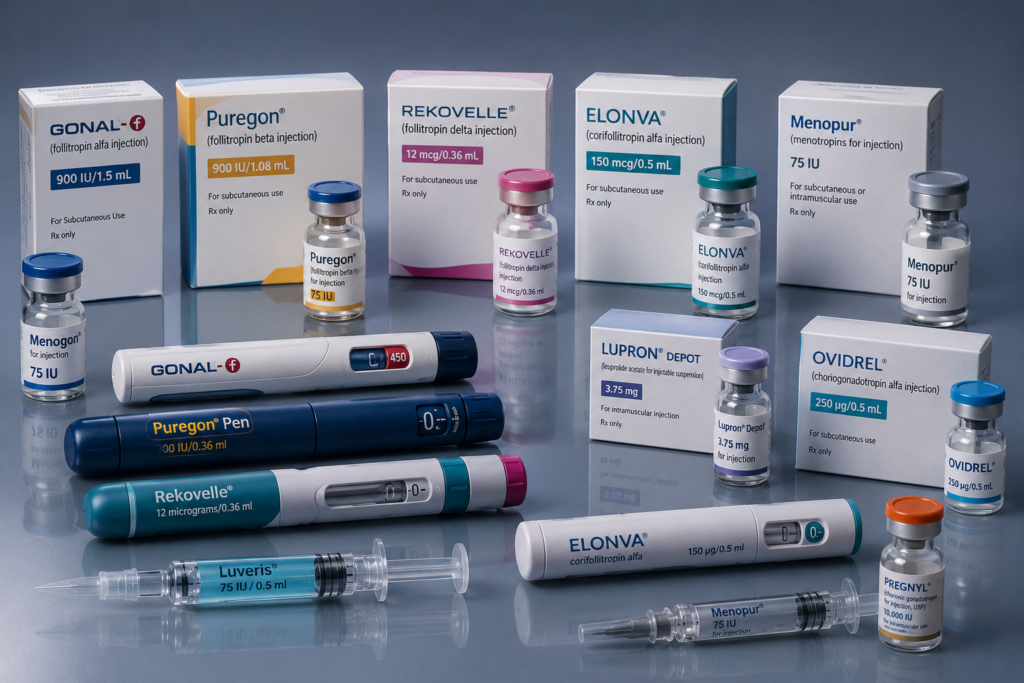
The success of In Vitro Fertilization (IVF) is intrinsically linked to the quantity and quality of the eggs retrieved. For this reason, controlled ovarian stimulation (COS)—the process of inducing the maturation of multiple follicles—has always been the cornerstone of fertility treatment. However, the philosophy behind how we stimulate the ovaries is undergoing a profound transformation.
Urinary-derived hormones still have a role
Purification and manufacturing have evolved. Modern urinary-derived and recombinant preparations are both used; the historical origin of a product does not by itself determine its suitability.
The Shift in Philosophy: Efficiency Over Volume
For years, the IVF industry operated under the “more is better” mantra. The goal was often to maximize the number of retrieved eggs, under the assumption that volume equated to higher pregnancy rates. However, clinical experience revealed a dangerous trade-off: Ovarian Hyperstimulation Syndrome (OHSS). Excessive stimulation did not guarantee proportional increases in live birth rates; instead, it jeopardized patient safety, leading to complications like ascites, thrombosis, and systemic distress, particularly in young patients or those with Polycystic Ovary Syndrome (PCOS).
The Era of Precision Stimulation
Today, global authorities like ESHRE (European Society of Human Reproduction and Embryology) and ASRM (American Society for Reproductive Medicine) are championing a shift toward “patient-tailored” protocols. The new standard is no longer defined by how many eggs one can harvest, but by how accurately one can dose the medication to the patient’s biological profile.
- Product-specific dosing: Some formulations use algorithms incorporating AMH and body weight. This is not a universal rule for all stimulation drugs or a guarantee of a particular response.
- Long-acting preparations: Can reduce injection frequency in suitable protocols, but are not interchangeable with every regimen.
AI as decision support
Algorithms are being studied to assist prediction and dosing. A more precise prediction or a faster workflow is not automatically proof of improved live birth or safety.
Both urinary-derived and recombinant products have evolved. Product choice should reflect evidence, indications and the stimulation plan rather than a simple old-versus-new hierarchy.
Safer does not mean risk-free
Individualized protocols, monitoring and OHSS-prevention strategies reduce risk but do not eliminate complications. Patients still need clear instructions for concerning symptoms.
Disclaimer: This report is for informational purposes. Ovarian stimulation protocols must be personalized by a reproductive endocrinologist based on individual clinical diagnostic markers.
Evaluate outcomes, not novelty
Stimulation decisions should consider expected response and safety. New tools need validation within the clinical setting in which they are used. ESHRE ovarian stimulation guideline (2025 update).
Related reading
"Controlled Stimulation": Balancing the Precision and Power of Fertility Injections