
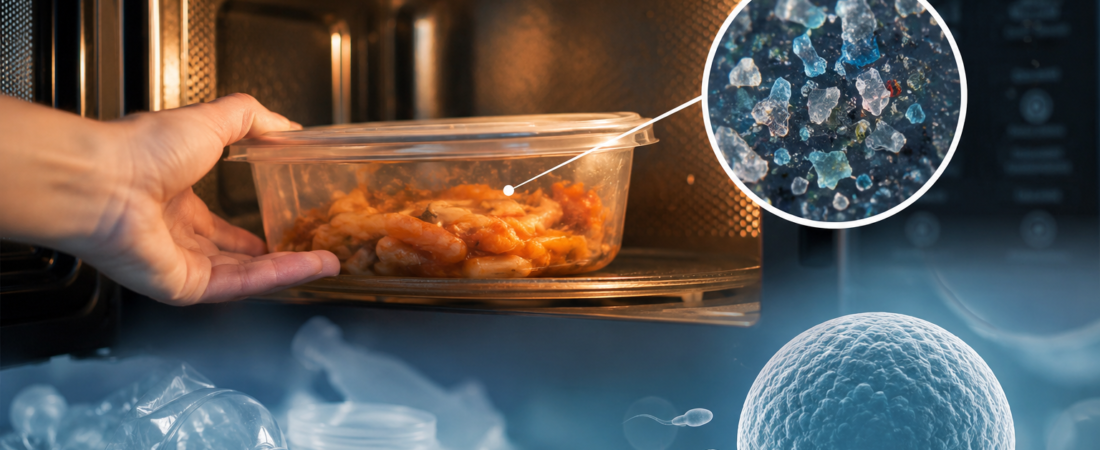
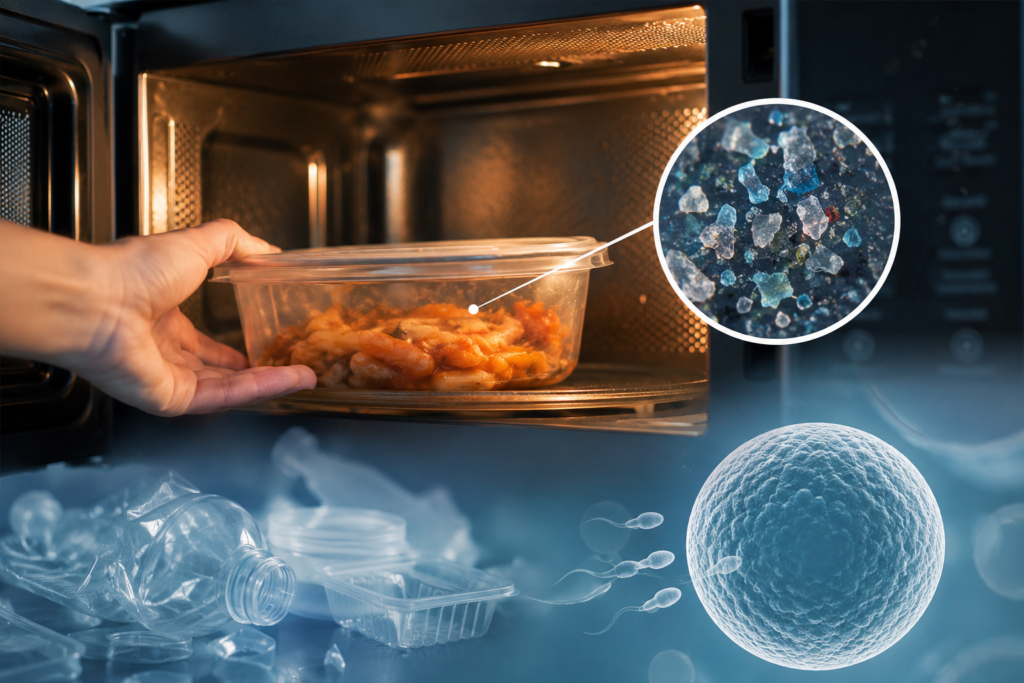
It is a familiar scene: reaching for a plastic container of leftover food, placing it in the microwave, and setting it for three minutes. With a single “ding,” the meal is ready. Yet, experts in reproductive medicine and environmental health are now sounding an urgent alarm: in our pursuit of convenience, we may be systematically eroding our reproductive potential.
The Invisible Disruptors The culprits are endocrine-disrupting chemicals (EDCs)—compounds that mimic or interfere with the body’s delicate hormonal systems. Familiar names include Bisphenol A (BPA) and phthalates, but the list is expanding to include newer substitutes like Bisphenol S (BPS). These substances are ubiquitous, found in food packaging, delivery containers, coated receipts, and even household goods.
The “Heat Factor” and the Myth of “BPA-Free” The medical community is increasingly focused on the role of heat. Plastic containers are engineered for stability, but when exposed to the high temperatures of a microwave, their chemical structure weakens, significantly increasing the leaching of endocrine-disrupting chemicals into our food.
Furthermore, a common sense of security—the “BPA-Free” label—is often misleading. BPS, frequently used as a replacement, has also been shown to exhibit similar reproductive toxicity and endocrine-disrupting capabilities. The issue is not just a specific chemical, but our long-term, cumulative reliance on plastic-based chemical structures in our daily diet.
The Cumulative Biological Cost One microwave session will not cause infertility. However, human biology is defined by accumulation. Daily exposure, compounded over a decade or two, can create a persistent state of systemic stress. Because the human reproductive system—from spermatogenesis (which takes 70–90 days) to the complex orchestration of oocyte maturation and embryonic development—is exquisitely sensitive to metabolic and oxidative stressors, even minor hormonal fluctuations can have disproportionate consequences.
- For Men: Emerging studies link EDC exposure to reduced sperm counts, impaired motility, and increased DNA fragmentation.
- For Women: These chemicals are linked to ovarian function disruption, ovulatory system interference, and the exacerbation of estrogen-sensitive conditions like endometriosis.
A Shift in Clinical Philosophy The paradigm of fertility treatment is evolving. It is no longer just about optimizing hormone levels or selecting the “perfect” embryo; it is about “whole-body environmental medicine.”
Fertility specialists now offer a simple, pragmatic piece of advice: “Switch to glass for all hot meals.” This shift is not just about avoiding a single chemical; it is a conscious decision to reclaim the body’s natural hormonal balance.
Conclusion: Beyond Convenience For too long, we have operated under the assumption that convenience is synonymous with progress. But every technological shortcut carries a cost. We are beginning to witness the hidden side of our plastic-reliant lifestyle, particularly within our most sensitive physiological system: reproduction.
The path to restoring fertility—and by extension, the health of future generations—does not always require high-tech medical intervention. Sometimes, it starts with the simplest of habits: choosing a glass container over plastic, and refusing to heat our future in the convenience of a three-minute microwave session.
Sources: The Guardian (reports on EDCs and fertility); Bisphenol S (BPS) research synthesis; Recent research trends from ESHRE and ASRM regarding environmental exposure.
Disclaimer: This content is provided for informational purposes, based on reporting on public health and reproductive medicine trends. Medical judgments and treatment decisions must always be made in consultation with professional medical personnel. Image: AI-generated (ChatGPT, OpenAI) / Visual reference for illustrative purposes only.