
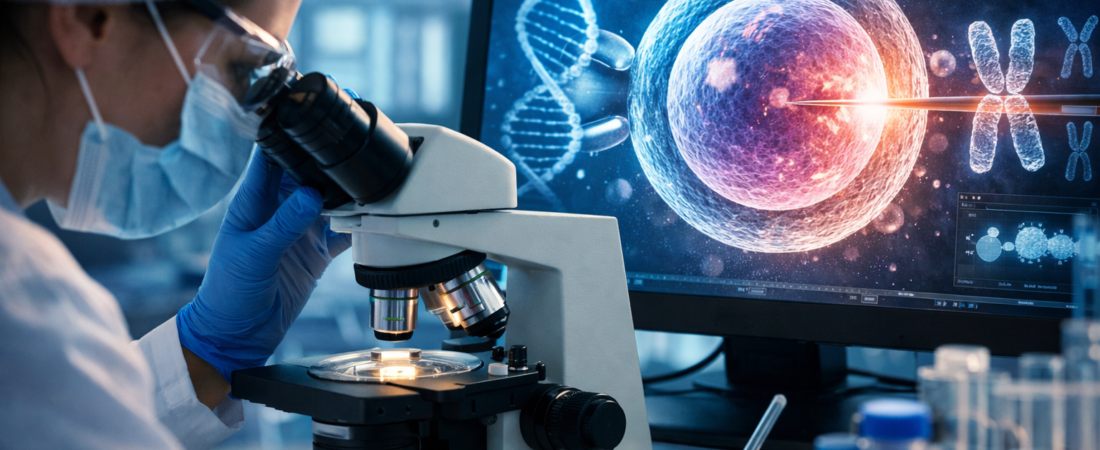
SGO1 and egg aging entered the spotlight with a 2026 preprint on chromosome protection. The experimental findings offer a possible direction for research, not a proven IVF treatment. Preventing a laboratory chromosome-separation error is a different endpoint from achieving a healthy live birth.
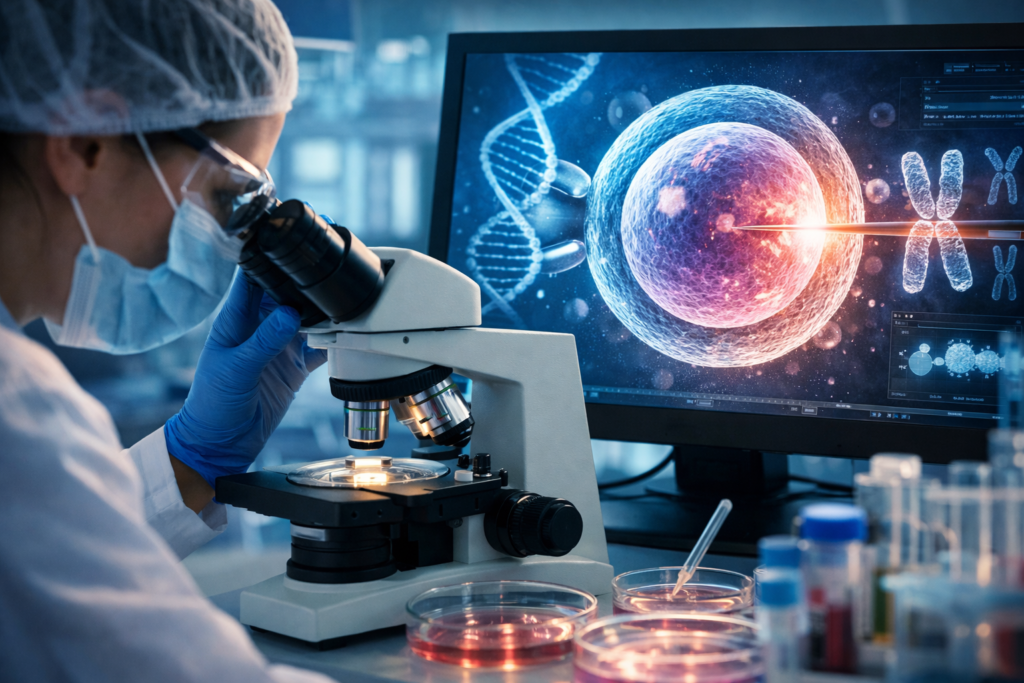
Experimental SGO1 supplementation asks whether one mechanism of chromosome separation can be protected. The result is an early laboratory finding, not a treatment already shown to improve IVF outcomes.
SGO1 helps protect chromosome cohesion during cell division. That role should not be described as making every chromosome align perfectly.
A January 2026 preprint reported less premature separation of sister chromatids in experimental eggs. This endpoint is not a pregnancy rate or a count of clinically usable embryos.
From selection to intervention?
Studying a mechanism is different from offering a safe correction during fertility treatment. Genetic screening and experimental supplementation address different questions.
The Clinical Reality Gap
However, we must distinguish between “laboratory potential” and “clinical reality.” Several critical challenges remain:
- Lack of Clinical Data: We have yet to confirm if these “rejuvenated” oocytes successfully result in pregnancy and healthy live births.
- Multifactorial Aging: Oocyte aging is not caused by a single protein deficiency. It is a complex process involving mitochondrial dysfunction, metabolic decline, and spindle structural abnormalities. Supplementing SGO1 addresses only one piece of a much larger, systemic puzzle.
- Safety: Experimental supplementation is not the same as DNA editing, but it still needs reproductive and developmental safety assessment.
A Cautious Outlook
Experts emphasize that while the study provides a compelling proof-of-concept, it is in its absolute infancy. Reproductive medicine has a history of being preceded by waves of “over-expectation.” While the possibility of direct oocyte intervention is now scientifically plausible, the reality is still far from the clinic.
The next question is whether a reproducible laboratory effect can translate into safe, meaningful reproductive outcomes. It cannot yet be presented as ovarian rejuvenation.
Disclaimer: This content is provided for informational purposes, based on reporting on scientific developments and various public data. Medical judgments and treatment decisions must always be made in consultation with professional medical personnel. Image: AI-generated (ChatGPT, OpenAI) / Visual reference for illustrative purposes only.
Primary report and development stage
Saha and colleagues’ January 2026 preprint reports experimental chromosome-separation findings. Disclosed commercial interests and the absence of clinical reproductive outcomes matter. Restoring Shugoshin 1 reduces chromosome errors in human eggs; DOI: 10.64898/2026.01.08.698387.
Related reading
"The Quest to Reverse Ovarian Aging": Can Science Turn Back the Biological Clock on Eggs?