
Relugolix can be part of treatment for fibroid symptoms, with important differences between monotherapy and combination regimens. Reducing bleeding or pain is not the same as curing a condition or improving fertility. Pregnancy plans, contraindications and treatment duration belong in the discussion.
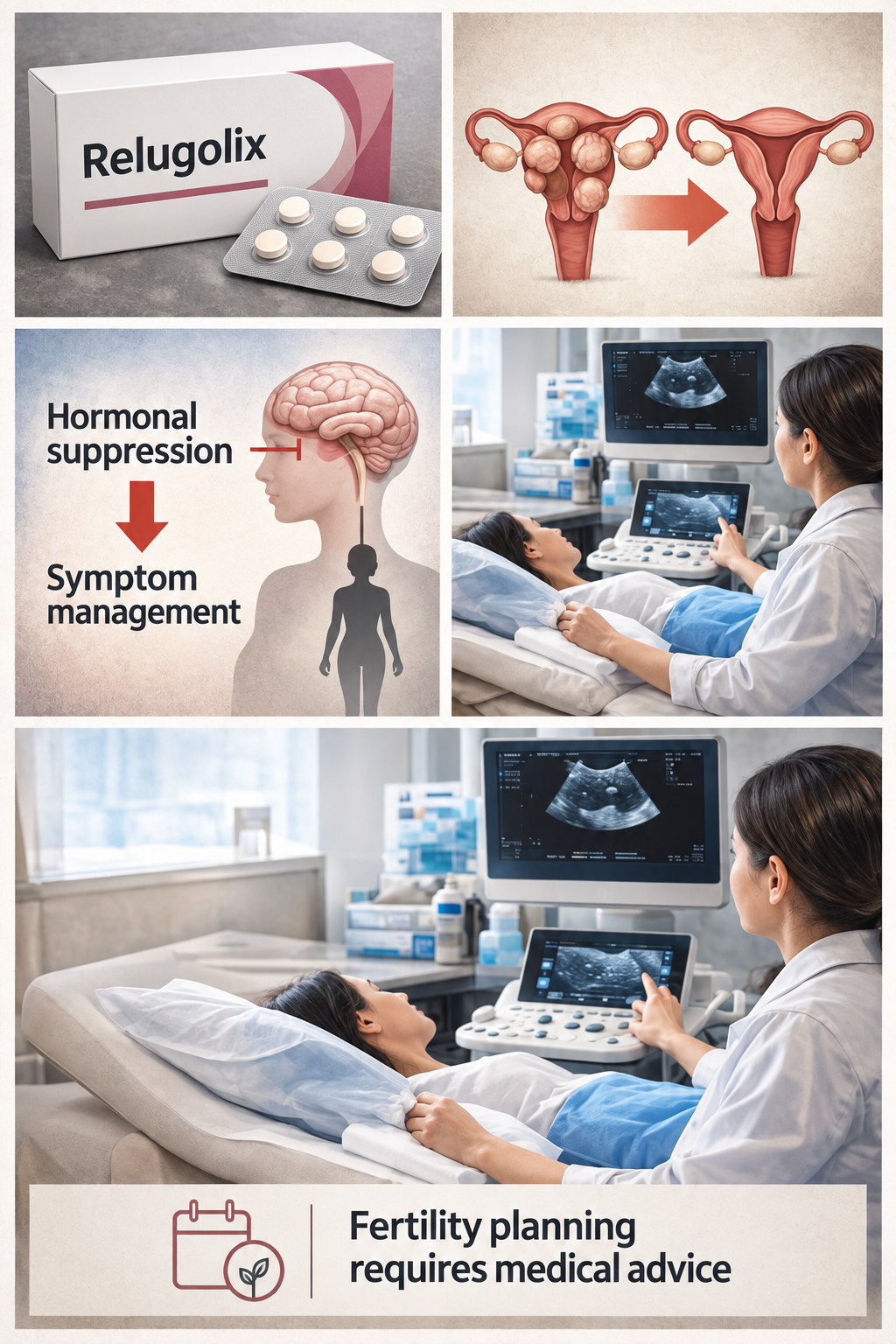
Relugolix is an oral GnRH antagonist used in defined hormonal treatment settings. Suppressing symptoms and removing a lesion are different approaches, each with its own trade-offs.
Randomized trials of relugolix combination therapy in women with fibroid-associated heavy bleeding found improvements in symptom outcomes. Those results should not be presented as a universal shrinkage percentage for every uterine condition or every formulation.
GnRH antagonism suppresses gonadotropin signaling without the initial agonist flare. Side effects and monitoring still matter; monotherapy and combination therapy with hormonal add-back are not interchangeable.
However, the clinical assessment is not so simple.
Symptom suppression does not necessarily eliminate the underlying lesion. Recurrence after stopping treatment and the need for further care depend on the condition and individual course.
Relugolix is not a fertility-enhancing treatment. Pregnancy precautions and contraception instructions depend on the prescribed product; suppression should never be assumed to be reliable contraception by itself.
A clinician should explain the indication, alternatives, duration and relevant risks, including the implications of reduced estrogen and any add-back hormones. Pregnancy plans need a coordinated treatment strategy.
Technology is undeniably evolving, but the direction remains a subject of intense debate.
Is “reducing symptoms” equivalent to “curing the disease,” or is changing the fundamental course of the disease the true measure of success? Relugolix stands precisely on that boundary.
Disclaimer: This content is provided for informational purposes, based on reporting on infertility and various public data. Medical judgments and treatment decisions must always be made in consultation with professional medical personnel. Image: AI-generated (ChatGPT, OpenAI) / Visual reference for illustrative purposes only.
The regimen and endpoint matter
The LIBERTY phase 3 randomized trials studied relugolix combination therapy for heavy menstrual bleeding associated with fibroids. The primary report appeared in the New England Journal of Medicine in 2021 (DOI: 10.1056/NEJMoa2008283). Symptom findings cannot establish a fertility benefit or be generalized to every relugolix regimen. Primary trials of relugolix combination therapy for fibroids.
Related reading
Uterine Fibroids and Fertility: Location Can Change the Whole Conversation
English visual adaptation: AI-generated conceptual illustration. It is not a clinical image, product endorsement or photograph documenting the cited study.