
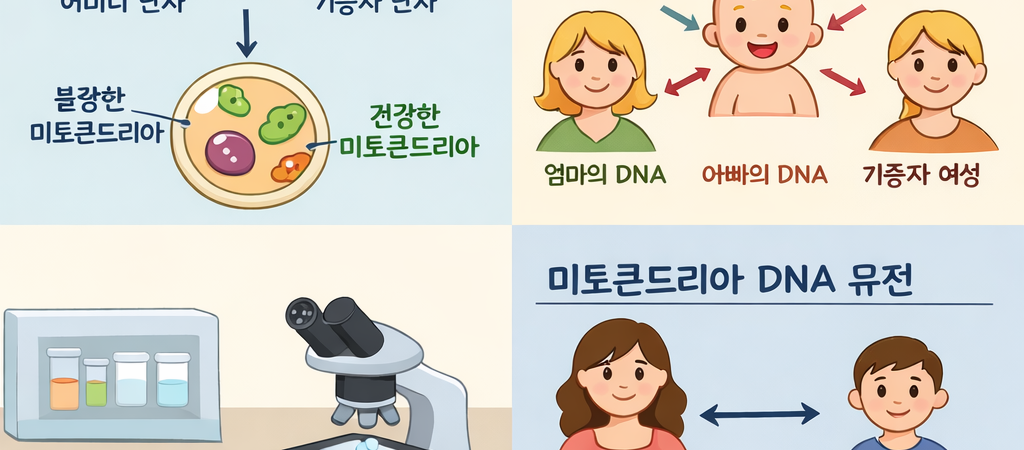
While conceiving a child has long been viewed as the domain of nature, contemporary reproductive medicine is gradually redrawing those boundaries. A technology recently gaining international attention is “Mitochondrial Donation” (MD). A clinical pathway report published in The New England Journal of Medicine in 2025 has confirmed that this technology is moving beyond the experimental stage and entering the realm of real-world clinical application.
In essence, the technology can be summarized as: “Retaining the mother’s core genetic identity while replacing only the malfunctioning component.”
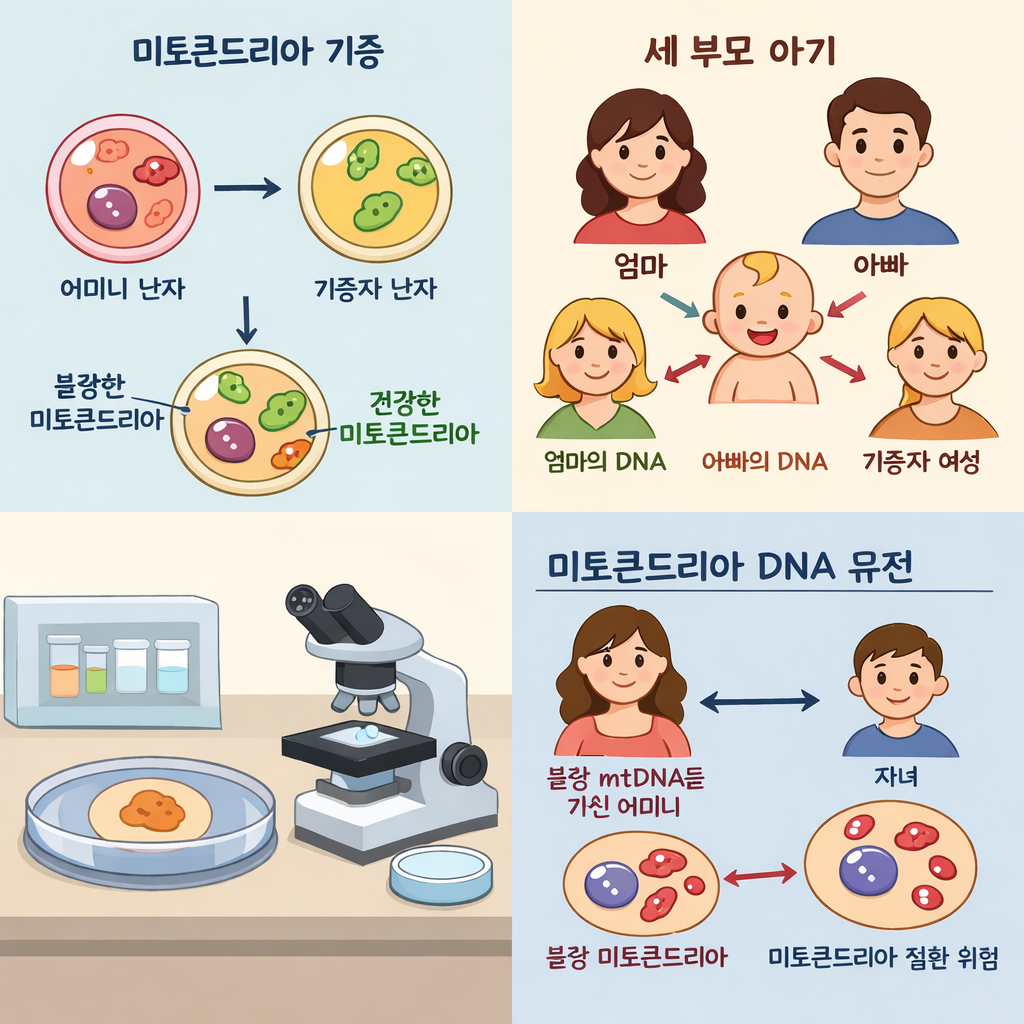
To elaborate, our cells contain organelles called mitochondria—often referred to as the “power plants” of the cell. A critical, yet problematic, aspect is that mitochondrial DNA (mtDNA) is inherited solely from the mother. If this mtDNA carries mutations, severe genetic diseases can be passed directly to the child.
Mitochondrial donation addresses this by maintaining the mother’s nuclear DNA (which contains the blueprint of her core identity) and introducing the mitochondria of a healthy donor. While this is often sensationally referred to as creating a “three-parent baby,” the child’s genetic makeup remains overwhelmingly derived from the biological parents. The donor essentially provides the “energy system.”
The significance of this technology is clear: it allows for the prevention of certain genetic diseases that IVF alone could not mitigate. It marks a transition in reproductive medicine from merely “facilitating pregnancy” to “intervention for a healthier offspring.”
However, this is where the conversation becomes complex. Where should we draw the line? While preventing disease is a compelling goal, overstepping this boundary risks spiraling into the contentious debate over “designer babies.” Furthermore, the critical question of long-term safety remains unanswered, as sufficient long-term data has yet to be accumulated.
Through the lens of a fertility specialist journalist, this technology clearly signals the future direction of the field. Reproductive medicine is moving beyond the technology of “achieving pregnancy” and toward the question of “what kind of pregnancy are we creating?”
One thing remains certain: mitochondrial donation is not a treatment for infertility per se; it is a clinical option for avoiding the transmission of severe genetic disorders.
Ultimately, the question converges on a single point: How much are we willing to intervene? The technology is already within our reach; what remains is the weight of human choice.
Disclaimer: This content is provided for informational purposes, based on reporting on infertility and various public data. Medical judgments and treatment decisions must always be made in consultation with professional medical personnel. Image: AI-generated (ChatGPT, OpenAI) / Visual reference for illustrative purposes only.