

Embryo grading describes visible developmental features used in IVF selection. A high grade is not a genetic certificate, and a lower grade is not proof that birth is impossible. The developmental stage, grading system and broader clinical context affect interpretation.
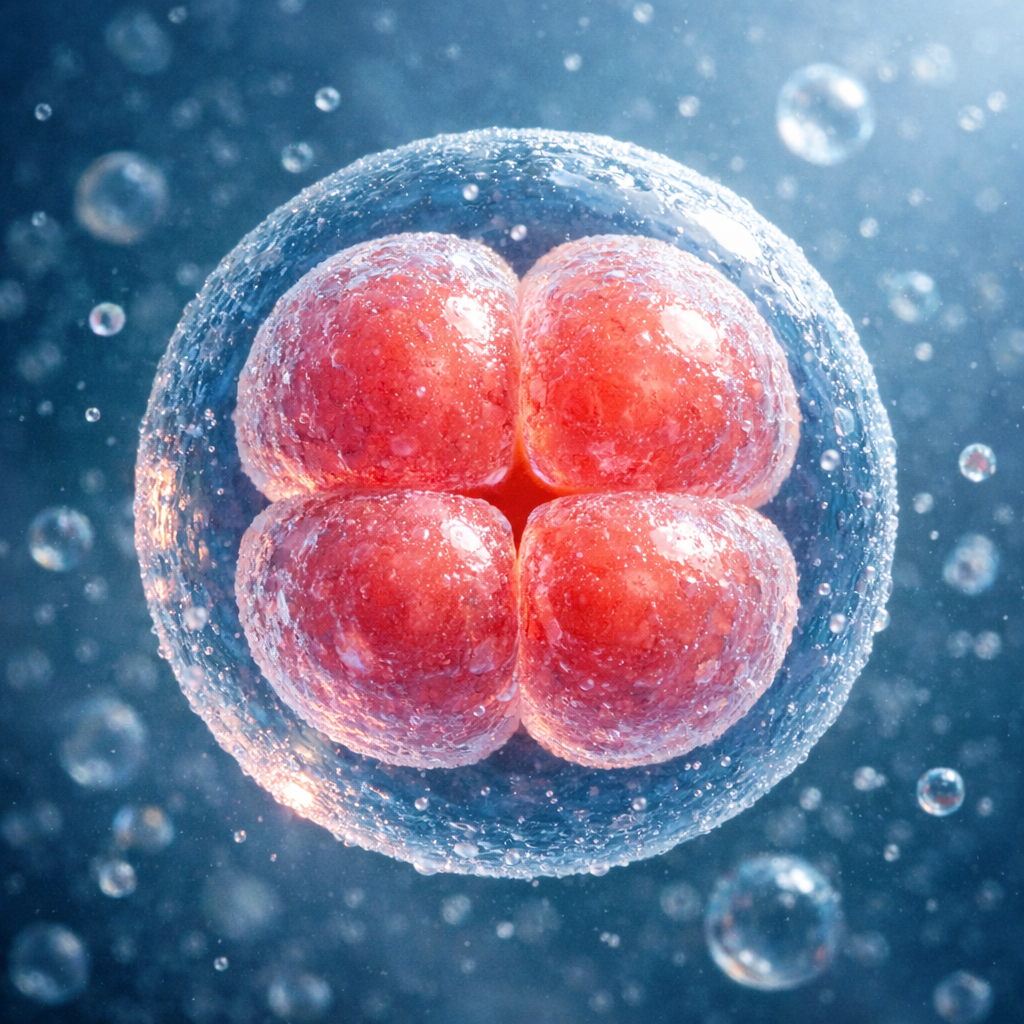
The first piece of news delivered to a couple preparing for an embryo transfer is often deceptively simple:
“This embryo is top-tier.” or “It’s a bit disappointing, but it’s mid-grade.”
This short, passing sentence can instantly become a source of absolute hope or deep despair. However, we must pause and ask a fundamental question: To what extent does an embryo’s grade truly reflect its biological reality?
Embryologists assess features appropriate to the stage: cell number and fragmentation at cleavage stages, and expansion, inner-cell-mass and trophectoderm appearance at the blastocyst stage.
In medical terms, this is known as a morphological assessment. The major limitation of this grading system is that it is strictly confined to what is visible to the human eye.
What is invisible simply cannot be graded. Crucial biological markers—such as structural chromosomal abnormalities, DNA fragmentation, and mitochondrial metabolic power—are completely missing from this grading sheet.
This size and scale of classification is precisely where the primary misconception begins.
A good appearance is not proof of normal chromosomes. Lower-grade embryos can also lead to birth, although group-level outcomes may differ.
A grade summarizes observed morphology and may help rank embryos. It is not a precise probability or an individual prediction by itself.
The clinical paradox is that when a patient is faced with a critical choice, this general trend is often treated as an absolute verdict. This disparity is the literal essence of the confusion and anxiety that fertility patients endure.
Recognizing this psychological toll, some reproductive endocrinologists intentionally reframe their vocabulary. Instead of proclaiming, “This is a top-grade embryo,” they choose warmer, more grounded phrases like, “It looks healthy,” or “It has great potential.” This is not a matter of semantic fluff; it is a conscious effort to view the embryo through the lens of individual potential rather than a rigid corporate label. Medicine is a discipline built on probabilities, not definitive absolute pronouncements.
PGT can answer selected genetic questions, but it is not automatically required because morphology has limitations. Different PGT methods have different indications.
Yet, even PGT is not a universal panacea. The procedure introduces its own set of clinical debates—including the physical impact of the embryo biopsy itself, the complex interpretation of chromosomal mosaicism, and the inherent margin of error in genetic testing. Ultimately, we return to the same reality: a flawless, absolute criterion for selection does not yet exist.
This is where the true art and science of IVF converge. The intricate process of analyzing a pool of embryos and selecting the single one with the highest current potential is a blend of technology and human expertise.
The trained eye of the embryologist, the longitudinal experience of the physician, and the unique biological profile of the patient are tightly woven together to drive the final decision. This is why IVF is widely recognized not as an automated protocol, but as a personalized “medicine of judgment.”
A grade is a reference point. Neither a high grade nor a low grade settles the outcome.
The key is to avoid being overwhelmed or defined by the numbers and labels assigned in the lab. Instead, the question to focus on is: “Given my specific biological path, is this choice the absolute best direction for my body?”
The moment we select an embryo for transfer, we are not sitting in judgment of a life; rather, we are choosing to embrace its potential. And that potential, more often than not, begins entirely outside the boundaries of a grading sheet.
Appearance informs selection without settling the outcome
Embryologists consider developmental features when assessing embryos. Selection criteria do not guarantee implantation or exclude every genetic problem. HFEA: decisions about embryos.