

Lately, hormone therapy has become a hot topic among men diagnosed with non-obstructive azoospermia.
Azoospermia, a condition characterized by the complete absence of sperm in the semen, is broadly categorized into two types: obstructive azoospermia (1) and non-obstrictive azoospermia (2).
- Obstructive Azoospermia (1): A state where sperm is actively produced within the testes, but a physical blockage along the reproductive tract prevents it from being ejaculated into the semen.
- Non-obstructive Azoospermia (2): A condition where the absence of sperm is not due to a simple blockage, but rather a fundamental failure of the testes to produce sperm. Crucially, despite this severe impairment, viable sperm can still be retrieved directly from the testicular tissue in about 10% to 15% of cases.
For patients with obstructive azoospermia (1), clinicians can easily retrieve sperm via Testicular Sperm Extraction (TESE) to achieve a successful pregnancy through In Vitro Fertilization (IVF).
The real therapeutic challenge lies with non-obstructive azoospermia (2). In these cases, finding viable sperm is exceptionally difficult, even when performing highly advanced Microsurgical Testicular Sperm Extraction (Micro-TESE) under an operating microscope.
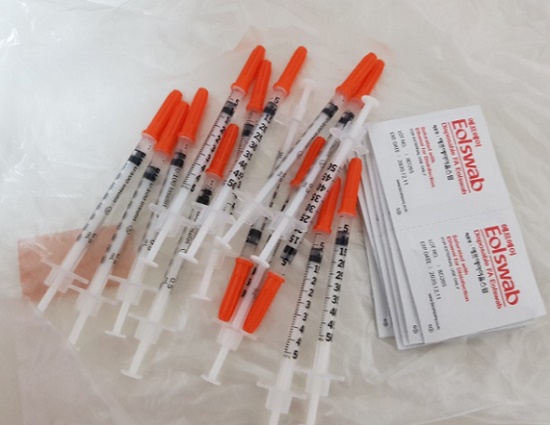
Amid these challenges, an increasing number of men with non-obstructive azoospermia (2) are proactively requesting testosterone prescriptions. Furthermore, a substantial number of fertility clinicians routinely prescribe Human Chorionic Gonadotropin (HCG) injections to patients preparing for Micro-TESE surgery.
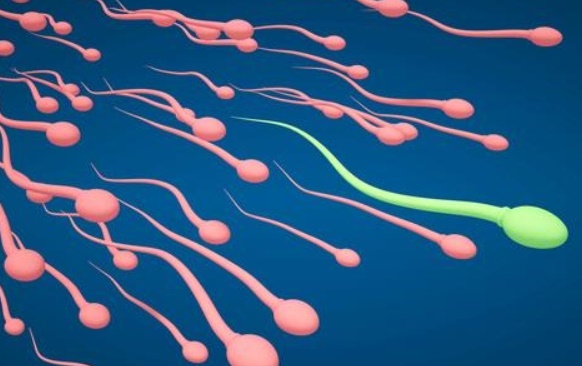
In response to this trend, male infertility urologists strongly oppose these practices. They warn that administering testosterone to men with severe oligospermia (low sperm count) or non-obstructive azoospermia is the fastest way to completely shut down remaining sperm production. Furthermore, they emphasize that prescribing HCG to men with non-obstructive azoospermia does not offer even the slightest benefit for spermatogenesis (sperm production).
Dr. Ju Tae Seo, a leading urologist specializing in male infertility, clarifies the underlying endocrinology:
“The reason some fertility specialists administer HCG to men with standard non-obstructive azoospermia is based on the theory that it will ultimately stimulate the pituitary gland to secrete more Follicle-Stimulating Hormone (FSH). However, introducing exogenous HCG does not increase endogenous FSH secretion.
In typical cases of non-obstructive azoospermia, baseline FSH and Luteinizing Hormone (LH) levels are already highly elevated or sitting at normal ranges. Forcing these medications into the system offers zero clinical benefit. While a certain Japanese research group previously published a paper tracking HCG usage in patients who had failed an initial Micro-TESE, the data ultimately concluded that the protocol was clinically insignificant.”
Both FSH and LH are essential hormones secreted by the anterior pituitary gland in the brain. FSH directly stimulates the germ cells within the testes to produce sperm, while LH triggers the Leydig cells to synthesize and secrete testosterone. Because sperm production is failing in non-obstructive cases, systemic testosterone levels may drop, which often drives baseline FSH levels up via a biological negative feedback loop.
“Consequently, HCG injections serve as a primary first-line therapy for hypogonadotropic hypogonadism—a distinct condition where the pituitary gland fails to secrete adequate LH and FSH. However, routinely prescribing HCG for standard non-obstructive azoospermia yields no real efficacy. In many clinical settings, it is simply prescribed because the physician feels compelled to offer some form of intervention.”
The Biological Engine of Sperm Production
The biological mechanism governing sperm production mirrors the track of female follicular development. To understand this clearly, let us look at the female reproductive axis first:
With the onset of menstruation, the reproductive system effectively resets. The pituitary gland releases FSH into the bloodstream to mature a new cohort of eggs. The ovaries receive this signal, and as the follicles grow, they secrete estradiol (E2). This rising estradiol prompts the uterine lining to thicken, preparing it for future implantation.
Once the egg reaches optimal maturity, the pituitary gland delivers a sharp surge of LH, which triggers ovulation. Following the release of the egg, the remaining follicular shell transitions into the corpus luteum, secreting progesterone to create a plush, highly receptive environment for an embryo.
The male system relies on the exact same hormonal cascade:
Sperm production is initiated by the pituitary gland’s secretion of FSH, and testosterone is subsequently synthesized as a byproduct of this process. In other words, systemic testosterone levels rise after sperm production is actively underway.
It takes approximately 90 days for sperm to be manufactured in the testes, mature into functional cells within the epididymis, travel through the vas deferens, pass the seminal vesicles, clear the prostate, and ultimately be ejaculated through the urethra. Specifically, it takes about 72 to 76 days to form a morphologically normal sperm cell with a tail, followed by an additional 12 to 18 days of maturation inside the epididymis.
Why External Testosterone Shuts Down the System
Just as estrogen (E2) is secreted as a direct result of maturing eggs in women, testosterone is produced as a direct byproduct of active spermatogenesis in men.
Therefore, when synthetic testosterone is introduced from outside the body, the brain’s negative feedback system mistakenly perceives that sperm production is firing at maximum capacity. As a result, the pituitary gland drastically reduces its secretion of FSH.
Conversely, when actual sperm production is severely impaired, the brain naturally ramps up FSH secretion to stimulate the lagging testes. This is why an exceptionally high baseline FSH level typically points to a fundamental failure in the testicular sperm factory.
Dr. Seung Hun Song, a professor of urology at the CHA University Medical Center, shares a highly consistent clinical assessment:
“The probability of retrieving viable sperm via Micro-TESE in patients with non-obstructive azoospermia remains remarkably low. While we frequently try prescribing clomiphene citrate prior to surgery to stimulate endogenous FSH secretion, the overall clinical efficacy has proven to be quite minimal.”
In conclusion, exogenous testosterone administration is strictly contraindicated for men dealing with severe oligospermia or non-obstructive azoospermia. Furthermore, relying on HCG injections to artificially manipulate FSH pathways offers no tangible efficacy in restoring male fertility.