
Can women with multiple sclerosis or epilepsy have a baby through IVF? A recent meta-analysis including 680 women with multiple sclerosis found no significant increase in relapse risk after assisted reproduction. Live births have also been reported in women with epilepsy. But evidence differs substantially between neurological conditions, and safety after a previous stroke remains uncertain.
For women diagnosed with a long-term neurological condition, planning a pregnancy can involve difficult questions. Could fertility-treatment hormones worsen their disease? Might seizures or relapses occur during pregnancy? Could their medication affect the baby?
Recent studies suggest that a neurological diagnosis alone does not necessarily mean abandoning in vitro fertilization (IVF). In particular, the latest multiple sclerosis analysis did not find evidence of a significant increase in relapse risk after assisted reproductive technology (ART). However, risks and treatment principles differ by disease, so one conclusion cannot be applied to every patient.
Multiple sclerosis: what did the analysis of 680 women find?
A recent updated meta-analysis examined relapse risk after ART in women with multiple sclerosis (MS).
MS is a disease of the central nervous system in which the immune system damages myelin, the protective covering around nerves in the brain and spinal cord. Symptoms can include impaired vision, altered sensation and muscle weakness. Some patients experience relapses, with symptoms worsening again after improvement.
The researchers combined 12 studies published through May 2026. Ten studies evaluated relapse risk after fertility treatment in 680 women with MS. The remaining two examined the relationship between ART and newly developing MS in a total of 586,656 women.
There was no statistically significant increase in MS relapse risk after ART. Neither gonadotropin-releasing hormone (GnRH) agonist nor antagonist protocols used during ovarian stimulation showed a clear increase in risk.
Women who became pregnant after treatment had a significantly lower relapse rate, with a reported adjusted rate ratio (aRR) of 0.50. Among women whose treatment did not result in pregnancy, relapse risk tended to be higher, but the difference was not statistically significant.
The authors concluded that evidence was insufficient to show that modern ART independently increases MS relapses. They emphasized maintaining stable disease activity rather than advising patients to avoid fertility treatment itself.
However, the difference between women who did and did not become pregnant does not establish a protective effect of pregnancy itself. Further prospective studies are needed.
Epilepsy: live births are possible, but seizure control and medication matter
Clinical research has also examined IVF in women with epilepsy, a condition involving recurrent seizures caused by abnormal electrical activity in brain nerve cells.
A review reported in 2026 considered ART, seizure control and antiseizure medication. Among 22 IVF attempts identified in the reviewed evidence, 12 resulted in pregnancy and eight live births were reported.
Many patients underwent treatment without worsening seizures. Nevertheless, interactions between antiseizure medication and fertility treatment remain an important concern. The small number of reported cases means these figures should not be treated as a general IVF success rate for women with epilepsy.
Pregnancy planning requires balancing stable seizure control with minimizing medication-related risks to the fetus. Some antiseizure medicines are associated with congenital malformations or adverse neurodevelopmental outcomes, making a medication review with a neurologist important before pregnancy.
Patients should not stop antiseizure medication on their own because they are trying to conceive. Worsening seizures can pose serious risks to both the mother and fetus.
Previous stroke: IVF safety remains uncertain
Women who have experienced a stroke require particularly careful assessment. A stroke occurs when a brain blood vessel is blocked or ruptures, damaging brain tissue. Pregnancy risks can vary with its cause and residual effects.
A 2025 review in BMJ Open examined ten studies on fertility treatment and stroke risk.
Among 32 reported pregnancies in stroke survivors, the researchers identified one conceived through IVF. Information about that patient’s stroke type and treatment was limited.
The available evidence therefore cannot establish how safe IVF is for women with a history of stroke.
Assessment before fertility treatment is especially important when conditions such as cerebrovascular malformations, aneurysms, thrombotic disorders or uncontrolled hypertension are present. Neurology, neurosurgery and high-risk obstetric specialists may need to contribute to the evaluation.
The central question is disease stability and pregnancy risk
Assessing IVF in someone with a neurological condition involves more than determining whether egg retrieval or embryo transfer is technically possible. The team must consider hormonal changes during ovarian stimulation, anesthesia or sedation, interactions with existing medication, and risks during pregnancy and birth.
The American Society for Reproductive Medicine (ASRM) likewise advises against automatically excluding women from fertility care because an underlying condition makes pregnancy high risk. Decisions should be individualized after relevant specialist assessment and thorough counselling.
A neurological diagnosis is not, by itself, an absolute contraindication to IVF. But findings in MS cannot simply be extended to epilepsy, stroke, brain tumors or other conditions.
The goal is not only to achieve pregnancy, but to protect maternal health and support a safe birth. Women with neurological conditions need a personalized pregnancy plan developed jointly by neurology, reproductive medicine and high-risk maternity teams, rather than a blanket restriction on treatment.
Related reading
Once pregnancy occurs, ultrasound findings also need careful interpretation. Read what a study of early IVF ultrasound can—and cannot—tell us about miscarriage diagnosis.
Sources and evidence limitations
This article primarily draws on the meta-analysis by Mohamed I. Mohamed and colleagues at Alexandria University, Egypt, published on October 7, 2026, in Multiple Sclerosis and Related Disorders. DOI: 10.1016/j.msard.2026.107965.
Additional sources cited in the Korean article include a 2026 epilepsy review in Neurology, a 2025 review of fertility treatment and stroke in BMJ Open, and ASRM ethical guidance. The epilepsy evidence was reported as a conference abstract; the strength of evidence differs between conditions.
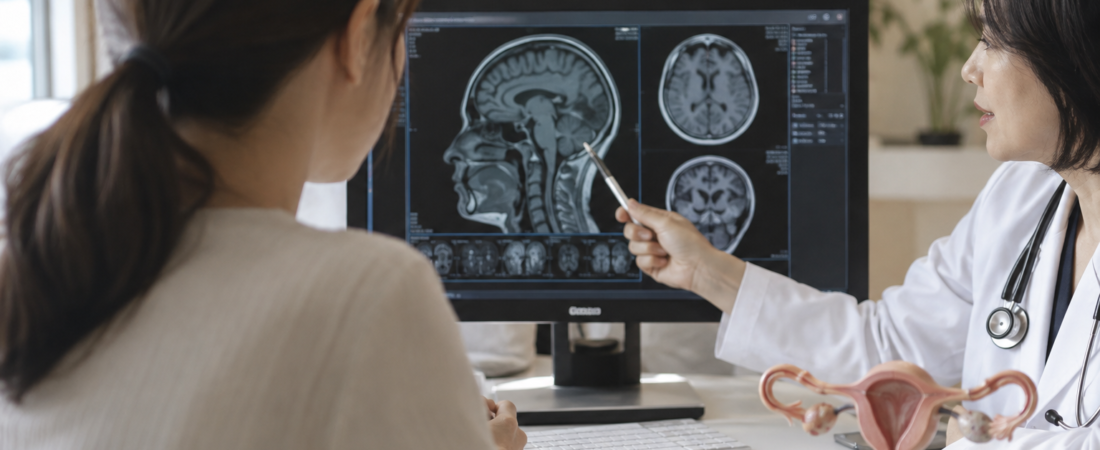
The illustration was created with generative AI (ChatGPT, OpenAI) and depicts fictional people rather than actual patients.
Copyright © 2026 The Fertility Notes. All rights reserved. Unauthorized reproduction, redistribution, scraping, AI training, or other data use of articles, photographs, images, and all other content is strictly prohibited and may result in legal liability.