
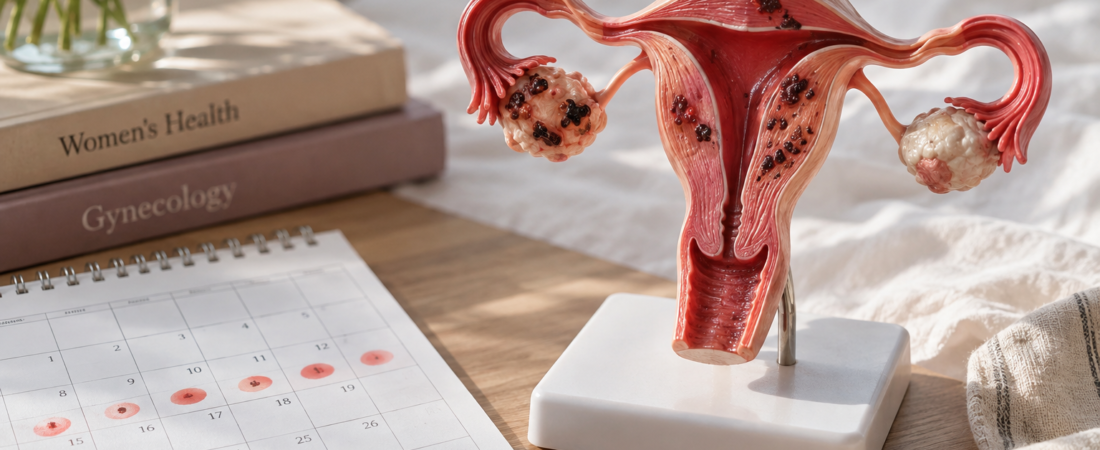
A surgical cohort found longer bleeding and more cyclical bowel symptoms, but no significant difference in pain or infertility status.
Women with both endometriosis and adenomyosis had longer periods and more frequent cyclical bowel symptoms than women with endometriosis alone in a comparative study. Pain intensity, quality of life and infertility status did not differ significantly.
Researchers from the University of São Paulo medical school and collaborating institutions studied 119 women. The paper appeared in the October 2026 issue of the International Journal of Gynecology & Obstetrics after online publication on April 17, 2026.
Periods averaged 10.5 days in the abstract
The study compared 60 women with endometriosis alone and 59 with both conditions. All underwent surgery, with diagnoses confirmed by histology.
The abstract reported mean menstrual bleeding durations of 6.7 days with endometriosis alone and 10.5 days with coexisting adenomyosis—a difference of about 3.8 days.
The detailed results table gave 11.1 days for the coexisting-adenomyosis group, rather than the abstract's 10.5 days. This discrepancy should be acknowledged; both presentations nevertheless indicated significantly longer bleeding in that group.
Measures of menstrual blood-loss volume did not differ significantly. Longer bleeding therefore did not necessarily mean greater blood loss in this study.
Cyclical bowel symptoms: 55% versus 28%
Cyclical bowel symptoms occurred in 55% of women with both conditions, compared with 28% of those with endometriosis alone.
These symptoms include menstrual-cycle-related changes such as diarrhea or constipation. Longer bleeding and bowel symptoms were relatively prominent in the coexisting-adenomyosis group.
The study cannot determine whether adenomyosis itself, endometriosis location or other factors explained the bowel symptoms.
Two diagnoses did not mean every symptom was worse
Menstrual pain, pain during sex and chronic pelvic pain did not differ significantly between groups. Neither did quality-of-life measures or infertility status.
The results caution against judging pain severity or infertility risk solely from the presence of both diagnoses. However, participants were selected surgical patients, so the findings cannot simply be generalized to everyone with endometriosis.
Longer periods warrant attention to the full clinical picture
Endometriosis involves endometrial-like tissue outside the uterus; adenomyosis involves endometrial tissue within the uterine muscle. They can coexist and share symptoms such as painful periods and pelvic pain.
For someone already diagnosed with endometriosis, lengthening periods or recurrent cyclical bowel symptoms may prompt assessment for coexisting adenomyosis.
Longer bleeding can also result from fibroids, endometrial polyps, hormonal changes and other causes. Evaluation, including ultrasound where appropriate, helps distinguish these possibilities.
Treatment decisions should consider actual bleeding patterns, pain and effects on daily life, rather than the diagnostic combination alone.
This comparative cross-sectional study suggests that longer bleeding and more bowel symptoms may stand out more clearly than worsening pain when adenomyosis accompanies endometriosis.
Research source
Mariana Matzenbacher Brunoro and colleagues, University of São Paulo and collaborating institutions. “Coexisting adenomyosis in endometriosis: Similar pain and quality of life, with longer bleeding and bowel symptoms—A comparative cross-sectional study.” International Journal of Gynecology & Obstetrics, October 2026; first published online April 17, 2026. DOI: https://doi.org/10.1002/ijgo.70988. PMID: 41992935.
Related reading
The illustration was generated with ChatGPT (OpenAI); any depicted people are fictional.
Copyright © 2026 Fertility Information TokTok Fertility News | THE FERTILITY NOTES. All rights reserved. Unauthorized republication, reproduction, redistribution, scraping, AI training and data use of any content, including articles, photographs and images, are strictly prohibited. Violations may result in legal liability.