
- 180 IVF patients randomized into two groups for a 60-day dietary intervention
- Plant-forward ‘pro-fertility diet’ paired with daily omega-3, vitamin D, folic acid, and vitamin B12 supplementation
- Fertilization rate rose from 66% to 81%; top-tier (Grade A) embryos jumped from 21.7% to 45.2%
- Impact on downstream clinical pregnancy and live birth rates remains to be investigated
“What should I eat while preparing for In Vitro Fertilization (IVF)?”
Internet forums and social media are filled with advice recommending specific foods—from pineapple core and pomegranate juice to soy milk and bone broths—as miracle boosters for fertility. But what happens when patients do not just consume a single “superfood” for a few days, but systematically overhaul their dietary patterns two months before starting an IVF cycle? Does preconception nutrition alter oocyte fertilization and early embryo developmental quality?
A randomized controlled trial (RCT) published in the September 2026 issue of the international journal Reproductive BioMedicine Online (RBMO) offers compelling clinical evidence. When 180 subfertile women preparing for IVF were divided into two groups and assigned distinct dietary regimens for 60 days, researchers observed pronounced differences in fertilization rates, embryo cleavage rates, and morphological embryo grading.
Two Months Prior to IVF: 90 Patients per Arm with Divergent Nutritional Strategies
The research team recruited 180 women aged 18 to 42 undergoing IVF at an infertility center in Isfahan, Iran, between June 2024 and June 2025. Participants were randomized into two equal groups of 90:
- Intervention Arm (Pro-Fertility Diet + Targeted Supplements): Followed a structured plant-forward, nutrient-dense diet combined with daily supplementation of 1,000 mg Omega-3, 1,000 IU Vitamin D, 1 mg Folic Acid, and 500 µg Vitamin B12 for 60 days prior to oocyte retrieval.
- Control Arm (Standard Healthy Diet): Received standard nutritional counseling based on the conventional ‘Healthy Eating Plate’ model alongside daily standard supplementation of 500 µg Folic Acid.
Crucially, the control group was not left without guidance; the study compared a baseline healthy diet against an intensified, fertility-specific nutritional and micronutrient protocol.
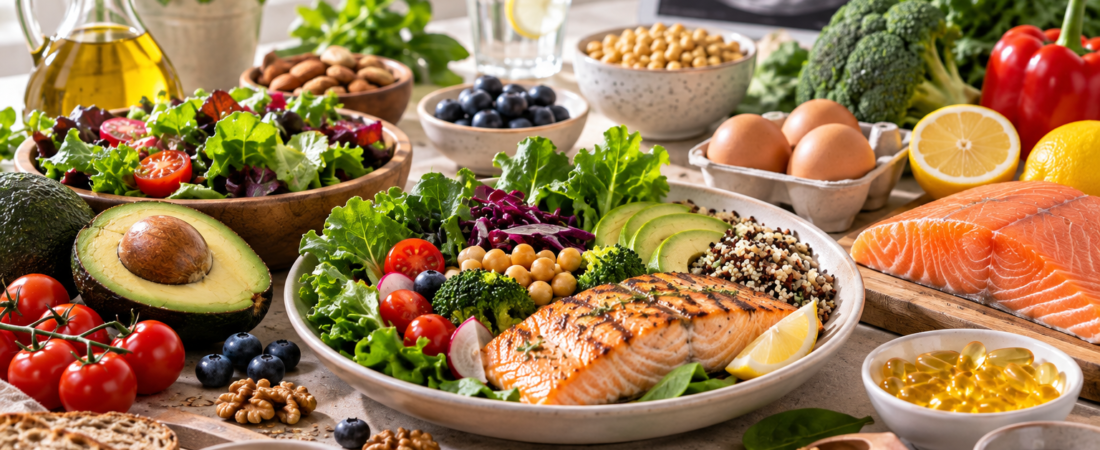
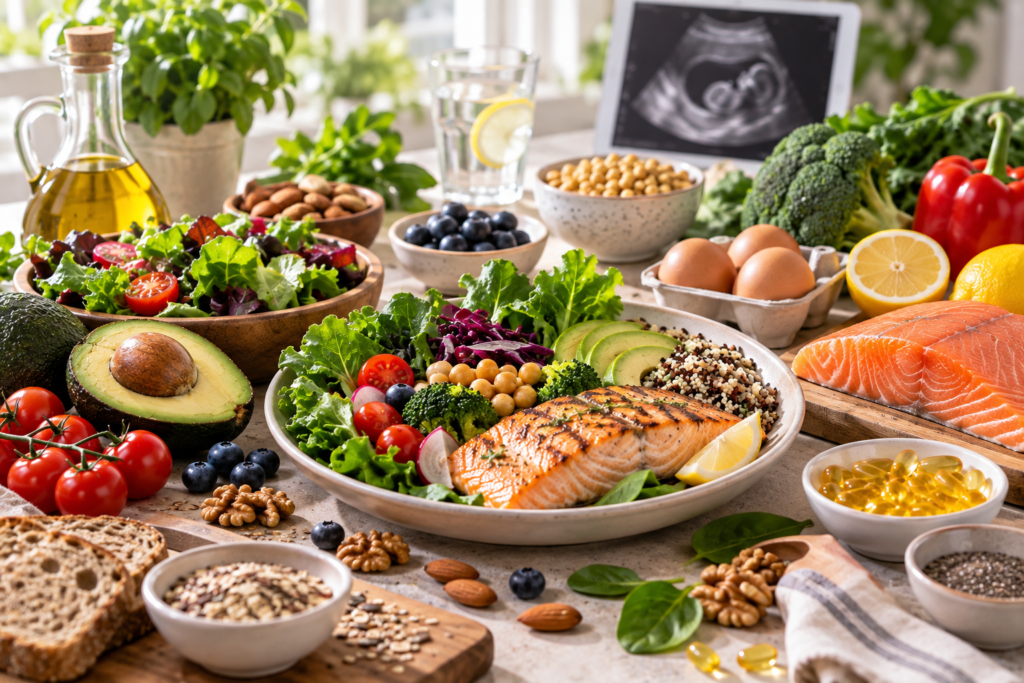
What defined the study’s pro-fertility diet? Rather than prescribing isolated “miracle foods,” the protocol emphasized:
- High natural dietary intake of folate, vitamin B12, and vitamin D
- Whole grains, diverse vegetables, and fruits (specifically emphasizing low pesticide-residue produce)
- Plant-based proteins, particularly legumes and beans
- Moderate dairy consumption
- Strict minimization of ultra-processed foods, refined sugars, and trans/saturated fats
Fertilization Rose from 66% to 81%: Significant Gains in Embryo Yield and Quality
Following the 60-day intervention, the embryological outcomes showed distinct, statistically significant improvements across several laboratory parameters:
| Embryological Parameter | Standard Healthy Diet (Control, n=90) | Pro-Fertility Diet + Supplements (Intervention, n=90) | Statistical Significance |
| Fertilization Rate | 66.0% | 81.0% | $P < 0.05$ |
| Embryo Formation (Cleavage) Rate | 62.0% | 79.0% | $P < 0.05$ |
| Mean Embryos per Patient | 2.22 | 3.78 | $P < 0.05$ |
| Grade A (Top-Quality) Embryos | 21.7% | 45.2% | $P < 0.05$ |
The proportion of top-tier (Grade A) embryos was more than double in the intervention arm.
In assisted reproduction, cycle success does not depend solely on how many oocytes are aspirated from the ovaries. The retrieved oocytes must undergo normal fertilization and sustain cellular cleavage without fragmentation or developmental arrest to yield viable blastocysts suitable for transfer or cryopreservation.
Does This Mean Omega-3 Alone Produces Superior Embryos?
A critical caveat is necessary when interpreting these findings: this trial does not prove that “taking an omega-3 capsule guarantees better embryos” or that “this specific diet automatically raises live birth rates.”
The primary reason is that the intervention was a bundled protocol. Participants simultaneously altered their macronutrient composition and took a combination of omega-3, vitamin D, folic acid, and vitamin B12. As a result, the study design cannot isolate whether the observed improvements stemmed from the whole-food dietary changes, omega-3 fatty acid incorporation, targeted vitamin supplementation, or a synergistic effect of all components combined.
An even more essential clinical distinction lies in the endpoints measured.
The trial evaluated intermediate in vitro laboratory parameters: fertilization, cleavage, and morphological grade. It was not designed or powered to determine whether this regimen translates into higher clinical pregnancy rates, lower miscarriage rates, or higher take-home baby rates.
A 2026 systematic review on diet and assisted reproductive technology (ART) published in RBMO noted that while healthy dietary patterns correlate positively with reproductive parameters, robust and consistent evidence demonstrating that any single dietary intervention directly improves live birth rates remains limited.
Preparation Over ‘Transfer-Day Superfoods’: The Preconception Window
The broader takeaway from this research is clear: in fertility planning, the overall nutritional pattern sustained during the weeks and months leading up to ovarian stimulation matters far more than what a patient eats on the day of transfer.
Folliculogenesis—the developmental process wherein a dormant primordial follicle matures into a preovulatory follicle ready for ovulation or retrieval—takes several months. During this extended window, the developing oocyte and its surrounding granulosa and cumulus cells are continually bathed in follicular fluid, whose biochemical and fatty acid composition directly mirrors systemic maternal metabolism.
A dietary pattern rich in antioxidants, unrefined carbohydrates, and healthy fatty acids can reduce systemic and intra-follicular oxidative stress, potentially supporting mitochondrial function and spindle integrity during oocyte maturation.
Because this study was conducted at a single fertility clinic in Iran, multicenter trials across diverse ethnic cohorts, body mass index (BMI) ranges, and underlying etiologies (such as severe PCOS or diminished ovarian reserve) are needed to confirm generalizability.
Furthermore, patients should not start high-dose supplements arbitrarily without clinical oversight. Appropriate dosages of fat-soluble vitamins and fatty acids depend on baseline blood panels, cardiovascular status, and individual metabolic profiles, and should always be coordinated with an attending fertility specialist.
Medical Source & Study Reference
- Journal: Reproductive BioMedicine Online (RBMO), Volume 53, Issue 3 (September 2026; Online ahead of print February 27, 2026).
- Study Title: Effect of a pro-fertility diet combined with omega-3 supplementation on embryo quality in infertile women undergoing IVF: a randomized controlled trial
- Lead Institutions: Isfahan University of Medical Sciences, Isfahan, Iran.
- Sample Size: 180 subfertile women aged 18–42 undergoing IVF (90 intervention vs. 90 control).
- Article Identifiers: DOI: 10.1016/j.rbmo.2026.105661 | PMID: 42330757
※ This article provides general scientific and medical information and does not replace individualized clinical diagnosis or care. Decisions regarding dietary modifications, supplement regimens, and fertility treatments should always be made in consultation with a qualified reproductive endocrinologist or physician.
※ The images associated with this article were generated using generative AI (ChatGPT, OpenAI) as illustrative visual references and do not depict real individuals.
※ Copyright © 2026 THE FERTILITY NOTES. All rights reserved. Unauthorized reproduction, duplication, distribution, scraping, AI training, or data utilization of all content, including articles, photos, and images, is strictly prohibited and may result in legal liability.