
ICSI and conventional IVF differ in how fertilization occurs, but does that affect early embryo cleavage? A retrospective study of 125,570 normally fertilized embryos found abnormal cleavage more often after ICSI. The association does not prove that ICSI causes the difference or determine which method gives an individual couple the best chance of live birth.
- Abnormal cleavage observed significantly more often in ICSI embryos than in conventional IVF
- Analysis of 125,570 normally fertilized embryos: 40.82% in IVF vs. 52.14% in ICSI; difference held after multivariate adjustment (aOR = 1.674)
- Trend observed even when semen parameters were normal; this association does not establish that ICSI causes poorer embryo quality
Couples preparing for In Vitro Fertilization (IVF) frequently ask whether conventional IVF (cIVF) or Intracytoplasmic Sperm Injection (ICSI) produces higher-quality embryos.
Because ICSI involves selecting a single spermatozoon under a microscope and microinjecting it directly into the cytoplasm of an oocyte, it is often perceived as a more advanced, high-precision technique. Consequently, even when male factor infertility is absent or mild, many patients assume that opting for ICSI will automatically help their embryos develop and divide more robustly.
However, a large-scale clinical study examining the early developmental trajectories of 125,570 normally fertilized embryos yielded findings that challenge this widespread assumption: embryos generated via ICSI exhibited early abnormal cleavage patterns significantly more often than those conceived through conventional IVF.
ICSI versus IVF: studying early embryo cleavage
A research team from the Women and Children’s Hospital of Chongqing Medical University and the Chongqing Health Center for Women and Children analyzed 125,570 normally fertilized (two-pronuclei, 2PN) embryos derived from 20,456 IVF and ICSI cycles conducted between 2021 and 2023. Among these, 99,019 embryos were generated through conventional IVF, and 26,551 through ICSI.
The investigators focused on a critical biological question that extends beyond raw fertilization rates: once sperm and egg fuse, does the subsequent progression through early cleavage stages—from 2-cell to 4-cell and 8-cell stages—follow an orderly physiological rhythm?
Early cleavage describes the first cell divisions after fertilization. Abnormal cleavage refers to departures from expected division patterns or timing, such as direct or reverse cleavage. This is an embryological observation, not in itself a diagnosis of chromosome status. The accessible study abstract does not specify the complete classification rules used in this cohort.
Rather than asking solely “did the egg fertilize?”, the study investigated how normally the embryo executed its earliest cell divisions after fertilization.
Abnormal cleavage: 40.82% with IVF and 52.14% with ICSI
The analysis revealed marked differences in early cleavage behavior:
- Conventional IVF Cohort: Abnormal cleavage was observed in 40.82% of embryos.
- ICSI Cohort: Abnormal cleavage was observed in 52.14% of embryos.
This represents an absolute difference exceeding 11 percentage points.
The association remained after adjustment for multiple variables using logistic regression with generalized estimating equations. ICSI embryos had approximately 1.67 times the odds of abnormal cleavage compared with conventional IVF embryos (aOR = 1.674; 95% confidence interval 1.590–1.762; P < 0.001). An odds ratio is not the same as a risk ratio and does not show that ICSI caused the difference.
This elevation was not isolated to specific age brackets or stimulation regimens; stratified analyses across various female age cohorts and distinct gonadotropin protocols demonstrated a consistently higher incidence of abnormal cleavage among ICSI embryos.
Findings in couples with normal semen parameters
A reasonable question arises: because ICSI is clinically indicated for men with severe oligoasthenoteratozoospermia, could the higher rate of abnormal cleavage simply reflect compromised paternal sperm quality from the outset?
The investigators evaluated this hypothesis by stratifying the study population according to baseline semen analysis results: normal semen profiles, mild abnormalities, and combined/multiple semen defects.
Remarkably, the higher incidence of abnormal cleavage in ICSI embryos persisted even within the subgroup of couples with completely normal semen parameters. The identical upward trend was observed across cohorts presenting with mild and multiple semen defects.
The association across semen subgroups does not isolate a biological mechanism. Mechanical disruption of the oocyte membrane, injection volume, artificial sperm selection and early spindle stability are possible research questions, not mechanisms demonstrated by these results. Residual differences between the IVF and ICSI groups may still contribute to the observed association.
How IVF and ICSI differ in fertilization
The fundamental divergence between conventional IVF and ICSI lies in how fertilization takes place:
- Conventional IVF: Oocytes are incubated in a microdroplet containing a dense concentration of motile spermatozoa. Fertilization relies on natural biological selection, requiring the sperm to independently bind to the cumulus matrix, penetrate the zona pellucida, and fuse with the oocyte membrane.
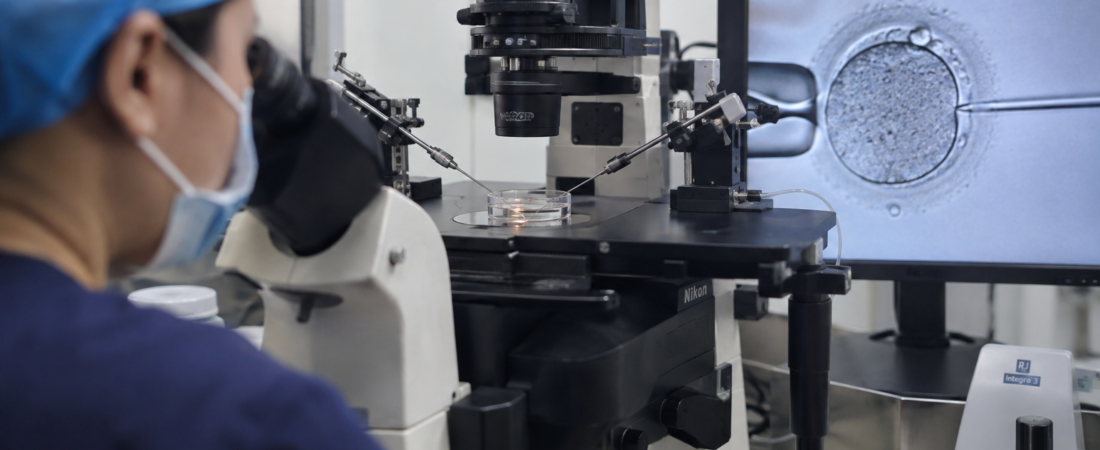
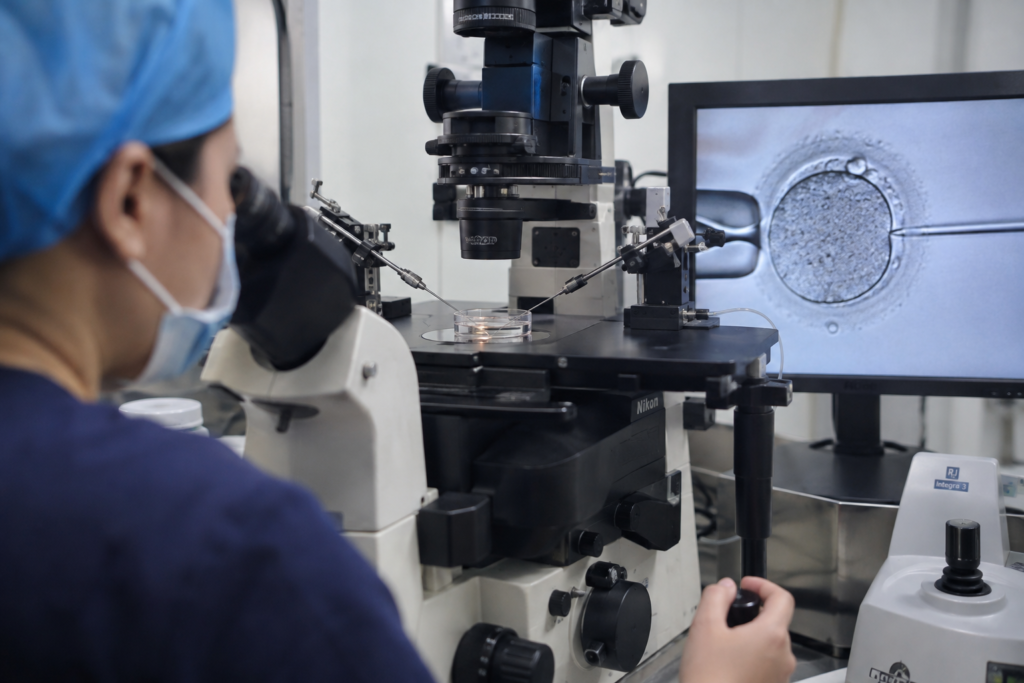
- ICSI: An embryologist manually immobilizes a single morphologically normal spermatozoon, aspirates it into a micropipette, and mechanically injects it across the oolemma directly into the ooplasm.
ICSI is an established option for male factor infertility, including selected cases with surgically retrieved sperm, and may improve fertilization after previous poor or failed fertilization with conventional IVF. Its suitability depends on the clinical situation; it does not guarantee fertilization, embryo development or live birth.
The clinical concern arises when patients and clinicians assume that because ICSI is technically more invasive and operator-dependent, it will inherently produce “better” embryos in couples where male factor infertility is absent. This study highlights that achieving high fertilization rates through mechanical injection does not automatically translate into superior post-fertilization cleavage kinetics.
Study limitations: association and clinical outcomes
These findings must not be misinterpreted to suggest that “ICSI creates defective embryos” or should be abandoned:
- Study Design: This was a large-scale retrospective observational study, not a prospective randomized controlled trial (RCT). While extensive statistical adjustments were performed, unmeasured clinical and biological differences between patients assigned to IVF versus ICSI cannot be fully eliminated.
- Endpoint: The reported outcome was early abnormal cleavage. This result should not be read as an estimate of implantation, cumulative live birth or a future child’s health. Cleavage observations alone do not establish an individual embryo’s chromosome status or reproductive potential.
- Clinical Indications: ICSI remains an established option for male factor infertility and may benefit selected patients after poor or failed fertilization with conventional IVF. A history of fertilization failure does not by itself define one treatment plan for every couple.
Choosing IVF or ICSI: what the findings can inform
When choosing an insemination method, fertilization and embryo development are relevant, but a cleavage study alone cannot determine their clinical weighting. Decisions also require evidence on live birth, the reason for using ICSI, previous treatment outcomes and the couple’s clinical circumstances.
In couples presenting with normal semen analyses and no documented history of fertilization failure, defaulting to ICSI under the belief that “it is more advanced, so the embryos will be better” is unsupported by current large-scale embryological data. Insemination strategies must be tailored by weighing semen profiles, oocyte yield, past reproductive history, and clinical indications.
Neither conventional IVF nor ICSI represents a universal solution for every patient. While ICSI remains a vital tool for those who genuinely need it, this analysis of 125,570 embryos serves as a clinical reminder that microinjection does not inherently guarantee superior embryonic development.
For another example of why laboratory findings and treatment outcomes need separate interpretation, read about PGT-A, cumulative live birth and pregnancy loss.
For clinical context, the 2026 ASRM committee opinion does not recommend routine ICSI for nonmale factor infertility. It recognizes selected uses, including previous poor or failed fertilization with conventional IVF, PGT-M and previously frozen oocytes. That guidance considers a broader evidence base than this cleavage study.
Medical Source & Study Reference
- Journal: Reproductive BioMedicine Online (RBMO), 2026;53(3):105767. Published online May 9, 2026.
- Study Title: Incidence of abnormal cleavage patterns in conventional IVF versus ICSI: a retrospective analysis of 125,570 normally fertilised embryos
- Lead Institutions: Women and Children’s Hospital of Chongqing Medical University; Chongqing Health Center for Women and Children, Chongqing, China.
- Study Cohort: 125,570 normally fertilized (2PN) embryos from 20,456 IVF/ICSI cycles (2021–2023).
- DOI: 10.1016/j.rbmo.2026.105767
※ This article provides general medical and scientific information and does not replace individualized clinical diagnosis or care. Decisions regarding the appropriate fertilization method (conventional IVF vs. ICSI) should always be made in consultation with a qualified reproductive endocrinologist and clinical embryologist, taking into account comprehensive semen analyses, oocyte numbers, past fertilization history, and underlying causes of infertility.
※ The images associated with this article were generated using generative AI (ChatGPT, OpenAI) as illustrative visual references and do not depict real individuals.
※ Copyright © 2026 THE FERTILITY NOTES. All rights reserved. Unauthorized reproduction, duplication, distribution, scraping, AI training, or data utilization of all content, including articles, photos, and images, is strictly prohibited and may result in legal liability.