
“From Growth Hormone to DHEA to Help Eggs Grow”… For Women with Diminished Ovarian Reserve, How Far Should We Trust Adjuvant Prescriptions?
- Co-prescriptions of Growth Hormone, DHEA, Coenzyme Q10, and L-Arginine are increasingly common in IVF clinics
- Select trials show signals of improvement in total oocyte yield and mature eggs, yet definitive live birth efficacy remains uncertain
- Adjuvants aim to optimize the microenvironment of existing follicles, not generate new eggs from scratch
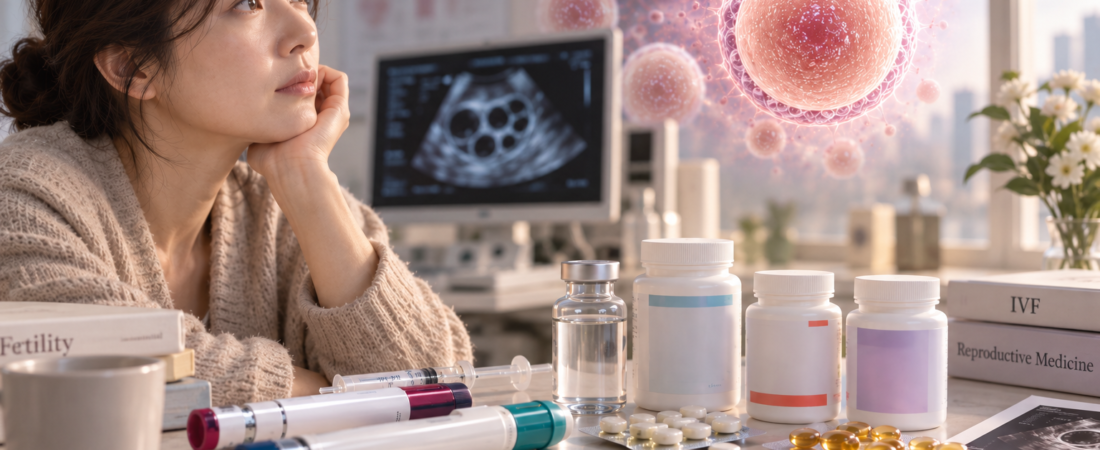
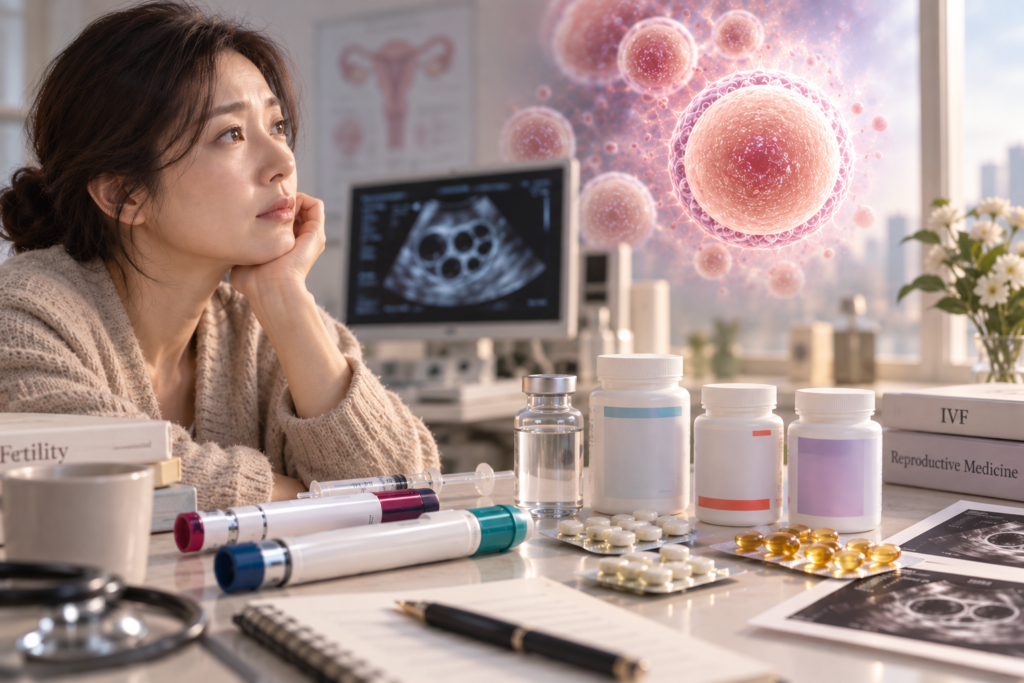
When reviewing the prescription sheets of women diagnosed with diminished ovarian reserve (DOR) starting In Vitro Fertilization (IVF), it is common to see a variety of supplements and medications alongside standard gonadotropin injections.
Patients often find themselves taking growth hormone (GH) injections, daily DHEA capsules, Coenzyme Q10 (CoQ10), and L-Arginine all at once. Depending on the fertility center, transdermal testosterone or other adjunctive therapies may be added to the regimen. From a patient’s perspective, it is only natural to hope: “If I take all of these together, won’t my follicles grow better and increase my chances of getting high-quality eggs?”
However, taking a closer look at the scientific literature reveals that the clinical reality is far from simple.
While select adjuvant therapies demonstrate modest increases in retrieved oocyte counts, mature oocytes, or even clinical pregnancy rates, very few treatments have proven definitively capable of increasing cumulative live birth rates. In the management of diminished ovarian reserve, “retrieving a few more eggs” and “increasing the probability of taking home a healthy baby” do not necessarily mean the same thing.
Diminished Ovarian Reserve Cannot Be Solved Merely by Pushing Doses Higher
The primary reason clinicians turn to adjuvant therapies for women with diminished ovarian reserve is that standard therapeutic options are severely limited.
If the pool of resting antral follicles available to respond in a given menstrual cycle is already small, endlessly increasing the daily dose of Follicle-Stimulating Hormone (FSH) will not recruit additional follicles. If a dose of 150 IU yields two eggs, stepping up to 300 IU does not magically yield four.
Consequently, reproductive endocrinologists search for alternative biological pathways beyond simply cranking up the gonadotropin dose:
- Growth Hormone (GH): Hypothesized to augment follicular responsiveness to FSH.
- DHEA: Intended to modify the intra-ovarian androgen microenvironment.
- Coenzyme Q10 (CoQ10): Aimed at enhancing mitochondrial bioenergetics.
- L-Arginine: Intended to improve local ovarian blood flow.
While these therapies target entirely different biological mechanisms, they share a single premise: attempting to make the microenvironment slightly more favorable for the follicles already present in the ovary. None of these treatments create new eggs.
Growth Hormone: The Most Extensively Studied, Yet the Verdict Remains Open
Among adjuvant therapies for poor ovarian responders (POR), Growth Hormone (GH) is one of the most frequently discussed. GH is thought to act through insulin-like growth factor 1 (IGF-1) and related signaling cascades to enhance granulosa cell function and upregulate follicular sensitivity to FSH.
Indeed, recent clinical trials and meta-analyses have yielded intriguing findings. Across multiple randomized controlled trials (RCTs), adding growth hormone to stimulation protocols in poor responders was associated with a trend toward higher retrieved oocyte numbers, more mature Metaphase II (MII) oocytes, and an increased number of usable embryos. In several pooled analyses, numerical gains in clinical pregnancy and live birth rates were also observed.
The underlying challenge, however, lies in trial heterogeneity: diagnostic definitions of poor response (ranging from the Bologna criteria to POSEIDON groups), GH dosages, administration timing, and ovarian stimulation protocols vary widely between studies. Furthermore, the overall sample sizes in many of these trials remain relatively modest.
For this reason, the European Society of Human Reproduction and Embryology (ESHRE) maintains a cautious stance in its clinical guidelines regarding the routine use of growth hormone in poor responders. While acknowledging its potential biological signals, experts conclude that current evidence remains insufficient to establish it as an obligatory, universal standard of care for every woman with low ovarian reserve.
DHEA: High Hopes for ‘Ovarian Rejuvenation,’ but the Climate Shifted as Evidence Accumulated
At one point, DHEA (dehydroepiandrosterone) was perhaps the most widely publicized adjuvant among women with diminished ovarian reserve. Because DHEA is an adrenal-derived androgen precursor, researchers hypothesized that administering it could elevate intra-ovarian androgen levels, which in turn would stimulate early follicular recruitment and upregulate FSH receptor expression on granulosa cells.
Early observational studies and small pilot series reported substantial increases in egg yields and spontaneous pregnancies, leading some to view DHEA almost as a medication that could reverse ovarian aging.
However, as rigorous randomized controlled trials accumulated, the scientific outlook changed. While individual trials reported slight numerical improvements in egg yields, mature oocyte counts, or clinical pregnancy rates, systematic reviews pooling the totality of high-quality RCTs failed to confirm a statistically significant or consistent improvement in live birth rates.
This explains why international guidelines, including ESHRE’s ovarian stimulation recommendations, advise against the routine prescription of DHEA for poor responders. A treatment’s widespread clinical popularity does not automatically mean it rests on gold-standard evidence.
CoQ10 Gaining Notable Traction Recently
In recent years, Coenzyme Q10 has emerged as a particularly compelling adjuvant in diminished ovarian reserve research. CoQ10 is an essential cofactor in the mitochondrial electron transport chain, directly responsible for cellular ATP synthesis.
The human oocyte is one of the most energy-demanding cells in the body. Because mitochondria play a pivotal role not only in oocyte maturation but also in the complex meiotic spindle alignments and cellular divisions of early embryonic development, mitochondrial bioenergetic decline has long been investigated as a core mechanism underlying oocyte aging.
Recent meta-analyses pooling randomized trials in women with diminished ovarian reserve have shown positive signals: patients supplementing with CoQ10 exhibited modest increases in retrieved oocyte numbers and higher clinical pregnancy rates. For a woman who typically retrieves only one or two eggs, an average gain of even one additional oocyte can be clinically meaningful.
Nevertheless, CoQ10 is not a definitive cure. The total number of enrolled trial participants remains relatively small, and dosages and treatment durations differ across studies, leaving data on cumulative live birth rates still preliminary. At present, it is best understood as an adjuvant backed by an encouraging and growing body of supportive evidence.
L-Arginine: Sound Biological Rationale, Scant Clinical Trials
L-Arginine is a semi-essential amino acid required for the enzymatic synthesis of nitric oxide (NO), a potent endogenous vasodilator. The biological rationale is straightforward: by enhancing blood perfusion to the ovarian stroma and surrounding follicular capillary beds, oxygen and essential nutrients might be delivered more efficiently to developing follicles.
Decades ago, small preliminary studies reported improved ovarian blood flow and enhanced follicular recruitment in poor responders receiving L-Arginine.
However, unlike growth hormone or DHEA, large-scale randomized trials never followed. Robust clinical trials assessing hard reproductive outcomes—specifically ongoing pregnancy and live birth—remain severely lacking.
Consequently, there is currently insufficient clinical proof to state that supplementing with L-Arginine reliably improves egg growth or IVF success. While the theory that “better blood flow supports better follicle growth” is biologically plausible, whether that translates into live births remains unverified.
When Everything Is Prescribed at Once, It Is Impossible to Know What Worked
In real-world clinical practice, patients are rarely prescribed growth hormone or CoQ10 in isolation; they are often given an entire multi-supplement regimen simultaneously.
Consider a scenario: a woman retrieves only one egg in her initial IVF cycle. For her subsequent cycle, she starts growth hormone injections, takes DHEA, CoQ10, and L-Arginine, and her physician switches her gonadotropin medication. At retrieval, she obtains three eggs.
From the patient’s standpoint, the intuitive reaction is: “The new cocktail of supplements worked.”
From a medical standpoint, however, it is impossible to isolate the true cause. Was it the growth hormone? The altered gonadotropin protocol? Or did her ovaries simply begin that month with a naturally higher baseline antral follicle count?
The human ovary does not start from the exact same baseline every month. This inherent physiological variability makes evaluating the true individual efficacy of adjuvant therapies exceedingly difficult.
More Eggs Does Not Automatically Mean ‘Better Egg Quality’
One of the most critical phrases that patients with diminished ovarian reserve must interpret with care is “improving egg quality.”
An increase in retrieved oocytes can be directly counted. The number of mature MII oocytes and successfully fertilized 2PN embryos can be verified under a microscope.
True biological “egg quality,” however, is vastly more complex.
Even if an adjuvant regimen leads to more usable blastocysts, that does not necessarily mean it has corrected underlying chromosomal aneuploidy or halted cellular aging. In clinical trials to date, there is no definitive proof that these adjuvant therapies can reverse age-related meiotic non-disjunction or significantly reduce embryonic chromosomal errors.
This is why live birth rate remains the ultimate benchmark in reproductive medicine. If an intervention yields more eggs or higher fertilization rates without translating into an increased likelihood of taking home a baby, the clinical value of the treatment changes.
There Is Still No Drug That Creates New Eggs
For women navigating diminished ovarian reserve, a fundamental biological reality must be kept in mind: none of these agents—whether growth hormone, DHEA, CoQ10, or L-Arginine—can generate brand-new germ cells inside a depleted ovary.
Their role is strictly limited to optimizing the hormonal, bioenergetic, or vascular environment for the resting follicles that already exist.
Therefore, for a patient with an undetectable AMH level and only one resting follicle visible on baseline ultrasound, taking a combination of supplements cannot be expected to suddenly yield ten eggs.
The cornerstone of care for diminished ovarian reserve remains tailoring an evidence-based stimulation protocol suited to the patient’s age, baseline antral follicle count, AMH, and prior ovarian response history.
Why Do Physicians Continue to Prescribe These Adjuvants?
Despite the mixed literature, the decision of fertility specialists to prescribe these adjuvants cannot be dismissed as baseless.
Women with diminished ovarian reserve face limited treatment avenues. For a patient who has undergone multiple cycles yielding only one or two eggs, securing even a single additional oocyte can mean the difference between having an embryo available for transfer and facing cycle cancellation.
This is precisely why clinicians selectively consider therapies that show recurring positive signals—such as growth hormone—tailoring the decision to a patient’s individual history, age, and ovarian response.
However, patients should understand the distinct levels of evidence behind each agent:
- Growth Hormone: Backed by relatively numerous trials, but results remain mixed and standard clinical guidance urges selective use.
- DHEA: Discouraged for routine use by modern international guidelines following disappointing pooled RCT data.
- CoQ10: Supported by a growing body of positive trial data regarding egg yields, though definitive live birth proof is still pending.
- L-Arginine: Lacks adequately powered clinical trials to establish its utility.
Summary
In the end, success does not depend on taking as many pills or injections as possible.
What matters is understanding whether a prescribed therapy is an established, proven treatment or an adjunctive option being explored for its potential benefits.
As of 2026, reproductive medicine has yet to discover a universal magic pill capable of restoring egg quality and guaranteeing a live birth for every patient.
The clinical frontier in managing diminished ovarian reserve is shifting away from asking “What else can we add to the prescription?” toward identifying “Which specific subgroup of patients can genuinely benefit from targeted adjuvant therapy?”
※ This article was synthesized based on the Ovarian Stimulation Guidelines published by the European Society of Human Reproduction and Embryology (ESHRE) alongside recent randomized controlled trials and meta-analyses investigating Growth Hormone, DHEA, Coenzyme Q10, and L-Arginine in poor ovarian responders. It does not replace individualized clinical diagnosis or medical care, and specific pharmacological decisions should always be made in consultation with a qualified reproductive endocrinologist.
※ The images associated with this article were generated using generative AI (ChatGPT, OpenAI) as illustrative visual references and do not depict real individuals.