
- European Society of Human Reproduction and Embryology (ESHRE) releases 2026 updated recommendations on good practice in IVF laboratories
- Detailed standards established spanning air quality, temperature, pH, embryo handling, and equipment maintenance
- Embryos maintained close to 37 degrees C… Low-oxygen culture around 5% recommended
- Strict policies on perfumes, cosmetics, and mobile phones… Emergency disaster plans for power outages and fires emphasized
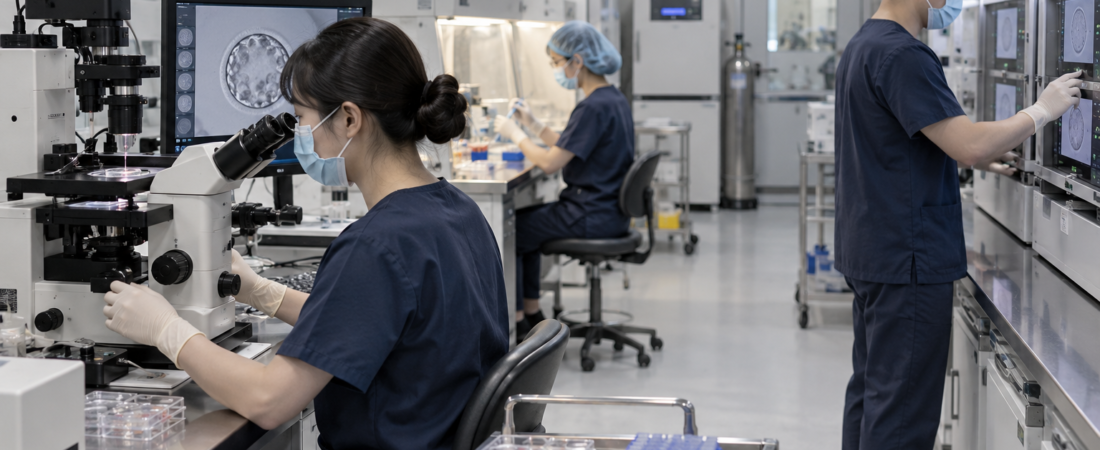
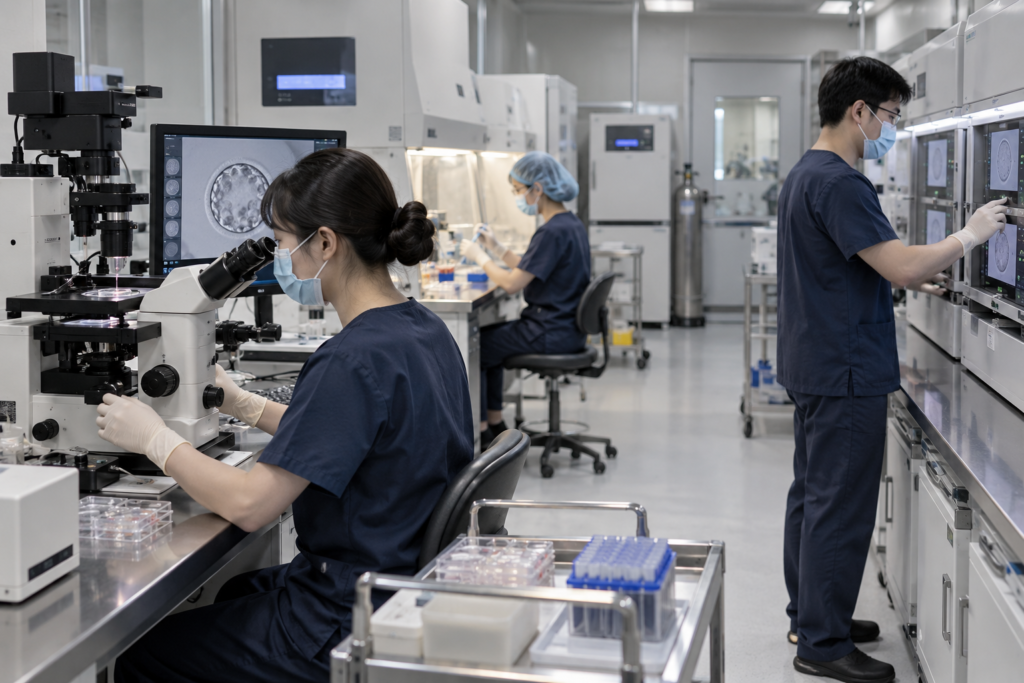
Patients undergoing In Vitro Fertilization (IVF) are familiar with their attending physicians, daily hormonal injections, egg retrievals, and embryo transfers. Yet, few ever see the inside of the embryology lab—the cleanroom where retrieved eggs and sperm meet, fertilize, and grow for several critical days.
Yet, across the entire IVF journey, the embryology laboratory is where an embryo spends its longest continuous period of time. This is precisely why the European Society of Human Reproduction and Embryology (ESHRE) has thoroughly overhauled its laboratory management guidelines for the first time in 11 years.
ESHRE recently published the updated “ESHRE recommendations on Good Practice in the IVF laboratory” in the August 2026 issue of the international journal Human Reproduction. The previous guidance was established in 2015; over the intervening decade, rapid advances in embryo culture systems, preimplantation genetic testing (PGT), and vitrification created an urgent need for updated clinical standards.
The new recommendations cover virtually every facet of laboratory operations: from staffing, training, and quality management systems to the handling of gametes, insemination, embryo culture, transfer, biopsy, cryopreservation, and emergency preparedness. Notably, the revised guidance significantly expands protocols for sperm preparation and establishes newly structured standards for trophectoderm biopsy used in PGT.
To an Embryo, the Lab Is Its Entire Living Environment
Viewed with the naked eye, an embryo appears microscopic, but it is exceptionally sensitive to subtle environmental fluctuations. What ESHRE repeatedly emphasizes in these new recommendations is the absolute imperative to maintain temperature, pH, and osmolality as strictly constant as possible.
When handling oocytes and embryos outside the incubator, working surfaces should be maintained close to 37 degrees C, with culture media and collection dishes pre-equilibrated to the correct physiological temperature. Throughout culture, incubator temperatures, gas concentrations, and media pH must be monitored continuously where possible, or verified at least daily.
Removing embryos from the protective incubator for microscopic evaluation or manipulation should be kept to an absolute minimum. The goal is to preserve thermal, chemical, and osmotic stability while shielding gametes and embryos from toxic airborne contaminants and harmful illumination. The guidelines specifically highlight minimizing exposure to high-energy blue light during microscopic inspection.
Atmospheric oxygen is another critical parameter. While room air contains approximately 21% oxygen, ESHRE recommends culturing embryos under physiological low-oxygen conditions—around 5%—to reduce oxidative stress and the formation of reactive oxygen species.
Even Perfumes Are Strictly Restricted in the Lab
One of the most fascinating aspects of these guidelines for patients is the rigorous control of laboratory air.
ESHRE advises managing the embryology cleanroom atmosphere through High-Efficiency Particulate Air (HEPA) filtration combined with dedicated volatile organic compound (VOC) filtration systems. Maintaining positive air pressure within the laboratory is also recommended to prevent external contaminants from infiltrating the cleanroom when doors open.
Regular environmental air quality testing is mandated. The daily habits of laboratory staff are subject to strict protocols as well: food, beverages, and smoking are strictly forbidden, cosmetic use should be minimized, and perfumes or scented products must be avoided entirely.
Personal electronic devices, such as mobile phones, which can distract embryologists during delicate micromanipulation procedures or introduce biological contamination, are also restricted within active laboratory areas.
The reason behind such meticulous control is simple: to keep the microenvironment where an embryo develops as pristine and stable as possible.
“Whose Embryo Is It?” Flawless Traceability from Start to Finish
Safety and chain-of-custody protocols received renewed emphasis.
Gametes and embryos must be assigned unique patient identifiers, ensuring seamless traceability across retrieval, fertilization, culture, cryopreservation, and transfer. Laboratories must maintain audit trails that document not only the biological samples, but also the specific lot numbers of culture media, contact plastics, and consumables used for each patient.
In essence, the system must be capable of confirming not only whose embryo it is at any given second, but also every single solution, surface, and procedure it came into contact with along the way.
Equipment maintenance is held to the same standard. Critical instruments, including incubators and heated workstages, must be serviced routinely, with temperatures and gas levels verified using external, calibrated diagnostic devices. Whenever an out-of-range value occurs, corrective actions and resolution outcomes must be thoroughly logged.
What Happens to Embryos During a Power Outage?
In this revision, ESHRE placed strong emphasis on contingency planning for unforeseen catastrophic events.
Clinics must formulate detailed emergency disaster plans outlining how to safeguard embryos, eggs, and sperm in the event of power failures, incubator breakdowns, or broader disruptions caused by fire, flooding, or earthquakes.
In particular, laboratories should know the exact duration an incubator can sustain physiological conditions without electrical power, and establish predefined protocols for emergency vitrification or the secure transport of growing embryos to backup facilities when necessary.
The Hidden Foundation of Clinical Outcomes
The outcome of an IVF cycle is shaped by a multitude of patient-specific variables, including maternal age, ovarian reserve, sperm quality, and embryonic chromosomal ploidy. A state-of-the-art laboratory alone cannot guarantee pregnancy.
Yet, the message delivered by ESHRE’s updated recommendations is unambiguous: behind the scenes where patients cannot look, every element—air quality, temperature, light, gas levels, equipment, and handling protocols—is calibrated with microscopic precision.
The interval between egg retrieval and embryo transfer may feel to patients like days of silent waiting. But within the laboratory, countless parameters are actively managed around the clock to provide each embryo with a stable, protective environment to thrive.
These recommendations establish the modern benchmark for that invisible world, codifying the essential conditions of the embryology laboratory after 11 years.
※ This article was written based on the “ESHRE recommendations on Good Practice in the IVF laboratory” published by the European Society of Human Reproduction and Embryology (ESHRE) in the August 2026 issue of the international journal Human Reproduction. It does not replace individualized clinical diagnosis or medical care, and specific treatment decisions should always be made in consultation with a qualified reproductive endocrinologist or clinical embryologist.
※ Image: AI generated (ChatGPT, OpenAI) / For illustrative reference only.