
The Real Age That Exercise Changes
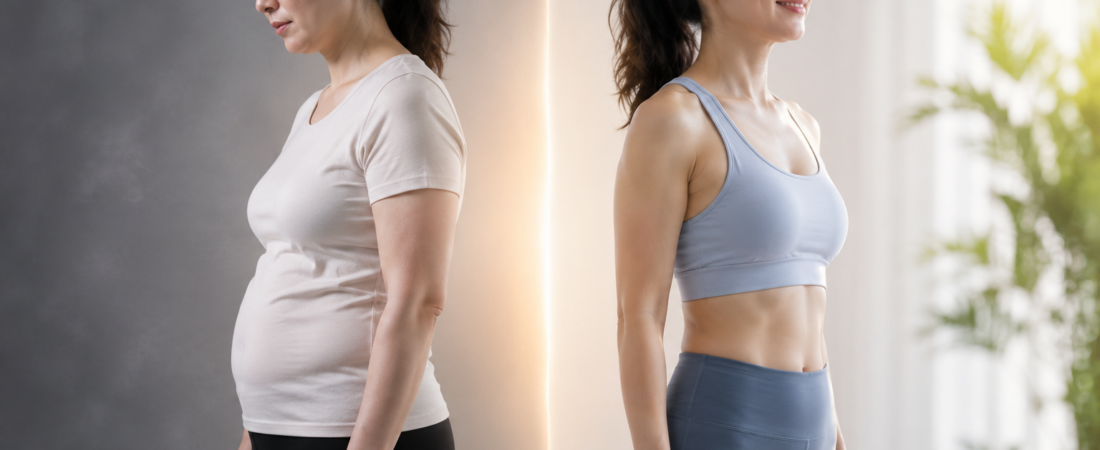
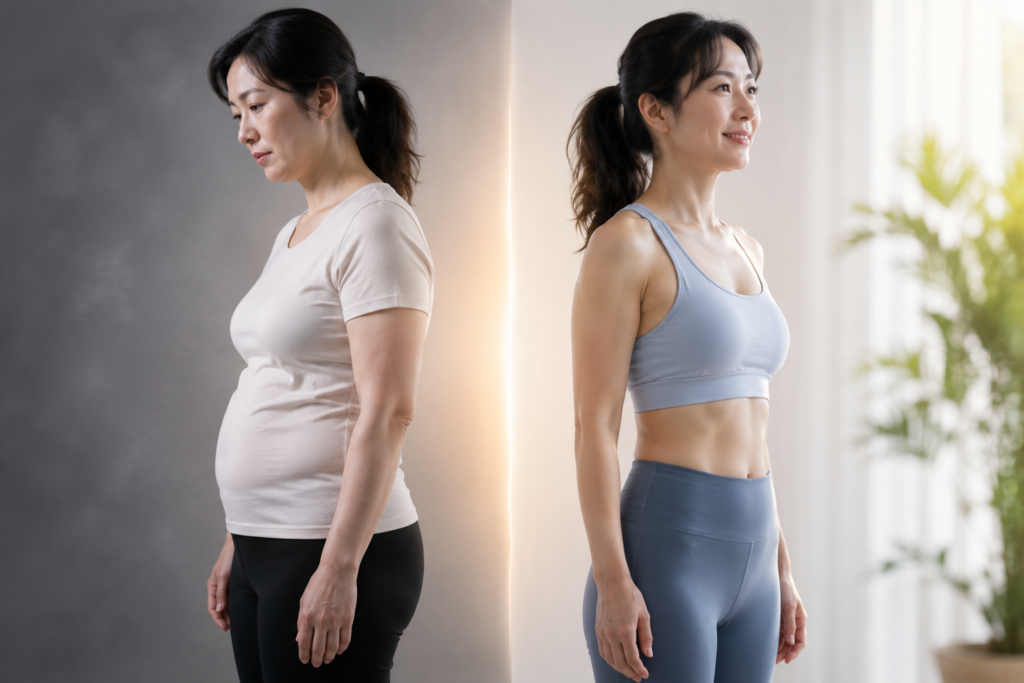
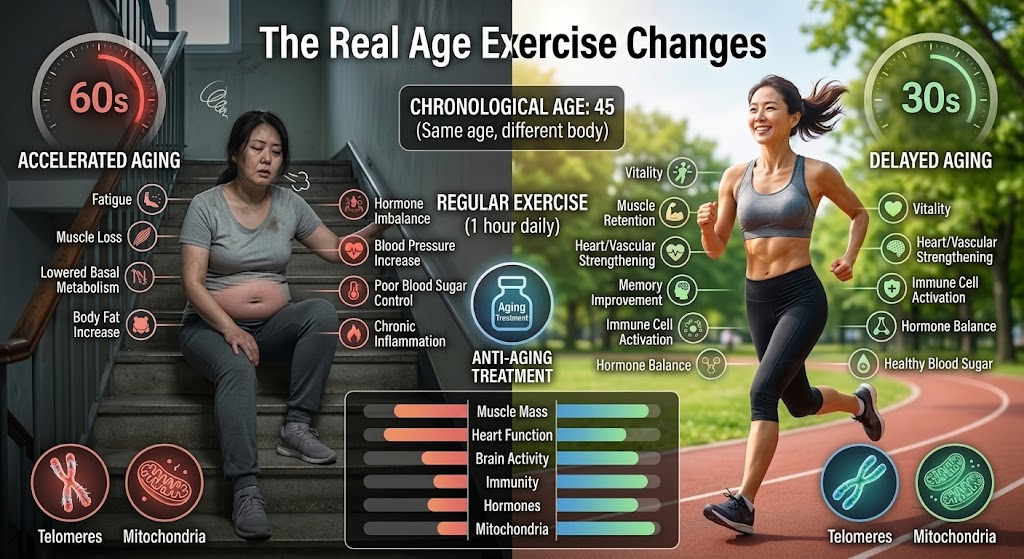
Though their resident registration cards both read age 45, their bodies were not the same age at all.
One person gets short of breath climbing just a few flights of stairs, and their blood pressure and blood sugar slowly begin to rise. The other exercises for over an hour every day, maintaining muscle, blood vessel, and heart function. Medically speaking, it is difficult to view the bodies of these two people as being the same age.
In recent sports medicine and aging research, growing evidence continues to show that regular exercise delays biological age. Biological age refers to how old cells and organs actually are, rather than the age written on an official ID.
How Inactivity Accelerates Aging
Women who rarely exercise experience muscle loss first.
Muscle mass in women begins to decline in their late 30s, and the rate of reduction accelerates further around menopause, around age 50. When muscle diminishes, basal metabolic rate drops, and fat easily accumulates even when eating the same amount. Abdominal obesity sets in, increasing insulin resistance and raising the risk of diabetes.
Conversely, women who combine about an hour of aerobic exercise and strength training daily significantly slow down this rate of muscle loss. Because muscle is the largest organ that consumes blood sugar, blood glucose regulation capacity is also maintained.
The Heart, Brain, and Immunity
Differences manifest in the heart as well.
A lack of exercise gradually reduces the heart’s ability to pump blood. Blood vessels lose elasticity, and blood pressure rises slightly. In contrast, those who exercise consistently allow their heart to pump more blood at once while maintaining vascular endothelial function, ultimately lowering the risk of myocardial infarction and stroke.
The brain is no exception.
Regular exercise is known to increase the secretion of brain-derived neurotrophic factor (BDNF), promoting new nerve cell connections. Successive studies report improvements in memory and concentration, alongside a reduced risk of dementia.
The immune system also changes drastically.
Individuals who do not exercise easily develop chronic inflammation. Inflammatory substances in the blood rise, increasing the risk of various chronic diseases. On the other hand, proper exercise reduces inflammation and maintains immune cell function, lowering the risk of infections and chronic diseases.
Hormones, Mitochondria, and Telomeres
Hormones differ too.
Regular exercise enhances insulin sensitivity, aids the secretion of growth hormone and hormones necessary for muscle maintenance, and slows down physical functional decline even after menopause.
The biggest difference lies in the mitochondria.
Mitochondria, which act as power plants inside cells, increase in number and function the more you exercise. This is why the degree of fatigue felt and the speed of recovery differ completely even at the same age.
Recently, research into telomeres—the caps at the ends of chromosomes—has also garnered attention. Individuals who engage in regular exercise tend to maintain longer telomeres, which is interpreted as a sign of relatively slower cellular aging. However, telomere length is influenced by multiple factors including genetics and lifestyle habits, meaning it is not determined by exercise alone.
Conclusion
Experts evaluate that one hour of exercise a day goes far beyond simply reducing weight; it acts close to a “systemic anti-aging medicine” that simultaneously manages the heart, blood vessels, muscles, brain, immune system, hormones, and cellular energy systems.
Even at age 45, one person’s body may already be heading toward age 60, while another’s body maintains the functional capacity of someone in their late 30s. Though age may be the same, the body’s clock flows at entirely different speeds depending on exercise habits.
※ This article was synthesized based on recent research on exercise and aging published in international journals such as Mechanisms of Ageing and Development, JMIR Aging, and Frontiers in Physiology, as well as data from the American College of Sports Medicine (ACSM). It does not replace a specific individual’s diagnosis or treatment, and actual medical judgment must be made through consultation with a specialist.
※ Images: Created using generative AI (ChatGPT, OpenAI); depicts fictional individuals, not real people.