

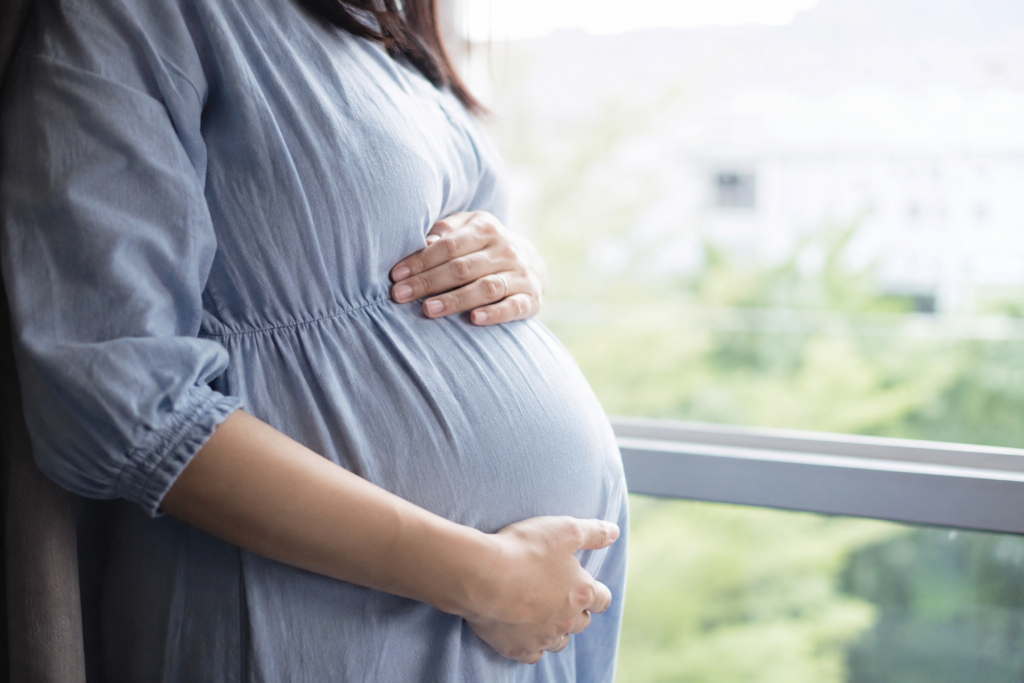
“Even Amid Scorching Heat and Hardship, Life Begins”
As consecutive heatwaves push temperatures past 35°C (95°F) day after day, anxiety is mounting among women preparing for pregnancy.
“Is it really okay to undergo IVF in weather this hot?” “I walked out in the heat wave after my embryo transfer—did something go wrong with implantation?” “I caught a cold and ran a fever—should I just give up this month?”
Every summer, similar questions flood fertility clinics and online communities. Yet fertility specialists consistently emphasize: “The season itself does not dictate the success or failure of pregnancy.” This is because the inception of life relies on a biological system far more intricate and resilient than we often imagine.
The Remarkable Resilience of a Tiny Cell
A human zygote is a mere 0.1 millimeters in diameter. Though it is a tiny cluster of cells barely visible under a microscope, the moment fertilization occurs, an independent life program initiates.
The embryo repeatedly divides on its own, travels down the fallopian tube, and reaches the uterus after about 5 to 6 days to become a blastocyst. Implantation, which follows, is not simply a matter of ‘sticking’ to the uterine wall as commonly thought. The trophoblast cells of the embryo actively invade the endometrium, build new blood vessels, form the foundation of the placenta, and construct a novel life system between mother and child. In developmental biology, this is regarded as one of the most complex biological events in a human lifespan.
Why is such a microscopic life form far stronger than we give it credit for?
The answer lies in human evolutionary history. For hundreds of thousands of years, humanity survived scorching heat and bitter cold, floods and droughts, famine and war, infectious diseases, and grueling physical labor. Pregnancy and childbirth did not exclusively happen in climate-controlled environments like today. During agrarian societies, women plowed fields in midsummer; during hunter-gatherer eras, pregnant women had to travel vast distances. Climates were harsh, and life was infinitely more difficult than it is now. Yet humanity did not go extinct, and life persevered.
This means that our reproductive systems evolved not to collapse easily under routine environmental shifts. If implantation failed easily due to hot weather, a day of stress, or mild physical activity, humankind could not have thrived as it does today. Modern medical science likewise confirms no consistent evidence that summer as a season lowers IVF success rates. While some studies analyze seasonal variations, the ultimate decisive variables are evaluated as embryo quality, endometrial status, maternal age, and hormonal environments.
Why Absolute Rest Is Not Necessary
This is also why fertility specialists do not recommend prolonged, strict bed rest following an embryo transfer.
In the past, the prevailing belief was that patients should barely move for several days post-transfer, but modern consensus dictates that normal daily routines are fine. Walking, climbing stairs, or riding home in a car does not cause an embryo to ‘fall out.’ An embryo does not merely roll around physically inside the uterus; once implantation begins, it establishes an intimate biological bond with the uterus at the cellular level.
This does not mean all situations are entirely risk-free, however.
Experts stress that everyday warmth must be distinguished from clinically dangerous situations. High fevers exceeding 39°C (102.2°F) lasting for extended periods, severe dehydration, hypotension, or major physical trauma like severe car accidents can impact both mother and fetus. During early pregnancy in particular, persistent high fevers carry a potential risk of negatively affecting fetal development, making prompt treatment of underlying conditions and temperature regulation crucial. Furthermore, severe dehydration from extreme heat can place a strain on blood circulation, underscoring the need for adequate hydration and rest.
Shifting the Focus from Guilt to Biology
Ultimately, the success or failure of implantation is driven by far more complex biological factors than a single day’s heat or stress. Chromosomal abnormalities in the embryo, cell division capacity, endometrial receptivity, hormonal balance during the implantation window, and the immunological environment all interlock to start a new life. Current studies show that the most common cause of implantation failure is a chromosomal anomaly within the embryo itself, while the likelihood of routine daily activities serving as a direct cause is extremely limited.
Many patients undergoing fertility treatment tend to internalize the blame for failures: “Because I walked too much that day…” “Because I went outside during a heatwave…” “Because I couldn’t sleep well…” “Because I was stressed…” They blame themselves, assuming that is why it failed again.
This is precisely why medical staff repeatedly explain that “daily activities of that level do not dictate implantation outcomes.” Excessive guilt and anxiety only make an already grueling treatment journey harder.
Conclusion
This summer is exceptionally hot. Tropical nights, continuous heatwaves, and periodic heavy downpours make it easy for both body and mind to wear out. However, biology teaches us a different truth: Life is not as fragile as glass.
Though a fertilized zygote is invisible to the naked eye, it possesses the astonishing capability to divide, migrate, build blood vessels, and form an entirely new organ—the placenta—all on its own. The human body is likewise engineered through hundreds of thousands of years of evolution to sustain life amidst diverse environmental changes.
Therefore, experts advise that the core of preparing for pregnancy during a heatwave is not harboring a vague fear that “heat will ruin everything,” but rather preventing dehydration, getting sufficient sleep, managing chronic conditions, and seeking appropriate care if medical red flags like high fevers or severe trauma arise.
What determines life is biology, not the season; and far more important than the heatwave are the moments when the embryo and the uterus are truly ready.
※ This article was written based on clinical recommendations from the American Society for Reproductive Medicine (ASRM) and the European Society of Human Reproduction and Embryology (ESHRE), international reproductive medicine and developmental biology research papers, and clinical consultations with fertility specialists. It does not replace a specific individual’s diagnosis or treatment, and actual medical judgment must be made through consultation with a specialist.
※ Images: Created using generative AI (ChatGPT, OpenAI); depicts fictional individuals, not real people.