
A 24-Hour Life Safety Net in IVF Clinics Protecting Embryos Amid Heavy Rain and Lightning: How Self-Generated Emergency Power, Liquid Nitrogen, and 24/7 Monitoring Systems Safeguard Life
With historic downpours and lightning strikes concentrated in central regions, concerns over power outages are growing. While the average household worries about the minor inconvenience of a stopped refrigerator or air conditioner, the situation is entirely different in In Vitro Fertilization (IVF) clinics.
Inside these medical facilities, numerous eggs, sperm, and frozen embryos are stored, while new life grows within incubators. If a lightning strike were to cut off power to the hospital, what would happen to the fertilized eggs? Are IVF clinics truly safe?
To cut straight to the conclusion, most specialized fertility clinics possess power safety systems far more robust than standard medical institutions. While the exact scale and facility levels vary by hospital, it is standard practice for embryology and cryopreservation rooms—areas directly tied to life—to operate multi-tiered emergency power systems designed to handle even total blackout scenarios.
How Frozen Embryos Are Actually Stored
Many people assume that frozen embryos are kept frozen using continuous electricity like a regular household freezer, but the actual mechanism is different.
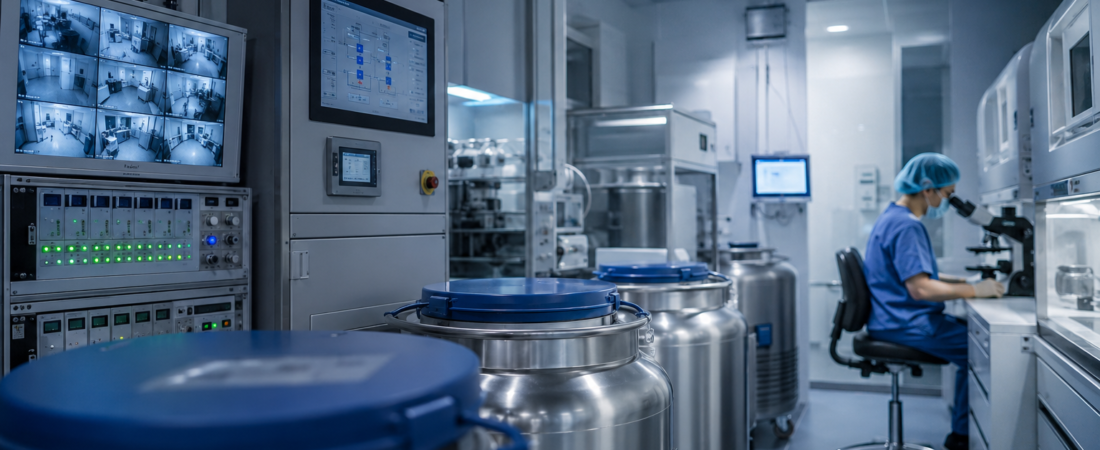
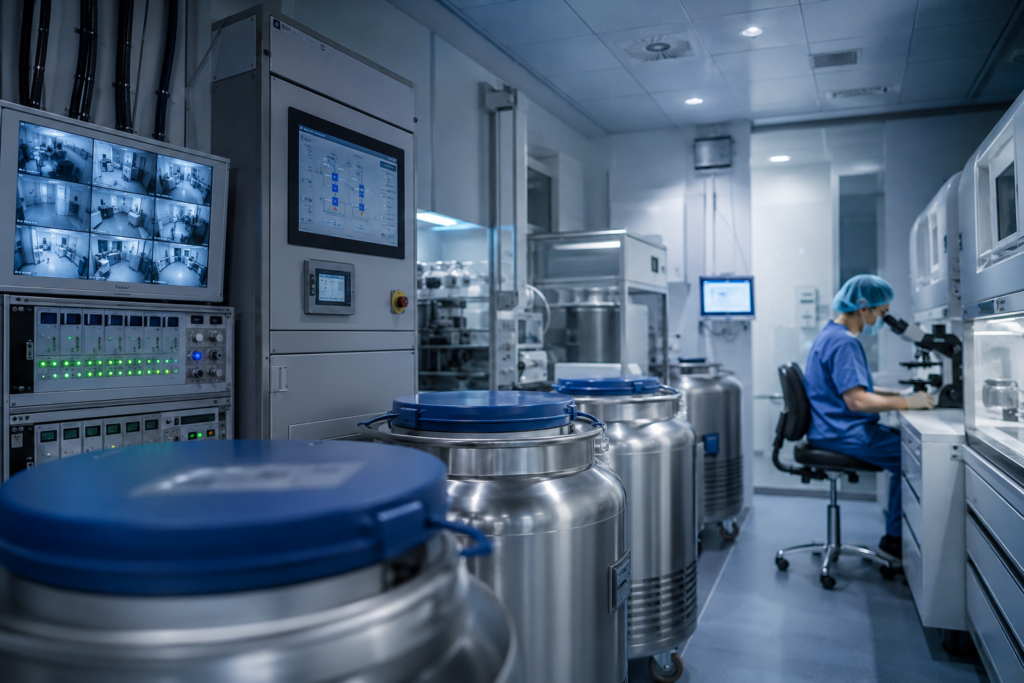
Frozen embryos, eggs, and sperm are stored inside liquid nitrogen tanks at -196°C (-321°F). These tanks feature vacuum-insulated structures, meaning that even if external electricity is completely cut off, the internal temperature does not rise rapidly. This is why the likelihood of frozen embryos being damaged by a temporary power outage alone is extremely low.
However, this does not mean electricity is unnecessary.
Automatic sensors monitoring liquid nitrogen levels, remote alarm systems, and storage facility monitoring equipment all require power. Most IVF clinics operate 24-hour monitoring systems that instantly alert medical staff if any abnormalities occur in liquid nitrogen levels or temperatures, maintaining an emergency response protocol so staff can react immediately.
Protecting Embryos Inside Incubators
Embryos residing in incubators post-fertilization require even more meticulous protection. This is because fertilized eggs develop for 3 to 6 days inside incubators that maintain a constant temperature of 37°C—mimicking the human uterus—along with proper humidity and regulated carbon dioxide and oxygen concentrations. If this environment is disrupted, it can impact embryo development, making incubators one of the most strictly protected pieces of equipment in the hospital.
Most specialized fertility clinics establish and operate independent emergency power systems separate from external grids.
Under normal circumstances, they use electricity from the grid, but if a blackout occurs due to a lightning strike or substation accident, an Uninterruptible Power Supply (UPS) immediately supplies power to core equipment without even a split-second gap. This is followed by the automatic engagement of emergency generators, shifting the hospital to its own self-generated power. The transition happens so smoothly that patients typically do not even notice a power failure had occurred.
Consequently, equipment directly linked to life—such as incubators, frozen embryo storage facilities, liquid nitrogen monitoring systems, egg retrieval rooms, embryo transfer suites, anesthesia equipment, and microscopes—continues to operate normally during power outages.
Some large IVF centers stock enough fuel to run generators continuously for tens of hours and employ dedicated personnel to inspect power supply statuses in real time.
Facility Management Matters More Than Natural Disasters
Experts emphasize that the level of facility management is far more critical than natural disasters themselves.
Past IVF-related accidents reported internationally have frequently stemmed from poor equipment management, alarm system malfunctions, or human error rather than major typhoons or earthquakes. This means that no matter how cutting-edge a hospital’s equipment is, safety cannot be guaranteed if regular inspections and emergency response systems fail to function properly.
When choosing a hospital, patients should look beyond success rates and medical staff credentials to evaluate safety management systems.
Checking whether a hospital is equipped with a UPS and emergency generators, monitors its frozen embryo storage rooms 24/7, and maintains automated liquid nitrogen sensors with remote alarm systems can serve as crucial selection criteria. Increasingly, more fertility clinics are openly sharing these facility and management frameworks.
Conclusion
As climate change turns torrential downpours and lightning strikes into everyday occurrences, a hospital’s disaster response capability is becoming a new competitive edge in medical services. An IVF clinic is not merely a place for treatment; it is a sanctuary protecting the futures and new lives of countless families.
This is why multiple tiers of power backups and monitoring systems are constructed to safeguard embryos safely even when thunder rolls and entire cities plunge into darkness.
The success of fertility treatments is not accomplished through brilliant medical technology alone. Only when accompanied by robust safety systems capable of preserving life through any disaster scenario can patients entrust their hopes for new life with true peace of mind.
※ This article was written based on emergency power operation systems in domestic fertility clinics, safety management protocols for embryo storage, expert consultations, and related data. It does not replace a specific individual’s diagnosis or treatment, and actual medical judgment must be made through consultation with a specialist.
※ Images: Created using generative AI (ChatGPT, OpenAI); depicts fictional individuals, not real people.