
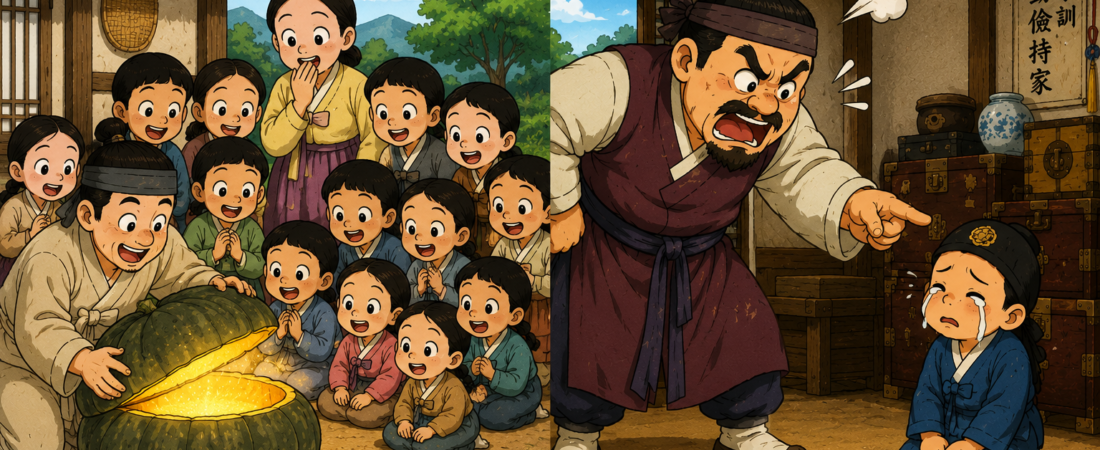
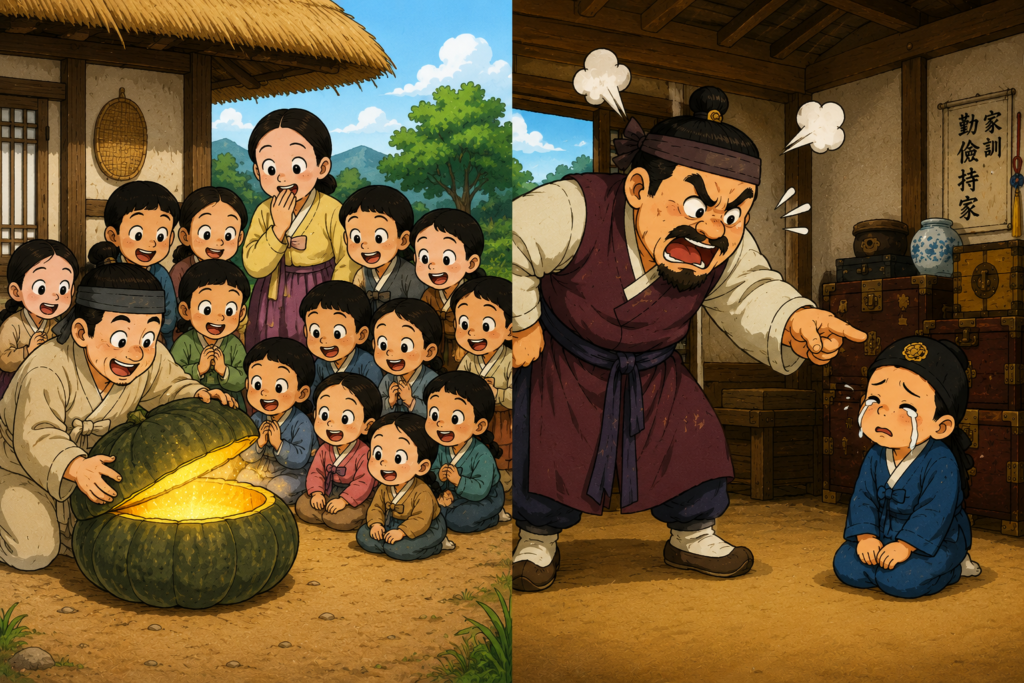
Lee Seung-ju’s Population Reader / Re-reading Classics through the Lens of Modern Demographics Survival Strategies of Two Families, Beyond the Labels of ‘Good’ and ‘Bad’
I read it thoughtlessly when I was a child. I was taught that Heungbu was a good man and Nolbu was a greedy one. However, re-reading The Tale of Heungbu after growing older, a completely different scene came into focus. Heungbu had twelve children despite having no rice to eat, often starving with his family.
On the other hand, Nolbu lived in a tiled house with overflowing storehouses and mountains of land and wealth, yet I had never heard of ‘Nolbu’s twelve children.’ A strange thought suddenly occurred to me: from today’s perspective, Heungbu represents high fertility, while Nolbu oddly mirrors the image of the modern parent who chooses to have few children.
Of course, the author of The Tale of Heungbu did not write this with the issue of low birth rates in mind. However, classics show new faces as eras change. Re-reading The Tale of Heungbu in today’s South Korea reads more like a sociology textbook that reflects on the relationship between childbirth and the economy, surpassing the simple moral of ‘rewarding good and punishing evil.’
By today’s common sense, Heungbu’s life is incomprehensible. How could he raise twelve children when he could barely feed himself? In these times, the first things he would hear are, “You don’t even have a house—you’re having more children?” or “How will you handle the cost of private education?” These are all too familiar conversations in South Korea today.
However, the calculation was different in the era Heungbu lived in. In an agrarian society, a child was not a drain on the parents’ wallet, but rather labor power that would build up the household. They were the most reliable support system—working in the fields, tending to livestock, and taking responsibility for the parents’ old age. As the number of mouths to feed increased, so did the number of hands to work; thus, Heungbu’s high fertility was not a special heroic tale but a landscape of life that was sufficiently understandable at the time.
Industrialization and urbanization completely flipped this formula. A child is no longer labor power, but the biggest project in a parent’s life. From postpartum care centers to daycare, English kindergartens, private education, university tuition, and wedding funds—the share parents must bear is endless. In the past, children fed the parents; now, parents invest more than half their lives for their children.
The Economics of Family Seen by Flipping The Tale of Heungbu
As the economic meaning of viewing a child changed, the parents’ choices changed as well. It is not because they don’t love their children. It is because they want to provide more education and more opportunities to each one. In economics, this is explained as a “society that invests in the quality rather than the quantity of children.”
This change is even more pronounced in affluent areas. The more intense the competition for education, the stronger the tendency to reduce the number of children and concentrate on educational investment. It is not that there is no money to raise children, but that the level of investment in a single child is too high. The love has grown, but the burden of raising them has grown faster.
Therefore, low birth rates are often misunderstood. People say it is a problem caused by the changing values of the young generation. But have people really changed? If Heungbu were placed in a reality where he had to calculate Seoul’s jeonse (deposit-based rent) prices and educational expenses today, would he have really had twelve children? If Nolbu lived in today’s world, he wouldn’t have had multiple children just because he had the wealth.
Ultimately, what has changed is not Heungbu and Nolbu, but the era. In the Joseon Dynasty, a child was an asset responsible for livelihood; now, they are beings for whom parents must take full responsibility. Childbirth is not decided by love alone. It has become an issue that requires calculating the anxieties regarding housing, education, care, jobs, and the future.
The government says, “Have children.” But what parents truly want to hear is not “Have a child,” but the promise, “We will raise the child with you.” Fertility rates do not rise with slogans alone. Creating reliable care, affordable housing, and a non-overheated educational environment comes first. What the government and local municipalities should compete over is not the amount of childbirth grants, but the creation of ‘the best city to raise children.’
The true ending of The Tale of Heungbu is not in Heungbu becoming rich. It is in embracing Nolbu, who lost everything, and living together. It is about the community reconnecting broken relationships. The low birth rate is the same. In a society where parents raise children alone, both Heungbu and Nolbu have no choice but to hesitate about having a second child. Only when there is a promise from society to raise children together can the ending of The Tale of Heungbu begin again in today’s Republic of Korea.