

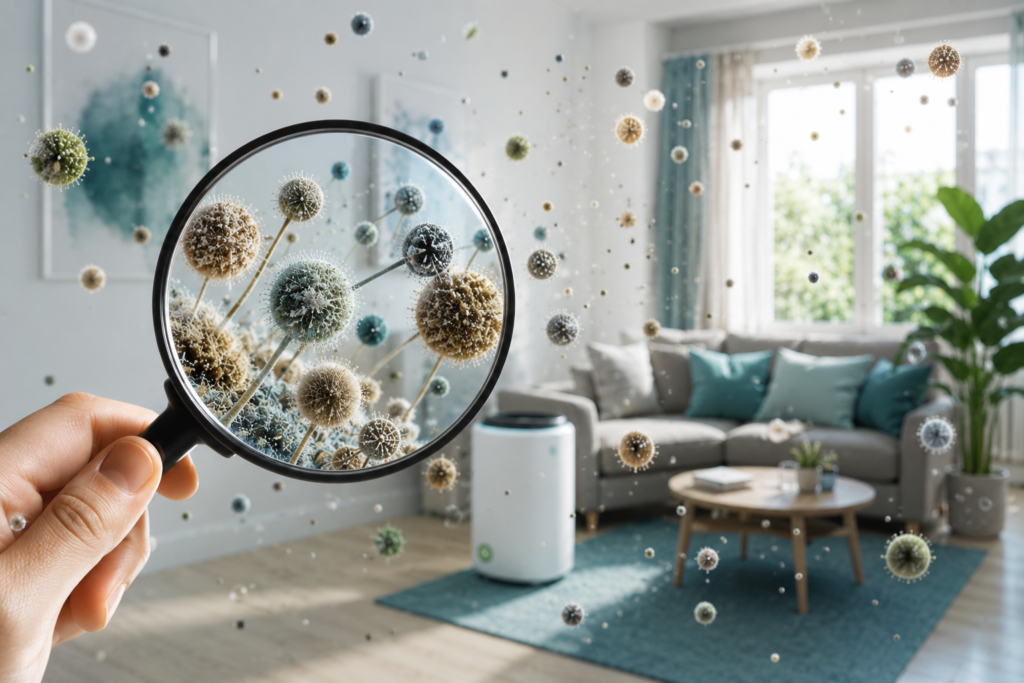
As Humidity Rises, Inflammation Within the Body Grows
During the rainy season, water droplets cling to windows, and black mold spreads in bathroom silicone and corners of the veranda before you know it. Laundry doesn’t dry for days, and a musty smell permeates the house. Most people think of this as just an inconvenience that comes with the changing season.
However, recent studies in reproductive medicine and environmental medicine are paying attention to the possibility that the indoor environment during the rainy season is not merely a lifestyle issue, but one that changes systemic inflammation and the immune system, potentially affecting the uterine environment of women preparing for pregnancy.
In infertility treatment, age, hormones, ovarian function, and embryo quality have long been considered the most important factors. Recently, however, variables such as sleep, stress, obesity, fine dust, endocrine disruptors, and now indoor air quality have emerged as new factors that can influence pregnancy success rates. In particular, research suggests that during periods when indoor humidity rises, like the rainy season, the simultaneous increase in mold, house dust mites, and the volatile organic compounds (microbial VOCs) produced by mold can trigger chronic inflammation in the body.
Mold is not just a microorganism that turns wallpaper black. It releases countless spores, hyphae, and various toxic metabolites into the air. Some molds produce toxic substances called mycotoxins. It is known that long-term exposure to these can not only cause respiratory diseases but also consistently stimulate the immune system, leading to systemic inflammatory responses. In the field of environmental toxicology, studies consistently raise the possibility that such chronic exposure may affect not only the liver, kidneys, and nervous system but also reproductive function.
Recently, the medical community is focusing most on ‘low-grade chronic inflammation.’
Even if there are no specific symptoms, if immune cells are stimulated for a long period, inflammatory cytokines such as Interleukin-6 (IL-6) and Tumor Necrosis Factor-alpha (TNF-α) consistently increase. It is a state like a small, invisible spark continuously burning inside the body. Research is rapidly increasing, suggesting that such chronic inflammation can affect not only cardiovascular disease or diabetes but also reproductive function.
During the Rainy Season, the Uterus Also Finds It Harder to Breathe
The uterus is not just a space to carry a baby. It is a highly sophisticated immune organ that must appropriately suppress immune responses to accept a fertilized egg, while at the same time blocking external pathogens. For a fertilized egg to implant, the endometrium must maintain a delicate immune balance; if the entire body is in a state of chronic inflammation, this balance may be disturbed. In fact, abnormalities in the endometrial immune environment have become an important field of research regarding recurrent implantation failure or unexplained infertility, and studies reporting the link between increased inflammatory cytokines in the endometrium and reduced implantation rates are being published steadily.
Among the studies published this year, one that drew particular attention was the report that mycotoxins were detected in the follicular fluid of women undergoing In Vitro Fertilization (IVF). A research team at Semmelweis University in Hungary analyzed the follicular fluid of IVF patients and announced that several types of mycotoxins were identified, some of which were present at higher concentrations than in the blood. The researchers explained that mold toxins could reach the environment around the ovaries, suggesting the possibility of increased oxidative stress, hormonal disruption, and changes in follicle development. Although the scale of the study is not yet large, it is evaluated as a meaningful result showing that environmental toxins can actually affect the area around reproductive organs.
Similar conclusions were presented in a review in the field of reproductive medicine. Researchers analyzed that mycotoxins might be involved in decreased ovarian function, menstrual irregularities, and changes in the implantation environment in women, and in men, they could be related to sperm motility, DNA damage, and decreased sperm production. However, they emphasized that research on humans is not yet sufficient to conclude that mold is a direct cause of infertility and that further research is needed.
House dust mites, which also increase during the rainy season, cannot be ignored either. House dust mites and mold exacerbate allergic rhinitis, asthma, and atopic dermatitis. Such allergic diseases are not just problems of the nose or skin; they consistently stimulate systemic immune responses. In the bodies of allergy patients, inflammatory cytokines increase, and some studies suggest that this chronic inflammatory environment may reduce endometrial receptivity. In other words, a season where the nose is sensitive might be a season where the uterus is also sensitive.
IVF procedures fertilize eggs and sperm in a lab, but the ultimate success is determined in the uterus. No matter how high-grade an embryo is transferred, if the endometrium is not ready to accept the fertilized egg, implantation is difficult. Thus, recent infertility treatment is rapidly changing from an era of managing only hormones and embryos to an integrative medical approach that also manages sleep, stress, weight, diet, exercise, environmental pollution, and indoor air quality.
Fertility specialists advise that maintaining indoor humidity at the 40–60% level during the rainy season and ventilating the house even for a short time twice or thrice a day is helpful. It is best to remove mold from bathrooms, window frames, and inside air conditioners as soon as possible, and use bedding only after sufficiently drying it. Especially for couples preparing for pregnancy, using a dehumidifier, checking for leaks, and cleaning air conditioner filters should be considered part of health care.
Living in a house with mold does not necessarily make pregnancy impossible. To date, there is no decisive research that proves this. However, the latest reproductive medicine does not look for the causes that hinder pregnancy only inside the ovaries and uterus. It is slowly uncovering the fact that the air and environment inside the home, where people breathe and live every day, are also an important part of reproductive health.
Small mold spreading on the window frame during the rainy season is not just an unsightly stain. It might be a signal of an environment that can shake our body’s immune system and foster chronic inflammation.
Pregnancy is not achieved solely with healthy eggs and sperm. It is completed only when a uterus that can warmly accept a fertilized egg and a living environment that keeps that uterus healthy are both in place. A rainy season deep clean might not just be about making the house clean, but perhaps the first infertility treatment to prepare an environment to welcome a new life.
※ This article was written by synthesizing environmental toxicology and reproductive medicine research published in 2025–2026 (mycotoxins and reproductive function, mold toxins in IVF patients’ follicular fluid, endometrial immune environment research, etc.). It does not replace specific individual diagnosis or treatment, and actual medical judgment must be made through consultation with a specialist.
※ The images used in this article were created using generative AI (ChatGPT, OpenAI) and depict fictional individuals, not real people.