
Awaken the Egg’s Power Plant… The Truth Behind the CoQ10 Craze
Among women preparing for fertility treatment, one of the most frequently heard supplement names is CoQ10 (Coenzyme Q10). It is commonly found in hospital waiting rooms, on online fertility forums, and in the bags of women preparing for In Vitro Fertilization (IVF). So, does CoQ10 really help eggs?
To start with the conclusion, CoQ10 is a nutrient involved in mitochondrial energy metabolism within the egg. However, this does not mean that “taking it guarantees pregnancy.” The reason reproductive medicine researchers are interested in it is related to the decline in mitochondrial function observed in aging eggs.
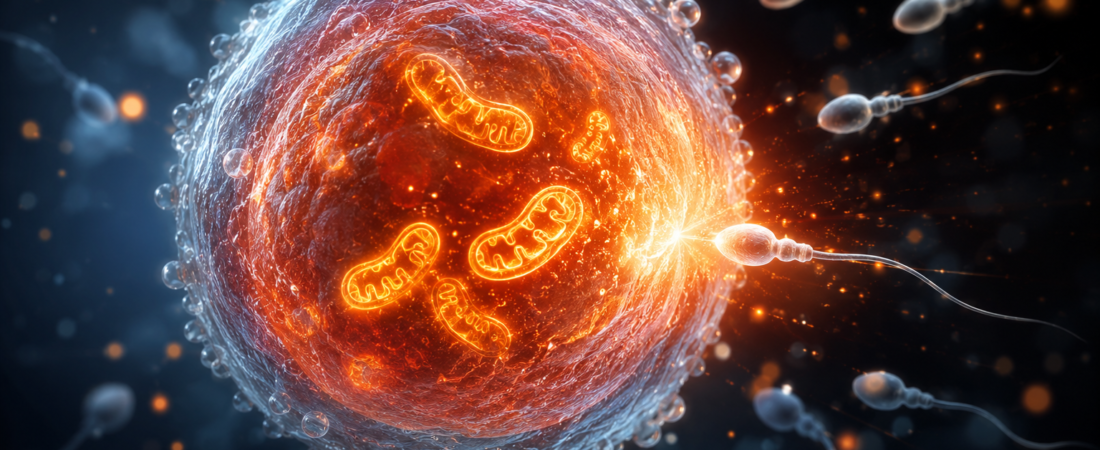
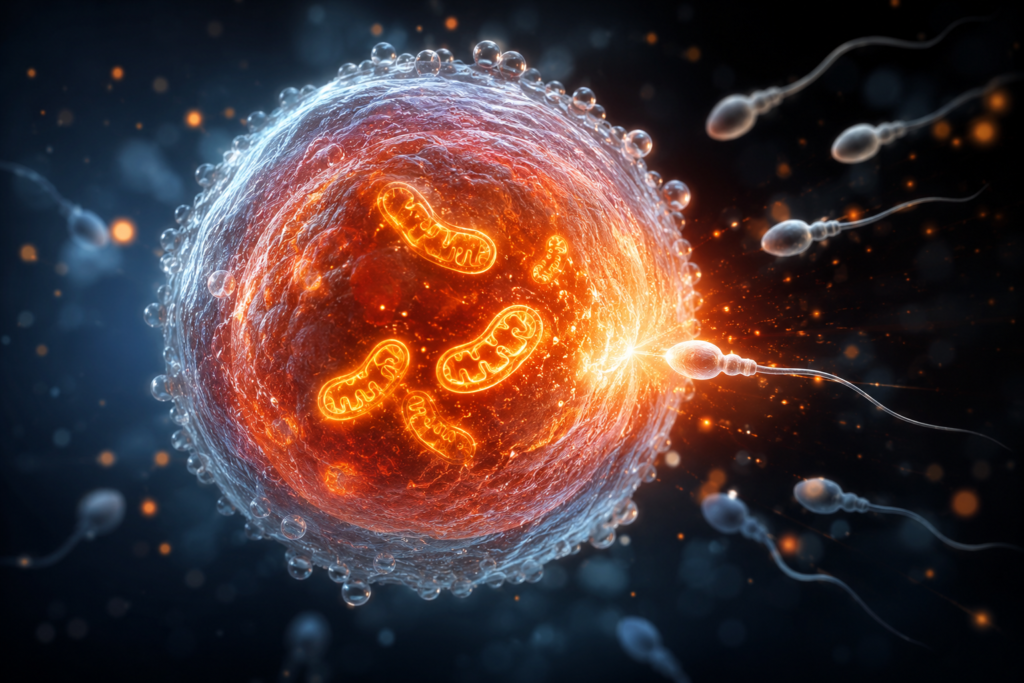
Every cell in our body contains a tiny power plant called the mitochondria, which is the organelle responsible for producing the energy necessary for cell survival. The egg is no exception. In fact, the egg is one of the cells with the highest number of mitochondria in the human body. This is because an enormous amount of energy is required for the processes of fertilization and embryonic cleavage.
The problem is that mitochondrial function declines with age. One of the reasons for the decline in egg quality after the late 30s is identified as mitochondrial aging. Research has been published suggesting that when energy production capacity decreases, the likelihood of errors occurring during chromosome separation increases, which can also affect embryo development.
This is where CoQ10 enters the picture.
The Power to Create an Embryo Depends on the Power Plant Inside the Egg
CoQ10 is a substance directly involved in the energy production process within the mitochondria. In simple terms, it acts as an assistant that helps the cellular power plant produce electricity. It also protects cells from free radicals through powerful antioxidant activity.
Interestingly, animal studies have produced noteworthy results. Research has reported that when CoQ10 was administered to aging mice, mitochondrial function and ovulation capacity in their eggs improved.
Subsequent studies on humans followed, and research has been published suggesting the possibility of increased follicle counts and a higher number of retrieved eggs in women with diminished ovarian reserve (DOR) or older women undergoing fertility treatment.
However, there is an important caveat here: there is still insufficient strong evidence to conclude that CoQ10 definitively increases pregnancy or birth rates. While some studies have shown positive results, others have failed to find significant differences. This is because the scale of these studies is small, and the patient groups are diverse.
Therefore, the current stance of the reproductive medicine community is relatively cautious. CoQ10 has the potential to be involved in egg energy metabolism, and its safety profile appears relatively high, making it a viable supplement for auxiliary use. However, it is not a treatment that can reverse egg aging or guarantee pregnancy on its own.
Nevertheless, the reason fertility specialists are interested in CoQ10 is clear. While there is no way to create new eggs, if it is possible to improve the energy production capacity of the remaining eggs even slightly, it could be helpful. This is especially true for women preparing for pregnancy with diminished ovarian reserve or advanced maternal age, where “egg quality” becomes a more critical issue than “egg quantity.”
Ultimately, CoQ10 is neither a miracle drug nor should it be dismissed as a mere health supplement. The reason reproductive medicine researchers pay attention to it is that it targets the mitochondria, the power plant of the egg, rather than the nucleus.
As the current trend in fertility research expands from a hormone-centric approach to one focused on cellular energy metabolism and mitochondrial function, it is expected that more research results regarding CoQ10 will emerge in the future.
One fertility specialist explained, “An egg is essentially a cell that runs on energy. There is sufficient possibility that mitochondrial health affects egg quality, but rather than placing excessive expectations on a single supplement, overall health management—including weight control, exercise, sleep, and smoking cessation—must accompany it.”
The essence of the CoQ10 craze lies not in the supplement itself, but in the signal that the paradigm of infertility treatment is changing. If the past was the era of hormones, now is the era of cellular energy. Researchers are focusing not only on stimulating the ovaries to retrieve many eggs but also on how healthily the mitochondria inside the egg produce energy. The center of gravity in fertility treatment is moving from “quantity” to “quality,” and then to “energy.”