
Fat, Feared as Weight Gain, Is Actually the Building Block of Life
“Greasy food is bad for your health.”
This is one of the most familiar health maxims for modern people. When deciding to lose weight, fat is the first thing to be reduced, and when choosing food, the fat content is the first thing checked.
In particular, many women preparing for pregnancy avoid fat altogether out of fear of weight gain. However, from the perspective of reproductive medicine, fat is not just a nutrient that becomes body weight. Fat is a core ingredient for producing hormones necessary to maintain reproductive function.
Human reproduction operates on a regulation system so sophisticated that it is often called the “art of hormones.” Estrogen and progesterone, which regulate female ovulation, and testosterone, which helps male sperm production, are all synthesized starting from cholesterol.
While cholesterol has long been perceived as a primary culprit behind cardiovascular disease, it is, in reality, an essential substance for constructing cell membranes and synthesizing Vitamin D and steroid hormones. Without cholesterol, sex hormones cannot exist; without sex hormones, reproductive function cannot be maintained.
The problem lies in the extreme diet culture spreading recently. One meal a day, fat-depleted diets, overly low-carbohydrate diets, and weight loss accompanied by excessive exercise do not just reduce weight; they can also reduce the energy and nutrients necessary for reproductive function.
In fact, if the body fat percentage becomes excessively low, the reproductive hormone axis connecting the hypothalamus, pituitary gland, and ovaries can become unstable, leading to ovulation disorders.
In severe cases, it can even lead to amenorrhea, where menstruation stops for several months or more. This is why amenorrhea is frequently observed in marathon runners, ballerinas, and athletes preparing for fitness competitions.
Reproduction is a function that requires far more energy than one might think. When survival is threatened, the human body prioritizes survival over reproduction. If nutrient supply is insufficient or weight drops rapidly, the body reduces its investment in pregnancy and childbirth and concentrates its resources on maintaining life. This is part of the human survival strategy that has evolved over hundreds of thousands of years.
Eggs are also deeply related to fat. An egg is the largest cell in the human body and stores substantial energy needed for the initial growth of an embryo after fertilization. Until the placenta is formed, the embryo relies on the energy stored by the egg to continue dividing. An egg is not just a cell containing genes; it is an energy reservoir for beginning a new life.
Of course, there is a misunderstanding to avoid here: it does not mean that because fat is important, eating more of it makes pregnancy easier. On the contrary, obesity can cause ovulation disorders, polycystic ovary syndrome (PCOS), insulin resistance, and reduced male sperm function. What reproductive medicine emphasizes is not the quantity of fat, but the quality.
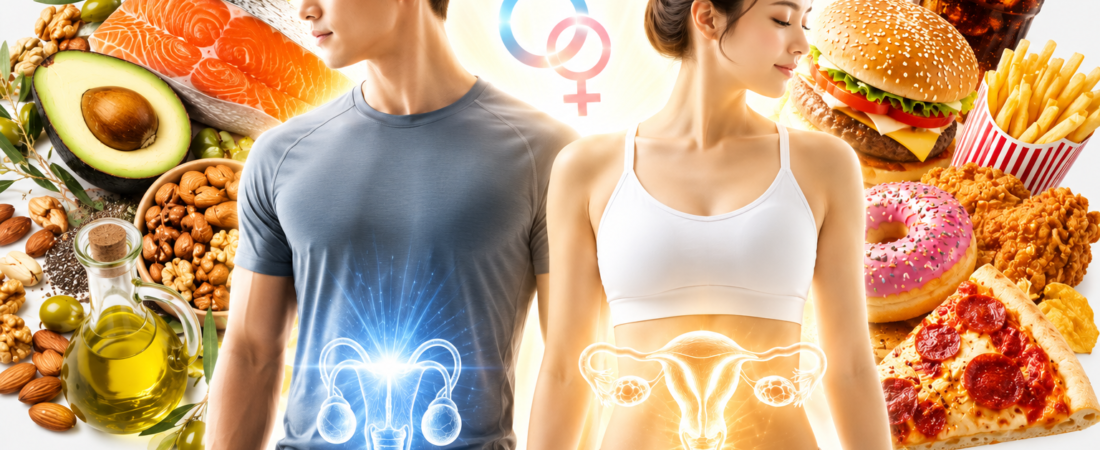
There is a clear difference in fats. Trans fats, often found in fast food, fried foods, and processed products, are known to increase inflammation in the body and worsen metabolic function.
On the other hand, research results continue to be reported suggesting that omega-3 fatty acids in fatty fish and unsaturated fatty acids abundant in nuts and olive oil may have a positive impact on not only cardiovascular health but also reproductive health.
Ironically, modern society has become an era that worries about obesity while simultaneously longing for underweight status. On social media, a thin body is consumed as the ideal body, and a culture that views body fat itself as an enemy is spreading among young women. However, reproductive medicine delivers a completely different message: a body that is too thin is not a healthy body.
A healthy body is not simply one with a low number on the scale. A truly healthy body is one where hormones are produced normally, ovulation occurs regularly, and there is sufficient energy to handle pregnancy and childbirth.
The era that says fat must be reduced unconditionally is coming to an end. It is now time to worry not about how little to eat, but about what kind of fat to eat. The good fats found in fish, nuts, olive oil, and avocados are not symbols of obesity. They are the ingredients that make hormones, maintain cells, and prepare for the beginning of a new life.
Reproductive medicine reminds us again of a simple but important fact: before fat is a substance that becomes weight, it is the ingredient that makes life.