
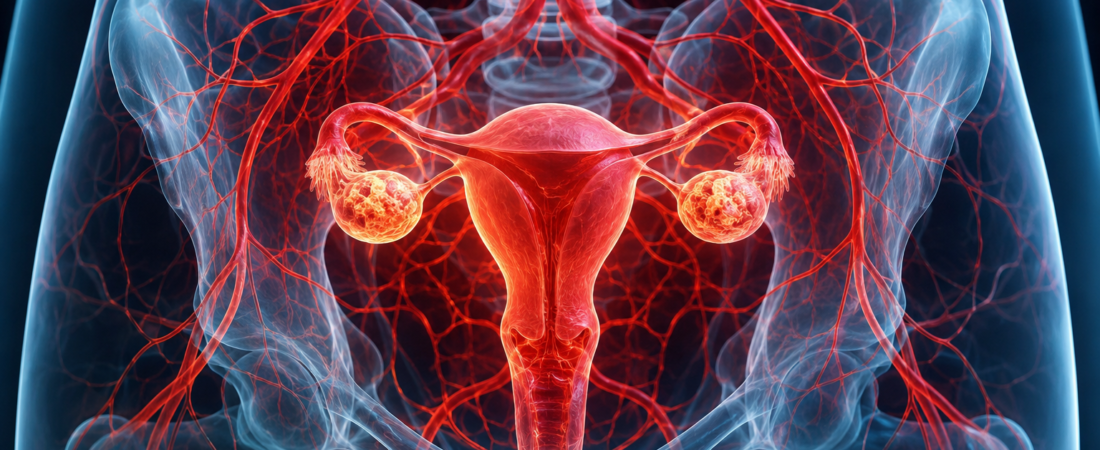
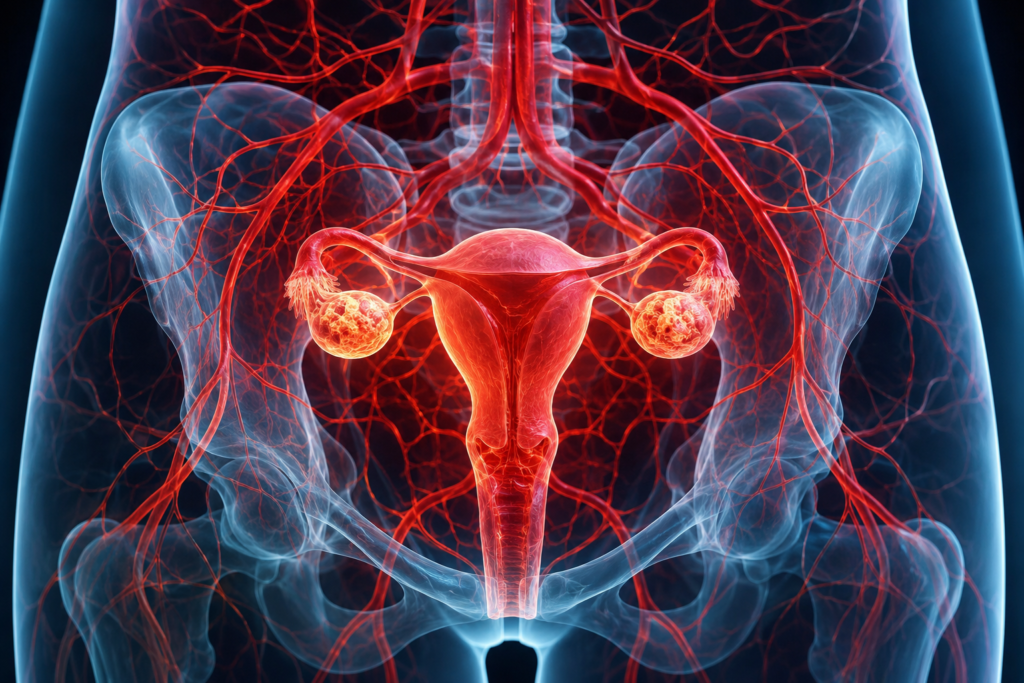
The Hormone Expressway: If Blood Flow Stops, Reproduction Stops Too
Pregnancy is often explained simply as the meeting of an egg and a sperm. However, if you look at it through the lens of reproductive medicine, pregnancy is a far more complex process.
The mere existence of healthy eggs and sperm does not automatically lead to pregnancy. Behind them, there is a complex movement of hormones, blood that transports those hormones, and ovaries and a uterus that receive that blood. Ultimately, life begins on the vascular system.
The female reproductive system is one of the most dynamically changing tissues in the human body. Every month, dozens of follicles in the ovaries compete to grow, and the endometrium repeatedly thickens to welcome a fertilized egg, only to be shed if no implantation occurs. All these changes are possible only when there is a constant supply of oxygen, nutrients, and numerous hormonal signals.
There is a fact that many people overlook: while female reproductive function is regulated by hormones, hormones can only move through the blood.
Follicle-Stimulating Hormone (FSH) and Luteinizing Hormone (LH) secreted by the pituitary gland travel through the blood to the ovaries, issuing instructions for follicle growth. Estrogen and progesterone produced in the ovaries are also delivered to the uterus through the blood, transforming the endometrium into a state receptive to implantation. If there were no blood flow, there would be no hormones—or more accurately, even if the hormones existed, they could not reach their destination.
Blood is more than just a means of transport; it is the communication network and the logistics system that connects the reproductive organs. The ovaries and the uterus constantly exchange information through blood vessels.
If blood vessels are roads, then hormones are the signal systems running on them. Just as goods cannot arrive if a road is blocked, the functions of reproductive organs inevitably suffer if the blood flow environment is poor.
In fact, reproductive medicine evaluates uterine and ovarian blood flow as key indicators. Sufficient blood flow supports follicle growth and endometrial development; conversely, if the blood flow environment is poor, it becomes more likely that the follicles and the endometrium will fail to reach an optimal state.
Of course, improving blood circulation alone does not solve all infertility issues. Numerous variables exist, such as age, ovarian function, sperm status, and embryo quality. However, it is hard to deny that healthy blood flow is the fundamental foundation of reproductive function.
Therefore, one cannot discuss ovarian and uterine health without discussing vascular health. What efforts should be made for vascular health?
First, regular exercise is the most certain way to improve vascular function and increase pelvic blood flow. Second, reduce sedentary time spent sitting for long periods. Third, ensure sufficient sleep. Fourth, maintaining an appropriate weight can prevent the decline of reproductive function. Fifth, smoking should be particularly avoided. Smoking constricts blood vessels and damages the microvessels of the ovaries, which can accelerate the aging of eggs.
In conclusion, reproductive health is not just a matter of hormones; it is also a matter of blood vessels. For the ovaries to create healthy eggs and for the uterus to nurture life, hormones are needed; for hormones to move, blood is needed; and for blood to move, blood vessels act as the expressway.
It is no exaggeration to say that the very first moment life begins is not the meeting of an egg and sperm, but within the blood vessels heading toward the ovaries and the uterus.