

“Only 4% are normal, and you’re telling me this is a good result?”
This is the standard reaction of most men reviewing their first semen analysis. Instinctively, we equate “normal” with a “majority.” If a manufacturing plant produced 96% defective products, it would be shut down. Yet, according to the World Health Organization (WHO), a strict morphology (normal shape) of 4% or higher is clinically classified as normal.
To understand this apparent paradox, we must look at the male reproductive system not as a failure, but as an engine of extreme biological filtration.
The High-Volume Manufacturing Model The human testicle does not operate as a boutique workshop crafting elite, perfect cells; it is a relentless, high-volume manufacturing plant. A single ejaculation contains tens to hundreds of millions of sperm. When a biological system operates at this velocity, the structural error rate is staggeringly high.
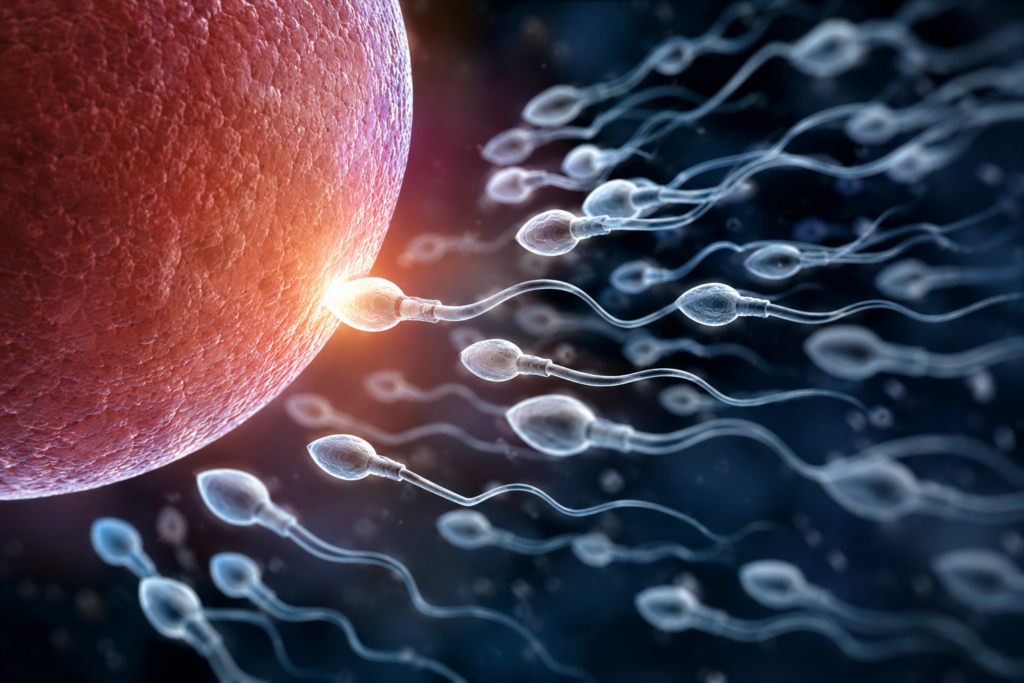
Under a microscope, the reality of human sperm is chaotic. You will see sperm with macrocephalic (abnormally large) or microcephalic (abnormally small) heads, double tails, and severe structural disproportions. The sleek, perfect “tadpole” depicted in biology textbooks is, in reality, a statistical minority. The 96% defect rate is not a biological malfunction; it is the built-in cost of mass production.
Beyond the Packaging: DNA Fragmentation Morphology only measures the exterior packaging. Modern reproductive medicine is increasingly shifting its focus to the cargo inside: DNA Integrity.
A sperm cell can look structurally flawless under a microscope but carry highly fragmented (damaged) genetic material. In clinical settings, it is common to see cases where standard semen parameters (count, motility, morphology) are completely normal, yet couples experience recurrent miscarriage or poor embryo development. In these cases, DNA fragmentation is often the hidden variable.
The Impact of Systemic Rust: Oxidative Stress Sperm cells are notoriously vulnerable to oxidative stress. Stripped down for speed, they lack the robust DNA repair mechanisms found in other cells. When the body’s systemic environment degrades, reactive oxygen species (ROS) accumulate and destabilize the sperm’s DNA. The primary drivers are measurable lifestyle variables:
- Toxins: Smoking, excessive alcohol, and exposure to endocrine disruptors/microplastics.
- Metabolic Load: Obesity and poor diet, which sustain systemic inflammation.
- Thermal Stress: Elevated testicular temperatures from prolonged sitting or tight environments.
- Systemic Fatigue: Chronic sleep deprivation and psychological stress.
The Variable of Age While men do not experience a sudden biological cliff like menopause, the male system is not immune to time. As a man ages, the efficiency of his biological quality control degrades. The rate of DNA fragmentation naturally increases, meaning the internal quality of the sperm can decline even if the external morphology remains within the 4% threshold.
Conclusion: A System of Extreme Filtration A 4% morphology score is not a verdict of systemic failure. Fertility is a highly complex, multi-variable equation. The human reproductive system is designed around extreme competition. Millions of sperm are deployed so that the environment can filter out the anomalies, allowing only the most structurally and genetically viable cell to reach the target.
When reviewing a semen analysis, do not fixate on the 96% that failed the visual quality control. Recognize that the system is functioning exactly as designed—producing volume to ensure that the critical 4% exists.
Sources: WHO Laboratory Manual for the Examination and Processing of Human Semen; Agarwal A. et al. (Research on male infertility and oxidative stress); Clinical data on sperm DNA fragmentation.
Disclaimer: This report is for informational purposes. A single semen analysis is just one metric in a systemic evaluation. Please consult with a urologist or fertility specialist for a comprehensive interpretation of your reproductive health.