
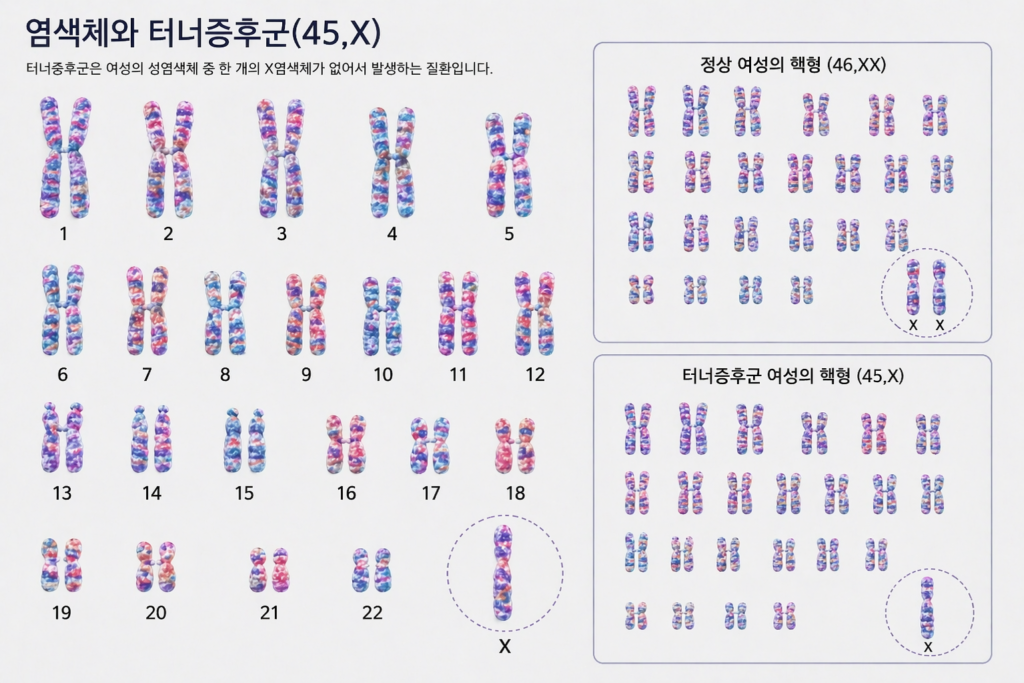
For many, a diagnosis of Turner Syndrome (45,X) comes as a profound surprise, often discovered only after facing the challenges of infertility. Because the condition can present with subtle physical signs, it is frequently misattributed to a “constitutional delay” in growth or development. However, the underlying chromosomal reality—the absence or partial deletion of an X chromosome—leaves a deep and permanent imprint on a woman’s reproductive system.
The Reproductive Mechanism: A Depleting Reserve The core challenge in Turner Syndrome is the premature loss of ovarian follicles. Most women with this condition are born with a limited “pool” of follicles, and those that do exist often undergo rapid attrition. This results in primary ovarian insufficiency (POI), where the ovaries fail to produce sufficient eggs or sustain regular hormonal cycles. For many, this leads to delayed puberty, irregular menstruation, or total ovarian failure.
While “Mosaic” Turner Syndrome—where some cells carry the normal 46,XX configuration—may allow for partial ovarian function, spontaneous pregnancy remains a statistical rarity. For most, the biological path to pregnancy necessitates the use of donor eggs via IVF.
The Greater Challenge: Physiological Safety The central concern for a patient with Turner Syndrome is not merely achieving pregnancy, but surviving the physiological demands of it. This condition is not just a reproductive concern; it is a systemic one.
- The Cardiovascular Risk: Turner Syndrome is significantly associated with structural cardiovascular anomalies, particularly coarctation of the aorta or bicuspid aortic valves. The aorta, the body’s main artery, is often inherently fragile.
- The Stress of Pregnancy: Pregnancy naturally increases blood volume and cardiac output by 30% to 50%. In a patient with an already vulnerable cardiovascular system, this added burden can trigger life-threatening events such as aortic dissection.
- Pregnancy-Related Complications: Beyond cardiac risks, patients are at a higher likelihood of developing gestational hypertension, preeclampsia, and preterm delivery.
A Strategic Roadmap for Parenthood If you have been diagnosed with Turner Syndrome, your path to pregnancy requires a specialized, multidisciplinary roadmap:
- Prioritize Cardiovascular Screening: Before attempting any conception, a comprehensive evaluation by a cardiologist is non-negotiable. This must include an echocardiogram and, in many cases, cardiac MRI to assess the dimensions and integrity of the aorta.
- Multidisciplinary Care: Your treatment team should not just include a reproductive endocrinologist. A high-risk obstetrician (maternal-fetal medicine specialist) and a cardiologist must be integrated into your care plan from day one.
- The Reality of Donor Cycles: Since the patient’s own ovaries are often limited in function, donor egg IVF is the most common path. Fortunately, the uterus is usually capable of carrying a pregnancy. The focus, therefore, shifts from “making eggs” to “optimizing maternal health” to ensure the uterus can safely support a fetus throughout gestation.
Conclusion: An Informed Journey A diagnosis of Turner Syndrome changes the strategy of parenthood, but it does not necessarily end the dream of parenthood. The path is more complex, requiring a rigorous commitment to cardiovascular health and meticulous medical oversight.
If you are pursuing pregnancy, remember that success is not just defined by a positive test result, but by a healthy outcome for both mother and child. Work with specialists who understand not just the reproductive challenges of Turner Syndrome, but the systemic implications as well. By prioritizing maternal safety, you are creating the strongest possible foundation for the family you wish to build.
Sources: Clinical literature on Turner Syndrome and reproductive outcomes (Journal of Clinical Endocrinology & Metabolism; Fertility and Sterility); cardiovascular risks in pregnancy (Circulation).
Disclaimer: This report is for informational purposes. Turner Syndrome involves significant health risks, particularly regarding cardiovascular integrity. If you have this diagnosis, you must undergo a formal medical clearance by a cardiologist and a maternal-fetal medicine specialist before attempting pregnancy.