

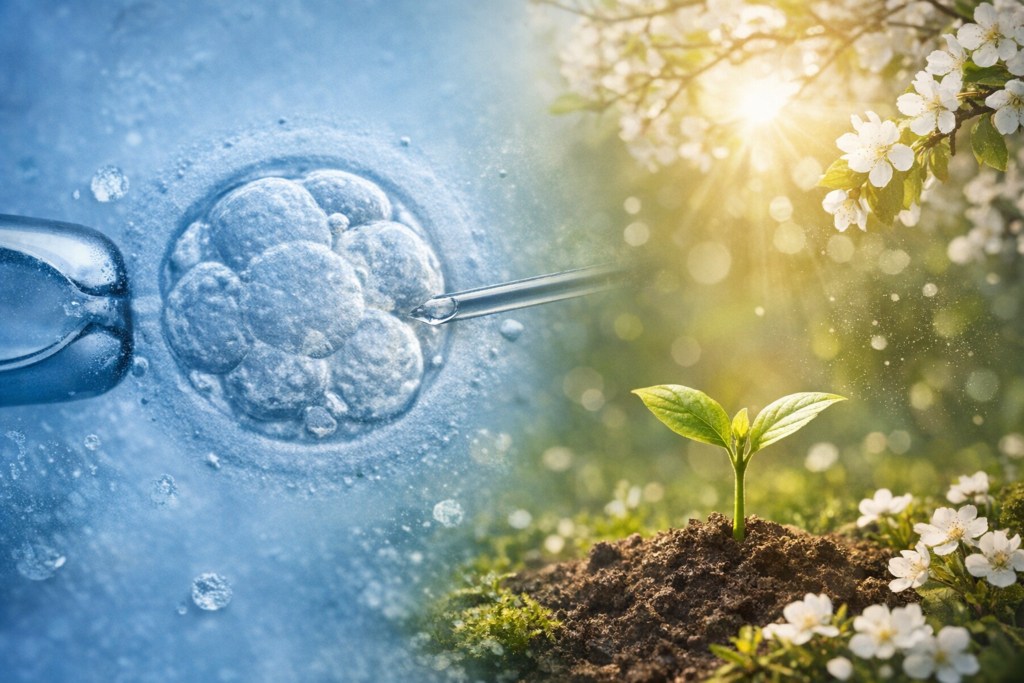
Spring is often romanticized as a season of hope, but from a reproductive standpoint, it is a period of biological flux. Changes in light, temperature, and environmental exposure subtly shift our internal rhythms. This flux serves as a poignant reminder of a truth that clinical practice is increasingly embracing: IVF success is not just about the quality of the embryo—it is about the harmony of the environment in which that embryo must thrive.
The Fallacy of Embryo-Centric Care For too long, the narrative of IVF has been dominated by the quest for the “perfect embryo.” We have refined our genetic screening, improved our grading systems, and obsessed over morphological perfection. While embryo quality is undeniably a prerequisite, it is not the sole determinant of success. An embryo, no matter how high its grade, is a passive passenger. It does not choose to implant; it must be received.
If the uterus is not prepared, the best embryo in the world will fail to take root. We are witnessing a fundamental shift in reproductive medicine: moving away from the obsession with embryo selection toward the meticulous optimization of the uterine environment.
The Uterus as a Precise Biological Soil Think of the uterus not as a static container, but as a dynamic ecosystem. This ecosystem is constantly reacting to external and internal variables:
- Immune Balance: Shifts in systemic inflammation can trigger subtle immune responses that reject an embryo before it even settles.
- Hormonal Rhythms: Even minor disruptions in the timing of progesterone exposure or melatonin levels can throw the “window of implantation” out of sync.
- Vascular Health: Optimal blood flow ensures that the endometrium is not just thick, but “functional”—a vital, nutrient-rich landscape rather than a sterile, thin layer.
The Shift Toward Integrated Management The new standard of care is moving toward “environment-centric medicine.” This approach prioritizes a holistic preparation phase before a frozen embryo transfer (FET). Instead of rushing to transfer as soon as an embryo is ready, clinicians are now focusing on:
- Systemic Inflammation Control: Addressing chronic inflammation that may be invisible but biologically detrimental to implantation.
- Hormonal and Metabolic Synchronization: Ensuring the internal system is stable and rhythmic.
- Personalized Timing: Utilizing tools like ERA (Endometrial Receptivity Assay) to ensure the “soil” is open for business at the exact moment the “seed” arrives.
Collaboration as the Path to Success This paradigm shift requires a new level of partnership between the patient and the specialist. It is a transition from viewing IVF as a technical procedure to viewing it as a coordinated physiological event.
As a patient, this means moving beyond asking “What is the grade of my embryo?” to asking, “How can we optimize my body’s environment to receive it?” It is a shift from passive anticipation to active, synchronized preparation.
Conclusion: Balancing the Equation Infertility treatment often looks like a race of technology, but in reality, it is a pursuit of balance. When the precision of laboratory technology meets the stability of a nurtured uterine environment, the probability of success shifts from a lottery to a managed process.
The farmer has known for centuries that the soil is as critical as the seed. It is time we apply this timeless wisdom to the miracle of life. Whether it is spring, summer, or winter, the goal remains the same: to create a home that is ready, waiting, and perfectly synchronized to welcome the life you are working so hard to create.
Sources: Recent clinical trends in IVF outcomes (Human Reproduction, Fertility and Sterility, Reproductive Biology and Endocrinology); consensus on endometrial receptivity and uterine environment management.
Disclaimer: This report is for informational purposes. Optimizing the uterine environment requires clinical assessment of your unique markers. Discuss your personalized preparation plan with your reproductive endocrinologist.