
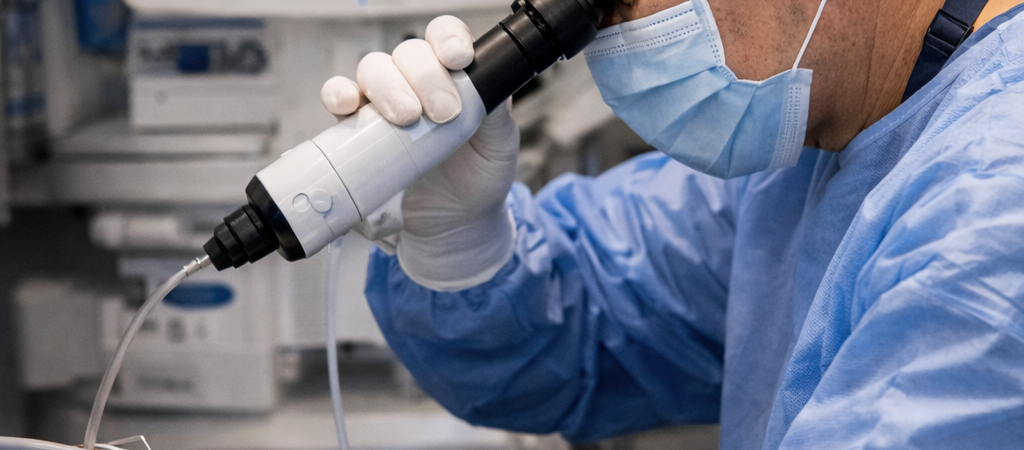
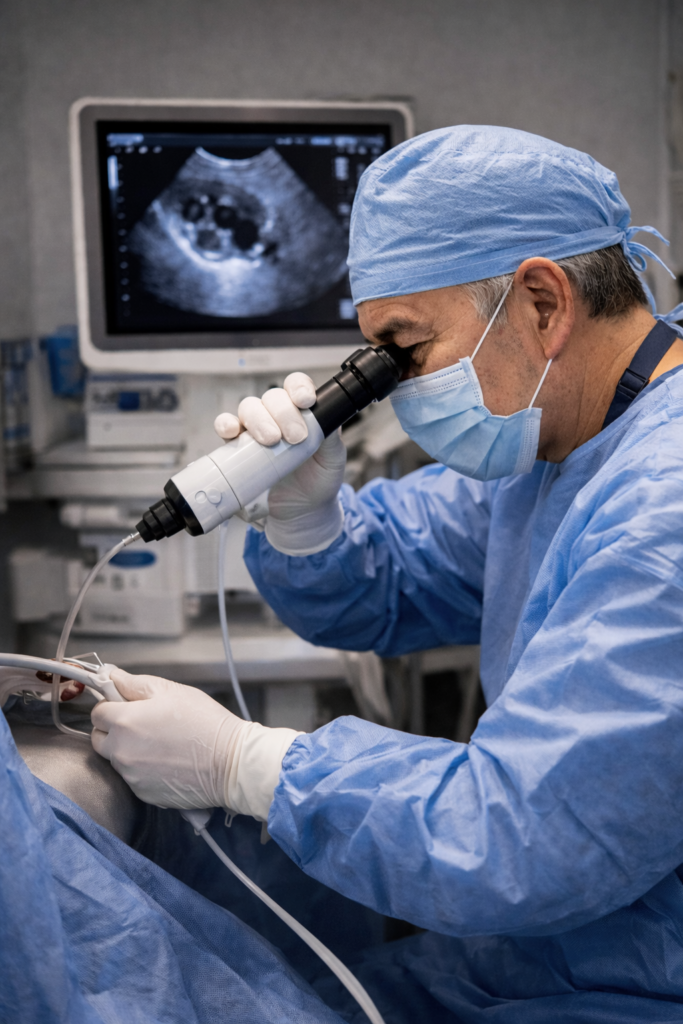
“Egg retrieval is not just a technical procedure; it is a clinical judgment.”
This statement captures the current reality of reproductive medicine. We have moved past the era where success is measured solely by the number of eggs collected. In the presence of an endometrioma—often referred to as a “chocolate cyst”—the procedure transforms from simple collection into a delicate navigation of damaged ovarian tissue.
The Reality of the Endometrioma An endometrioma is not merely a cyst sitting adjacent to the ovary; it is a structural invasion. It represents a state of chronic inflammation, fibrosis, and compromised blood flow. Within this environment, the “factory” that produces eggs is essentially under siege. The mitochondria within the eggs are exposed to oxidative stress, and the cellular environment is toxic, often leading to a discrepancy between the number of eggs collected and their actual potential to develop into healthy embryos.
The Complexity of Retrieval When a physician inserts a needle into an ovary compromised by an endometrioma, they are navigating a minefield:
- The Path of the Needle: The clinician must map a route that avoids the cyst. Piercing the cyst wall risks releasing old, inflammatory fluid into the pelvic cavity, which can lead to severe infections, such as ovarian abscesses—a complication that can turn a routine IVF cycle into a medical emergency.
- Strategic Sacrifice: There are times when a physician must decide to sacrifice the retrieval of a few follicles to protect the long-term integrity of the ovary. This is not a failure of technique; it is a triumph of clinical foresight.
Why Physician Choice is Decisive When endometriomas are present, the “standard protocol” is rarely sufficient. The choice of physician is the most significant variable in the cycle:
- Judgment over Speed: While high egg counts and rapid retrieval times are often touted as markers of a “successful” clinic, these metrics can be deceptive and even dangerous in the presence of cysts. A veteran specialist prioritizes structural safety and ovarian protection over sheer numbers.
- Customization: A senior specialist knows when to be aggressive and when to retreat. They interpret the anatomy of the ovary in real-time, deciding which follicles are worth the risk and which paths lead to potential complications.
The Shift Toward Precision We must move away from the idea that the ovary is a machine that performs better the harder it is pushed. In patients with endometriomas, the ovary is a fragile ecosystem. The more invasive and hurried the approach, the more you risk losing.
Choosing a specialist with extensive experience (often cited as 10+ years of senior practice) is essential. You are looking for a clinician who has seen enough complications to understand the nuance of “when to stop.”
Conclusion: Precision is the New Standard Reproductive medicine is evolving toward greater precision, and nowhere is this more evident than in the management of endometriomas. Your choice of physician is the most significant decision you will make in your IVF journey. Do not prioritize a clinic based on “average retrieval counts”; prioritize a specialist who demonstrates the wisdom to protect your ovarian health above all else.
Remember, in the presence of an endometrioma, what you don’t do is just as important as what you do. Success is defined not by how many eggs are collected today, but by how well your reproductive system is preserved for tomorrow.
Sources: European Society of Human Reproduction and Embryology (ESHRE) Endometriosis Guidelines (2022); clinical reviews on IVF strategies for patients with ovarian endometriomas.
Disclaimer: This report is for informational purposes. If you have been diagnosed with an endometrioma, consult with a senior reproductive endocrinologist to discuss the risks and benefits of various IVF protocols specific to your anatomical condition.