
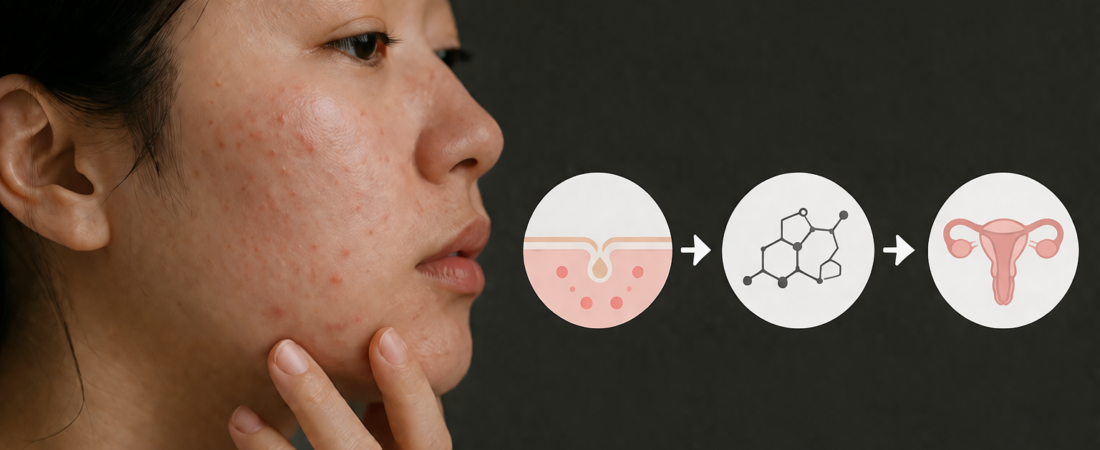
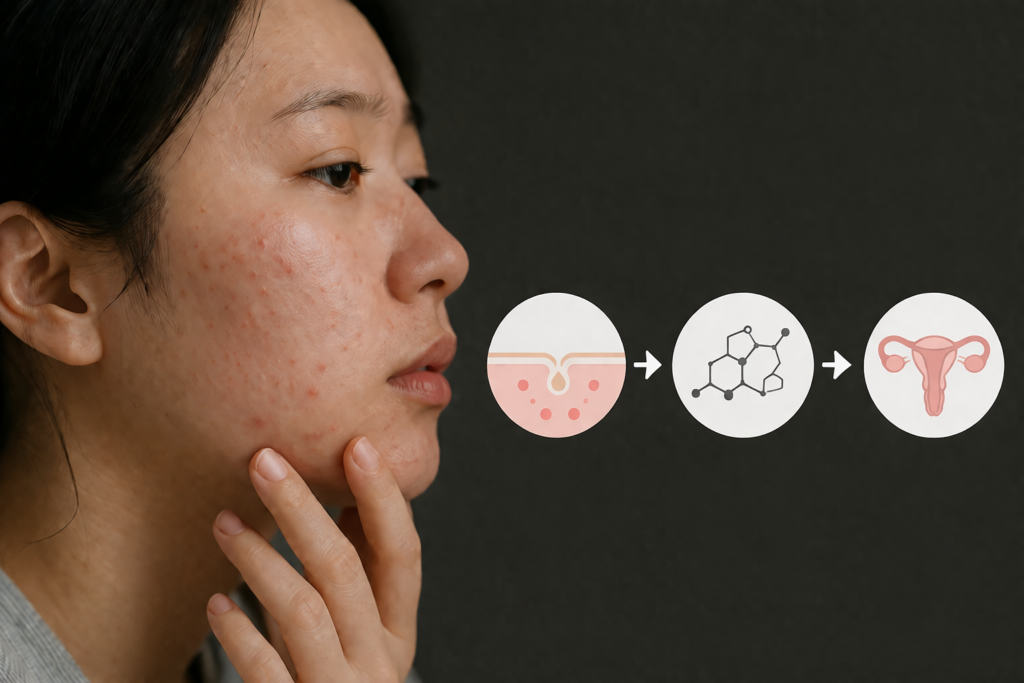
For many, a sudden flare-up of adult acne or persistent skin irritation is a frustration met with a trip to the dermatologist or a search for a more potent serum. But what if your skin is not the problem, but rather the messenger? Increasingly, reproductive endocrinologists are finding that dermatological issues—particularly those that prove resistant to topical treatments—are the first surface-level evidence of a deep-seated hormonal or metabolic breakdown that may also be impacting fertility.
The Skin: A Shadow of Your Internal System The skin is not an isolated organ; it is a physiological mirror. Hormones, inflammatory markers, and metabolic status all dictate the health of the skin barrier. When the body experiences systemic stress—whether it is insulin resistance, hormonal volatility, or chronic inflammation—the skin is often the first place to show signs of distress.
Consider conditions like Polycystic Ovary Syndrome (PCOS). Before a formal diagnosis of irregular ovulation is made, many women present with persistent acne, seborrheic dermatitis, or hormonal breakouts. This is not a coincidence; it is a clinical manifestation of androgen excess and insulin resistance, two major disruptors of both skin health and reproductive viability.
When Topicals Fail, Look Deeper When you treat skin issues topically while ignoring the underlying systemic drivers, you are merely silencing the alarm without extinguishing the fire. If you find yourself in a cycle of expensive dermatological procedures and products that yield only temporary results, it is time to ask: What is happening beneath the surface?
Key areas to investigate include:
- Hormonal Rhythms: Are your skin flare-ups coinciding with irregularities in your menstrual cycle?
- Metabolic Markers: Is your insulin sensitivity compromised? Chronic metabolic stress is a primary driver of both skin inflammation and compromised ovarian function.
- Systemic Inflammation: Is your body under constant oxidative stress, causing both dermatological sensitivity and potential impact on gamete quality?
The Integrated Perspective We must move away from the binary thinking that divides the body into “aesthetic” and “clinical” zones. Reproductive health is not confined to the uterus or the ovaries; it is a systemic process. When the internal system—comprising hormones, metabolism, and immune regulation—is in equilibrium, the skin remains stable as a natural consequence.
Modern research is already closing the gap between these fields. Emerging studies have begun to draw links between skin health and reproductive success, suggesting that systemic improvements in metabolic and hormonal health often result in simultaneous improvements in both complexion and fertility.
Conclusion: A Call for Holistic Observation Your skin is the most visible “window” into your internal system. Treating it as a superficial concern is a missed opportunity for early intervention. If you are preparing for pregnancy and experiencing persistent skin issues, treat these not just as a vanity problem, but as vital diagnostic clues.
Do not just ask for a stronger cream. Ask for a thorough evaluation of your hormonal profile, metabolic health, and inflammatory markers. By shifting your focus from the surface to the system, you aren’t just taking care of your skin—you are actively optimizing the environment for your reproductive health. The stability of your complexion may well be the most reliable indicator of the stability of your reproductive future.
Sources: Clinical correlations between androgen-related skin conditions (PCOS) and reproductive outcomes; literature on systemic inflammation and dermatological health.
Disclaimer: This report is for informational purposes. Persistent skin issues should be evaluated by both a dermatologist and a reproductive endocrinologist to determine if they are symptomatic of an underlying systemic or hormonal condition.