
A new legislative bill has recently been proposed to drastically expand the mandatory fertility treatment leave up to 30 days. But is that 30-day window truly sufficient to complete a fertility journey?
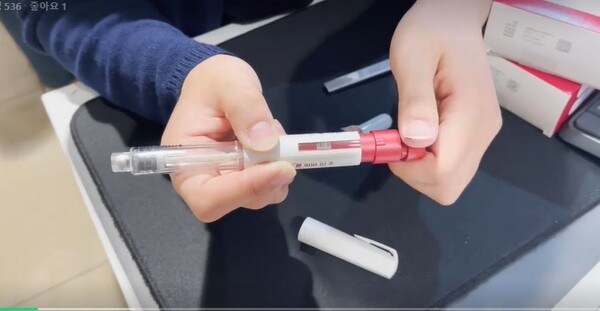
Image courtesy of Gwangju CL Fertility Center
The short answer is that it is entirely dependent on the specific clinical case. The exact duration fluctuates dramatically based on the type of fertility treatment or assisted reproductive technology (ART) protocol deployed.
As a baseline, preparing the body to optimize its reproductive environment—often referred to as systemic conditioning—ideally requires a proactive window of two to three months. However, if we evaluate strictly the localized clinical timeline, such as controlled ovarian hyperstimulation (과배란 유도) and active cycles, it takes approximately one to two months from the onset of menstruation to complete the medical procedures and confirm a pregnancy via a serum beta-hCG blood test.
The specific operational timelines for each fertility treatment are structured as follows.
📋 Intrauterine Insemination (IUI)
- Clinical Protocol:
- First Consultation (Day 2–3 of cycle): Baseline evaluation.
- Monitoring Phase: Transvaginal ultrasound to track follicle development and endometrial lining thickness.
- The Procedure: Insemination is precisely timed and executed right before or immediately following ovulation.
- Confirmation Phase: Serum blood test to verify pregnancy status.
- Operational Footprint:
- Requires a total of 5 to 6 clinic visits.
- The total duration spanning from cycle start to testing is exactly one month.
- The actual insemination procedure is performed around Day 10 to 15 of the menstrual cycle.
- The confirmatory pregnancy blood test is administered exactly two weeks post-procedure.
📋 IVF: Long Protocol (장기요법)
- Clinical Protocol:
- First Consultation (Day 16–21 of the preceding cycle): Prescription of gonadotropin-releasing hormone (GnRH) agonists to suppress premature ovulation.
- Stimulation Phase (2 weeks later): Prescription of gonadotropins to initiate controlled ovarian hyperstimulation. Daily self-injections begin at home.
- Monitoring Phase: Serial ultrasounds and blood draws to monitor follicle maturation and endometrial development while continuing daily injections.
- Oocyte Retrieval: Surgical harvesting of mature eggs.
- Embryo Transfer: Placing the cultured embryo into the uterine cavity.
- Confirmation Phase: Serum blood test to verify pregnancy status.
- Operational Footprint:
- Requires a total of 7 to 9 clinic visits.
- The total duration of the active cycle spans one month.
- During the monitoring phase, 1 to 3 additional tracking visits may be scheduled to lock in the precise trigger timing for egg retrieval.
- The confirmatory pregnancy blood test is administered exactly two weeks following the egg retrieval.
📋 IVF: Short Protocol (단기요법)
- Clinical Protocol:
- First Consultation (Day 2–3 of cycle): Immediate prescription of gonadotropins to initiate ovarian hyperstimulation. Daily self-injections begin immediately.
- Monitoring Phase: Serial transvaginal ultrasounds to monitor follicle growth and endometrial lining adjustments while adjusting daily medication dosages.
- Oocyte Retrieval: Surgical harvesting of mature eggs.
- Embryo Transfer: Placing the cultured embryo into the uterine cavity.
- Confirmation Phase: Serum blood test to verify pregnancy status.
- Operational Footprint:
- Requires a total of 6 to 8 clinic visits.
- The entire cycle is completed within one month.
- To accurately map out the surgical retrieval window, 1 to 3 monitoring visits are integrated into the protocol.
- The confirmatory pregnancy blood test is administered exactly two weeks following the egg retrieval.
📋 IVF: Low-Intensity / Mild Stimulation Protocol (저자극요법)
- Clinical Protocol:
- First Consultation (Day 2–3 of cycle): Combined prescription of low-dose injectable gonadotropins and oral ovulation induction agents.
- Stimulation Phase: Continuation of daily micro-injections paired with oral hormonal medications alongside serial clinical tracking of follicles and the uterine lining.
- Oocyte Retrieval: Surgical harvesting of mature eggs.
- Embryo Transfer: Placing the cultured embryo into the uterine cavity.
- Confirmation Phase: Serum blood test to verify pregnancy status.
- Operational Footprint:
- Requires a total of 5 to 7 clinic visits.
- The absolute duration is contained within one month.
- The protocol incorporates 1 to 3 monitoring visits to ensure safe and accurate tracking prior to egg harvesting.
- The confirmatory pregnancy blood test is administered exactly two weeks following the egg retrieval.
📋 IVF: Natural Cycle Protocol (자연주기요법)
- Clinical Protocol:
- This path completely bypasses external gonadotropin injections and oral ovulation induction medications. The strategy relies exclusively on harvesting the single, dominant follicle that the female body naturally matures during a standard menstrual cycle.
- First Consultation (Day 2–3 of cycle): Baseline cycle charting.
- Monitoring Phase: High-frequency ultrasound monitoring to track the natural progression of the single dominant follicle.
- Oocyte Retrieval: Precision harvesting of the naturally matured egg.
- Embryo Transfer: Laboratory fertilization followed by the transfer of the resulting embryo back into the uterus.
- Confirmation Phase: Serum blood test to verify pregnancy status.
- Operational Footprint:
- Requires a total of 5 to 9 clinic visits.
- Because tracking a natural, unmedicated wave of ovulation demands extreme precision, the frequency of ultrasound monitoring visits can escalate significantly.
- The confirmatory pregnancy blood test is administered exactly two weeks following the egg retrieval.
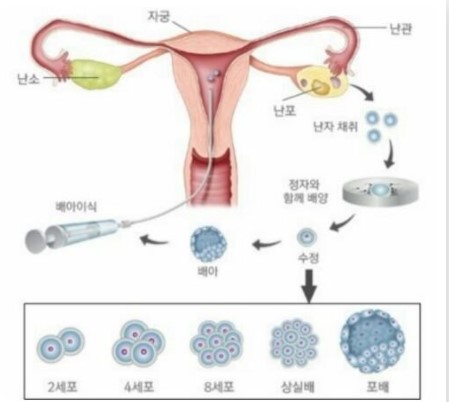
Image courtesy of Gwangju CL Fertility Center