
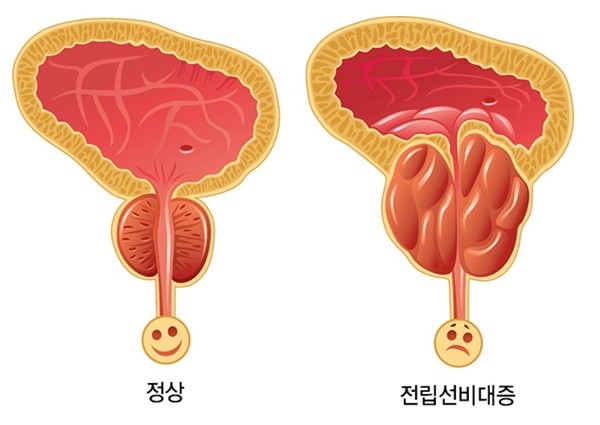
Benign Prostatic Hyperplasia (BPH), a condition traditionally considered an exclusive concern for middle-aged and older men, is now steadily rising among young adult males. Over the past five years, the number of young patients has surged by 33%.
To understand why this classic post-middle-age condition is increasingly affecting younger men, we sat down with Dr. Kyung Eun Min, a professor in the Department of Urology at Kyung Hee University Hospital at Gangdong.
The Prostate: A Male-Specific Organ That Enlarges Due to Aging and Genetics
The prostate is a walnut-sized physical tissue that surrounds the urethra and exists only in men. It produces approximately 30% of seminal fluid and is biologically characterized by its tendency to grow as a man ages.
While the prostate naturally enlarges over time due to various factors, severe enlargement can compress the urethra that passes right through its center. This compression triggers various lower urinary tract symptoms, such as urinary dysfunction, a sensation of incomplete emptying (residual urine), and nocturia (waking up at night to urinate)—a condition clinically defined as Benign Prostatic Hyperplasia (BPH).
Although the exact underlying trigger remains to be fully elucidated, aging is universally recognized as the primary established cause. Beyond aging, genetic factors and a family history of the disease also show a strong correlation with BPH.
Statistically, descendants of patients who underwent surgery for BPH face an increased likelihood of requiring surgical intervention for the same condition. Longitudinal studies involving identical twins have also demonstrated a high correlation, strongly confirming a genetic predisposition.
A 33% Surge Among Men in Their 30s Over Five Years: Westernized Diets Identified as the Main Culprit
The prostate typically begins to enlarge from the mid-30s onward and progresses to the point where nearly most men in their 70s have some degree of BPH. With roughly 95% of total patients aged 50 and older, it has long been the signature disease of middle-aged and older men.
Lately, however, the rate of increase among patients in their 30s and younger has become exceptionally pronounced.
According to statistical data from the Health Insurance Review and Assessment Service (HIRA), the number of patients aged 30 and under who visited clinics for BPH rose from 12,006 in 2014 to 15,997—marking a sharp 33% increase over a five-year period. This significantly outpaces the 24% growth rate seen across the entire patient population during the same timeframe.
Much like other chronic conditions such as diabetes and hypertension, a highly westernized diet is viewed as a major contributing factor behind this growing demographic of younger patients.
Additionally, shifts in lifestyle patterns, alongside a greater proactive tendency among young individuals to undergo regular health screenings or visit a urologist early upon noticing abnormal symptoms, are also believed to influence these rising statistical figures.
Urethral Compression by an Enlarging Prostate Triggers Various Urinary Disorders
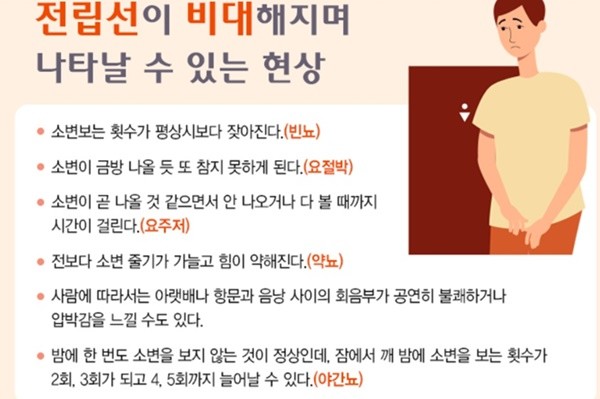
When an enlarging prostate constricts the urethra, it can severely disrupt daily life. Symptoms include an increased frequency of urination, an inability to hold urine (urinary urgency), a weak stream that lacks a feeling of relief, and frequent nighttime awakenings due to the urge to urinate.
Furthermore, because urine remains trapped in the bladder, it can pave the way for various complications such as urinary tract infections (UTIs), cystitis, and bladder stones. Active medical management is therefore essential.
Diagnosis: Digital Rectal Examination (DRE) and Transrectal Ultrasound (TRUS)
There are two primary diagnostic evaluations used to confirm Benign Prostatic Hyperplasia.
The Digital Rectal Examination (DRE) stands as the most critical baseline evaluation for diagnosing BPH. A clinician inserts a gloved, lubricated finger into the rectum to directly palpate the prostate. This exam is vital not only for evaluating BPH but also for screening for other prostate conditions, including prostate cancer and prostatitis.
Another key diagnostic modality is the Transrectal Ultrasound (TRUS). An ultrasound probe is gently inserted into the rectum to visualize the prostate directly. This technique allows for a highly precise measurement of the prostate’s volume and plays an important role in aiding prostate cancer detection.
Additionally, because TRUS provides detailed structural information regarding the bladder and seminal vesicles, it is also a highly effective method for investigating potential structural causes of male infertility alongside managing BPH.
Other basic evaluations include uroflowmetry and post-void residual volume tests, which easily assess bladder emptying efficiency by measuring the velocity of the urinary stream and the volume of urine left behind.
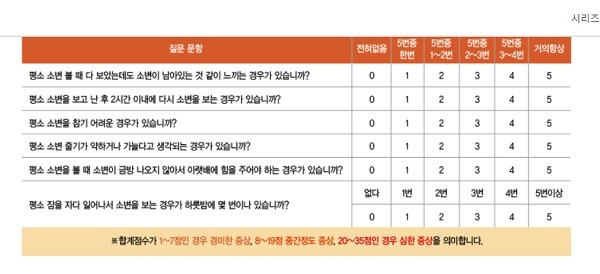
Treatment Continuum: Lifestyle Modifications, Medical Therapy, and Surgical Intervention
If a patient’s symptoms are mild and entirely manageable, conservative observation is initiated. During this period, symptoms can often be improved through lifestyle adaptations, such as utilizing warm sitz baths, optimizing voiding habits, managing fluid intake timing, and implementing targeted dietary changes.
Once active medical management for lower urinary tract symptoms caused by BPH is deemed necessary, pharmacological therapy is recommended as the first-line approach. Recent decades have seen the development of highly effective medications for BPH, which has significantly reduced the frequency of surgical interventions compared to the past.
However, if a patient experiences recurrent urinary tract infections, persistent hematuria (blood in the urine), acute urinary retention, bladder stones, or if medical therapy simply fails to deliver adequate relief, surgical treatment is actively considered.
Preventive Safeguards: Avoid Prolonged Sitting and Holding Urine
To effectively prevent and manage prostate enlargement, maintaining a regulated daily routine, securing ample rest, and avoiding prolonged periods of continuous sitting are vital.
Engaging in a balanced, healthy sexual life alongside regular physical exercise is also beneficial. It is highly advisable to avoid delaying urination for extended periods and to strictly limit excessive alcohol consumption.
Because chronic fatigue can severely exacerbate BPH symptoms, it should be actively avoided. Cultivating a regular habit of taking warm sitz baths (soaking the lower pelvic region) is highly recommended.
Dietary habits should be firmly focused on reducing visceral fat. This means increasing the intake of fruits and vegetables—particularly lycopene-rich tomatoes, garlic, and green tea—while strictly limiting red meat, saturated fats, and excessive caloric intake.
Lastly, minimizing fluid consumption after dinner is highly advantageous. Transitioning to a low-fat, high-fiber diet while reducing animal fat intake remains the single most important dietary pillar for long-term prostate health.
Source: Kyung Hee University Hospital at Gangdong Post / Insights provided by Dr. Kyung Eun Min, Professor of Urology.