
Among women struggling with infertility due to Polycystic Ovary Syndrome (PCOS), the supplement “Inositol” has recently gained significant popularity. But what exactly is it, and how does it work?
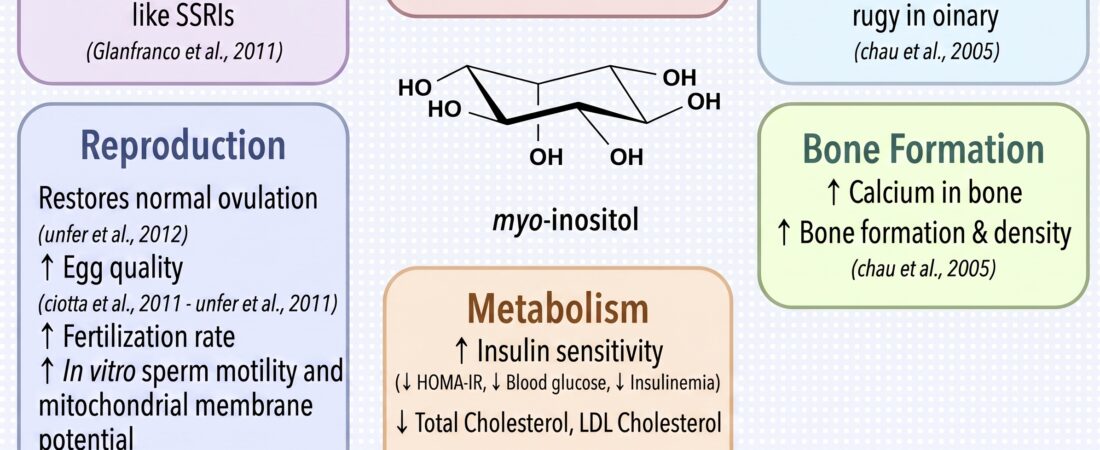
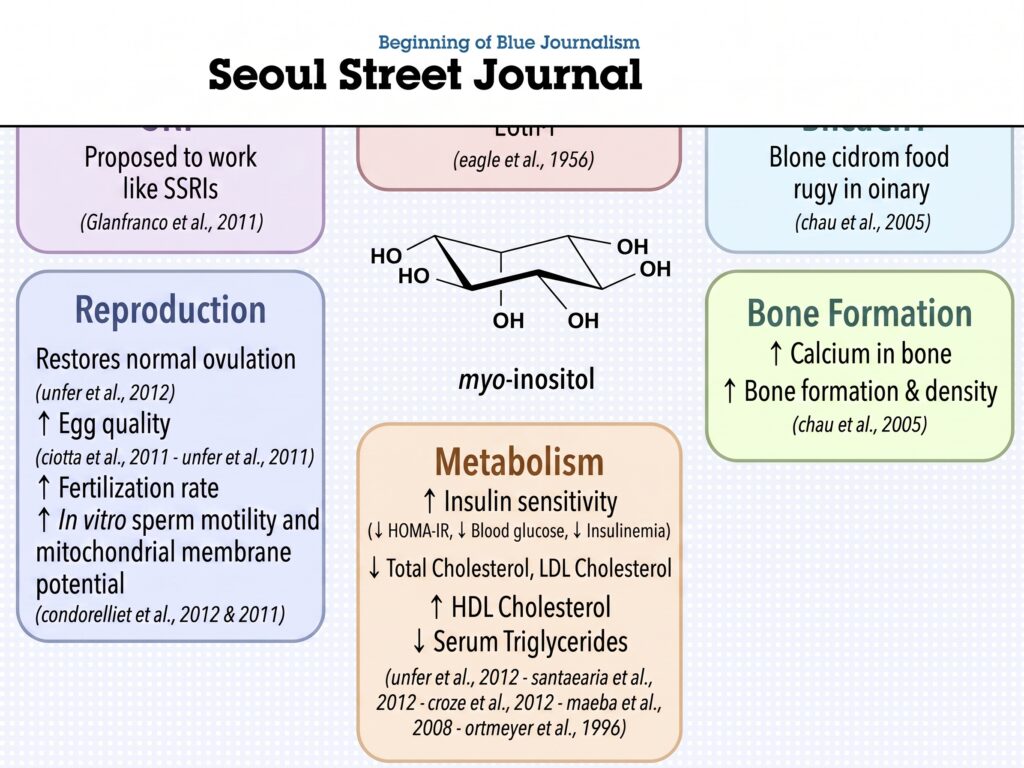
What is Inositol? Inositol was first discovered in the leaves of Bougainvillea. It is a carbocyclic sugar structurally similar to the Vitamin B complex, existing in nine different isomers. The form primarily used in supplements is “myo-inositol,” a naturally occurring form synthesized within the human body.
Inositol serves as a critical component of cell membranes and acts as a precursor to Phosphatidylinositol 3-kinase (PI3-kinase)—a secondary messenger for essential hormones such as insulin, Thyroid-Stimulating Hormone (TSH), and Follicle-Stimulating Hormone (FSH).
The PCOS Connection: Improving Insulin Sensitivity Because inositol is involved in signaling pathways related to insulin response, it is frequently recommended to women with PCOS to improve insulin resistance. By enhancing insulin sensitivity, inositol can improve egg quality; high doses are also known to help with psychological stability.
PCOS is a condition characterized by ovulatory dysfunction, often resulting from hormonal imbalances along the hypothalamic-pituitary-ovarian axis, which can be triggered by factors like reduced insulin efficiency or rapid weight changes. This is why diabetes medications are sometimes prescribed for PCOS patients—inositol is essential for proper glucose metabolism.
Research has shown that women with PCOS and insulin resistance often suffer from inositol deficiency. Studies have indicated that these patients exhibit serum inositol levels that are lower, while urinary excretion is approximately five times higher than that of healthy individuals.
Clinical Benefits and Usage Clinical studies have shown that supplementing with myo-inositol improves insulin sensitivity and cardiovascular markers in women with PCOS. This is the primary reason why fertility specialists actively recommend it for women undergoing IVF.
Research supporting this suggests that when PCOS patients take inositol 3–4 months prior to controlled ovarian hyperstimulation, they show marked improvements in follicle growth, the number of mature eggs, and embryo quality.
Lee Sung-geun, a pharmacist and researcher specializing in nutritional supplements, explains: “Myo-inositol is the most abundant isomer in nature and a component of the Vitamin B complex. It plays a crucial role in insulin and gonadotropin signaling, facilitating follicle development.” He adds, “Most academic papers utilize a dosage of 2–4g. For those planning a pregnancy, taking approximately 4g daily starting three months before conception is recommended.”
He also provides a note of caution: “While minor side effects such as nausea, vomiting, or abdominal bloating have been reported, these typically occur only at high doses (exceeding 10g per day). Furthermore, it is generally advised to discontinue use once pregnancy is confirmed.”
Disclaimer: This content is provided by a fertility specialist journalist based on the collection and analysis of domestic and international reproductive medicine research, policy materials, and statistical data. Medical judgments and treatment decisions must always be made in consultation with professional medical personnel. Image: AI-generated (ChatGPT, OpenAI) / Visual reference for illustrative purposes only.