

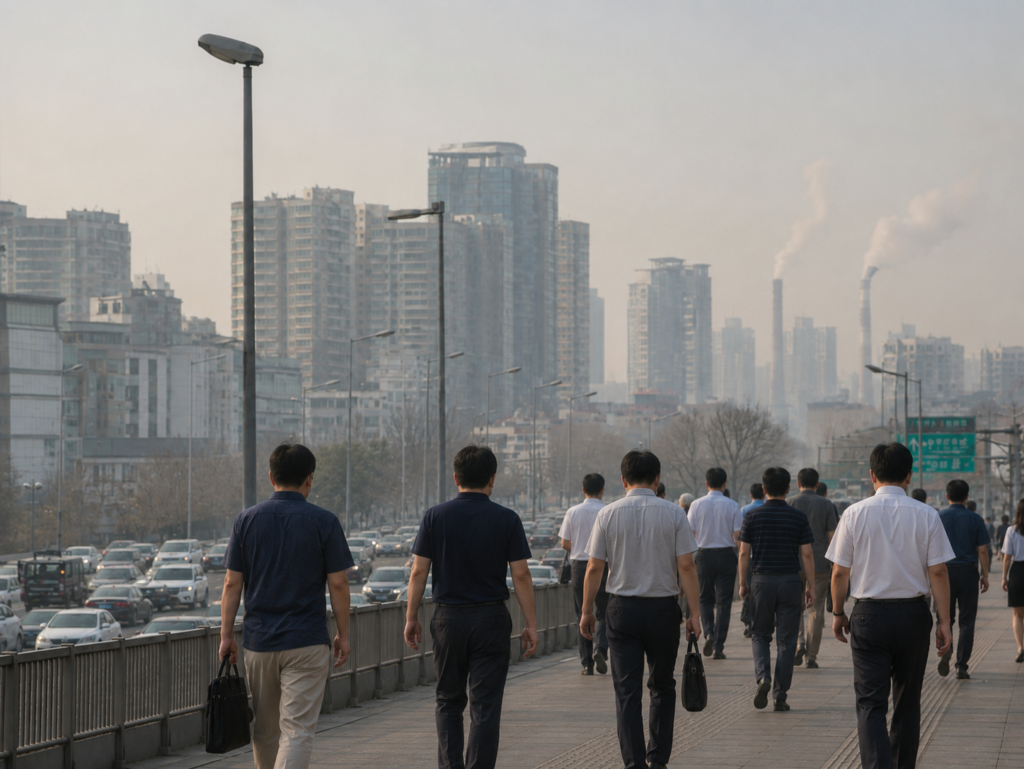
“Does the Air a Father Breathes Leave a Mark on Sperm?… DNA Switch Alterations in a 2,000-Person Study” Ozone and Nitrogen Dioxide Exposure Linked to Sperm DNA Methylation Changes: Large-Scale Analysis of 2,015 Men Alterations Extend to Genes Involved in Spermatogenesis and Chromosome Segregation… Including Paternally Imprinted Gene GNAS
Research has revealed that the air breathed daily can leave a distinct footprint on male sperm. Extending beyond merely lowering sperm count or motility, the findings confirm the potential for shifts in the so-called “gene switches” that regulate how genes function within sperm DNA.
According to a large-scale study presented at the Annual Meeting of the European Society of Human Reproduction and Embryology (ESHRE 2026), researchers tracked 2,015 men and analyzed the sperm DNA methylation status of 1,220 of them.
DNA methylation is a primary epigenetic mechanism that controls how actively specific genes are expressed without altering the underlying DNA base sequence itself. In simple terms, rather than rewriting the sentences in a book of genetic information, it acts like bookmarks or highlights regulating which sections are read and how frequently.
Comparing participants’ air pollution exposure with sperm DNA methylation patterns, the researchers identified pollution-associated methylation changes across multiple gene regions. Exposure to ozone (O3) and nitrogen dioxide (NO2), in particular, emerged as factors exerting a relatively strong influence on these alterations.
Epigenetic Shifts in Spermatogenesis and Imprinted Genes
What particularly commands attention is the function of the genes where alterations were detected. Some were involved in maintaining spermatogonial stem cells, the differentiation of spermatogonia into mature germ cells, and ensuring accurate chromosome segregation during cell division.
Sperm are not cells generated overnight. Because they originate from spermatogonial stem cells and develop through multiple stages of division and maturation, evidence that the gene-regulatory machinery governing this process is vulnerable to environmental influences offers a novel clue for understanding male reproductive health.
Notably, methylation shifts were also observed in the GNAS gene. GNAS is associated with “genomically imprinted” regions where parent-of-origin gene expression is critically regulated. This underscores why researchers are increasingly exploring how the epigenetic information in sperm connects to embryonic development post-fertilization.
Impact on Pregnancy Rates and Child Health Requires Further Research
However, these findings must not be misinterpreted to mean that “air pollution causes genetic mutations in sperm.”
What the study identified was not genetic mutations altering the DNA base sequence, but epigenetic changes where chemical tags attach to or detach from DNA, indicating potential shifts in gene expression levels. Some of these epigenetic changes may also vary depending on environment or lifestyle habits.
A more crucial limitation exists: identifying changes in sperm DNA methylation does not automatically equate to male infertility, lower IVF success rates, miscarriages, or health abnormalities in offspring. This study alone cannot establish how these epigenetic modifications translate into actual fertilization, embryo development, pregnancy rates, or live birth outcomes.
Expanding the Perspective on Male Reproductive Health
Even so, this research draws attention because it expands the lens through which male reproductive health is evaluated, moving a step beyond traditional semen analysis parameters such as sperm count, motility, and morphology.
While numerous studies have historically linked air pollutants—such as fine particulate matter and vehicle exhaust—to sperm concentration, motility, and oxidative stress, this study advances the field by examining the “molecular footprints” environmental exposure leaves behind at an epigenetic level.
The realization that epigenetic marks in sperm DNA—which have the potential to be transmitted to the next generation following fertilization—can be altered by environmental factors represents a vital task for future male infertility research.
Still, it is premature to jump to conclusions that “poor air quality is genetically inherited by children.” Long-term follow-up studies must confirm whether the correlation between air pollution and sperm DNA methylation holds in replicated research, whether these modifications persist throughout fertilization and embryogenesis, and whether they ultimately impact pregnancy and birth outcomes.
This study underscores that the air we inhale can leave a footprint not only in the lungs and cardiovascular system, but also at the level of reproductive cells. It poses a new question: rather than explaining male infertility through personal lifestyle habits and semen analysis numbers alone, we must also examine the very environment in which a man lives.
※ This article was synthesized based on the results of a large-scale study of 2,015 men presented at the ESHRE 2026 Annual Meeting (European Society of Human Reproduction and Embryology). It does not replace a specific individual’s diagnosis or treatment, and actual medical judgment must be made through consultation with a specialist.
※ Images: Created using generative AI (ChatGPT, OpenAI) as visual references to aid understanding and do not depict real individuals.