
Single-Cell Analysis of ~20,000 Testicular Cells from Diabetic Mice Presented at ESHRE 2026 ‘Developmental Stalling’ Observed Between Spermatocytes and Spermatids… Energy Metabolism and DNA Repair Also Disrupted Caution Required Before Applying Directly to Humans… “A Clue Showing Which Stage of Spermatogenesis Diabetes Impairs”
It is no secret that diabetes can impair sperm count and motility. However, does diabetes merely damage already-formed sperm, or does it trigger problems right from the very process of spermatogenesis?
At the recent Annual Meeting of the European Society of Human Reproduction and Embryology (ESHRE 2026), a study delved into this question down to the level of individual cells.
Researchers extracted approximately 20,000 cells from the testes of diabetic mice and performed single-cell RNA sequencing. Rather than analyzing the whole testis as a single mass, this approach examined which genes each individual cell turned on and off.
Developmental Stalling in the Sperm Factory
The findings were striking.
In the testes of diabetic mice, the cellular composition—ranging from spermatogonial stem cells, the starting point of sperm production, to various differentiating germ cells—differed significantly from that of normal mice.
What particularly caught the researchers’ attention was the transition phase from spermatocytes to spermatids.
Sperm do not emerge equipped with tails right from the start. Cells originating from spermatogonial stem cells undergo multiple rounds of proliferation and differentiation to become spermatocytes, and following meiosis, they transform into round spermatids. Subsequently, they develop heads and tails to become mature spermatozoa.
Yet in diabetic mice, a distinct ‘developmental stall’ appeared precisely during this transition from spermatocytes to spermatids.
Comparing the process to a sperm-manufacturing factory, it resembles a scenario where raw material supplies are not completely cut off, but products pile up at a specific processing stage mid-line, unable to move forward to the next phase.
Disruption of Energy and DNA Repair Pathways
The problems did not stop there.
Alterations also emerged in oxidative phosphorylation and glycolysis—the core processes by which cells generate energy—and pathways related to oxidative stress and apoptosis (programmed cell death) were disrupted. Furthermore, anomaly signals were captured within DNA damage response systems responsible for repairing DNA breaks.
Such shifts during spermatogenesis cannot be taken lightly.
Spermatocytes, in particular, must accurately segregate chromosomes and organize genetic information through meiosis. If energy supply becomes unstable, oxidative stress increases, and DNA repair functions suboptimally during this phase, the transition into normal spermatids inevitably faces jeopardy.
Moving Beyond Clinical Observation
This study draws attention because it pushes one step beyond previous clinical observations stating simply that “diabetic men may have poor sperm.”
Historically, explanations linking diabetes and male infertility focused primarily on downstream consequences like reduced sperm counts, diminished motility, or elevated oxidative stress. This study goes further, demonstrating at the cellular level that diabetes can obstruct a specific segment of the internal testicular process where sperm are manufactured.
In short, it suggests that the problem may not lie solely in the quality of finished sperm, but that the very “assembly line” producing them is compromised.
Limitations and Future Directions
Nonetheless, these findings must not be directly extrapolated to human diabetic patients.
This research was conducted using a murine (mouse) model rather than human clinical trials. Human diabetes involves countless overlapping variables, including blood glucose levels, duration of the disease, obesity, age, medications, and lifestyle habits. Therefore, one cannot definitively assert that spermatogenesis halts at the exact same cellular stage in humans.
Even so, the study poses vital questions for future exploration:
- Are human diabetic patients similarly vulnerable during the transition from spermatocytes to spermatids?
- Can tighter glycemic control reverse these cellular alterations?
- Does prolonged diabetes exacerbate damage to the spermatogenic process?
If these questions are validated through human studies, the paradigm for evaluating male infertility could shift.
Rather than relying solely on standard semen analyses showing “low sperm count,” approaching an era where clinicians trace the root cause down to internal testicular germ-cell stages is drawing closer.
The relationship between diabetes and male reproductive health is rapidly moving past the simplistic notion that “high blood sugar ruins sperm.” Research identifying the precise steps within the production line where failures originate has officially begun.
※ This article was synthesized based on the study titled “Single-cell transcriptomic landscape of spermatogenic abnormalities in diabetes” by Zhe Zhang et al., presented at the ESHRE 2026 Annual Meeting and published on July 8 in the international journal Human Reproduction. It does not replace a specific individual’s diagnosis or treatment, and actual medical judgment must be made through consultation with a specialist.
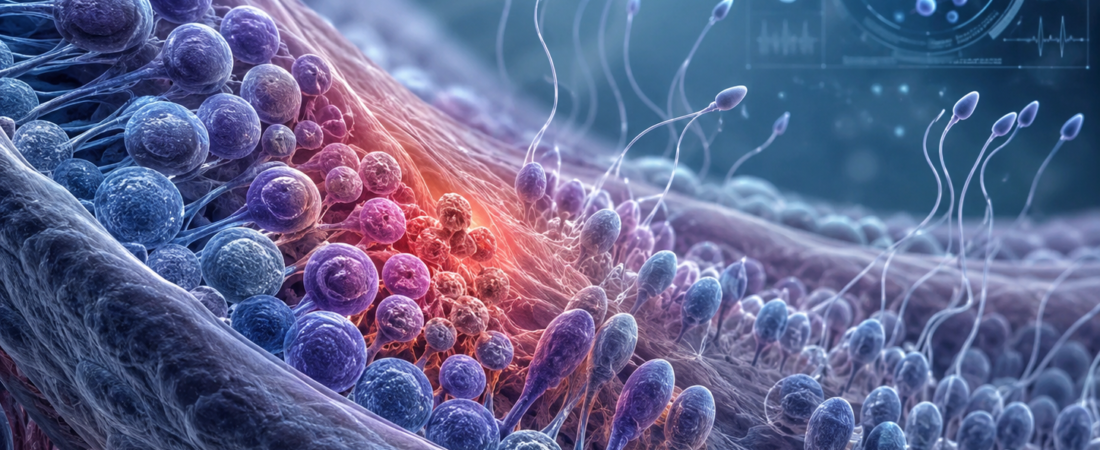
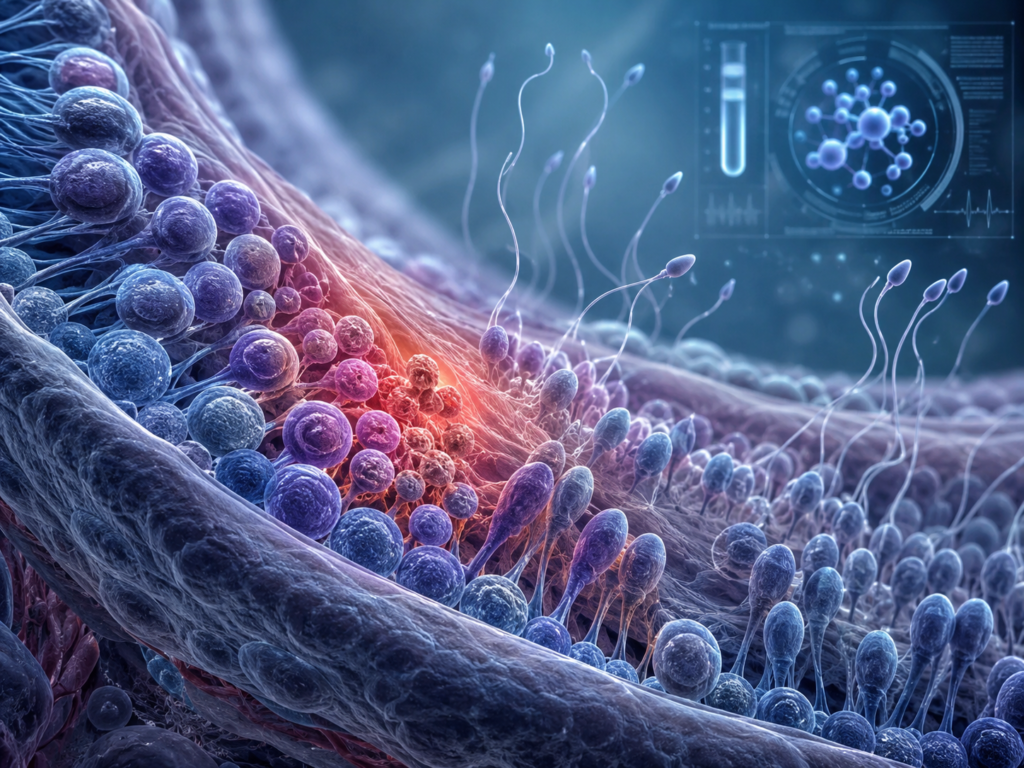
※ Images: Created using generative AI (ChatGPT, OpenAI) to provide visual references supporting understanding.