
Blood Flow, Inflammation, Receptivity… The New Standard for IVF Success is ‘Endometrial Quality’
“Your endometrium is over 8mm.”
This is one of the phrases women preparing for In Vitro Fertilization (IVF) most long to hear. In fertility clinics, an endometrial thickness of 8mm has long been accepted as a psychological benchmark for implantation.
Recently, however, this familiar standard is being shaken within the global reproductive medicine community. Research findings are consistently showing that the ‘quality of the endometrium’—such as the smoothness of blood flow, the absence of chronic inflammation, and how well it is prepared to receive an embryo—is what determines implantation success, rather than just the thickness in millimeters. The focus of infertility treatment is rapidly shifting from ‘thickness’ to ‘function,’ and from ‘numbers’ to ‘environment.’
Reproductive scientists often compare the endometrium to a “home where the embryo stays for the first time.”
A house is not necessarily a good place to live just because it is spacious. If the walls are cracked, the pipes are clogged, or the indoor air quality is poor, no one would want to stay there for long. The uterus is the same. The endometrial thickness measured by ultrasound only shows the size of the house.
What determines implantation is the environment inside the house. Factors such as whether blood vessels are sufficiently developed to supply oxygen and nutrients, whether immune cells do not recognize the embryo as a foreign invader, whether the tissue is undamaged by inflammation, and whether hormonal signals are transmitted normally—all these work in a complex combination. Recently, these factors are explained by the concept of ‘endometrial receptivity.’
The ‘Window’ of Implantation Is Shorter Than You Think
For only about 5 to 7 days after ovulation, the uterus enters a special state where it can accept an embryo. This is called the ‘Window of Implantation.’ During this period, the endometrium does not simply thicken; it transforms into an entirely different tissue. Blood vessels become denser, immune cells change their roles to avoid attacking the fertilized egg, and various proteins that allow the embryo to attach are expressed on the endometrial surface. As it is now known that even if this window opens just one day early or late, a healthy embryo may fail to implant, strategies to match the embryo transfer timing with the endometrium’s physiological state are becoming increasingly critical in IVF.
Researchers are recently paying particular attention to endometrial blood flow.
Blood flow is not merely about blood moving; it is a lifeline that supplies oxygen and nutrients, delivers hormones, and transports immune cells necessary for the implantation process. Even if the endometrium is thick, if blood flow is insufficient, cellular function will inevitably decline. In fact, recent studies published in international journals report that abnormal vascular formation and micro-blood flow are frequently observed in patients with recurrent implantation failure or thin endometrium. Consequently, some fertility centers are trending toward considering lifestyle management and customized treatment strategies to improve blood flow. While not all methods have been established as standard treatment yet, there is growing consensus that blood flow is a crucial variable in implantation.
Invisible chronic inflammation is also emerging as a new variable.
Even if the endometrium appears normal on the outside, a low level of inflammation may persist within the tissue. It is suggested that this chronic inflammation can disrupt the balance of immune cells and interfere with the ‘first dialogue’ between the embryo and the uterus. Therefore, research analyzing endometrial tissue and uterine fluid to evaluate inflammatory signals and immune responses is active, and reports of observing specific inflammation-related genes and immune cell changes in patients with recurrent implantation failure continue to emerge. This is why it is proposed that some cases of recurrent failure, which were previously difficult to explain, may be related to these subtle endometrial abnormalities.
Research on endometrial receptivity is also evolving rapidly.
The uterus is not just a tissue that thickens; it is a sophisticated organ where hundreds of genes function simultaneously to accept an embryo only at specific times. Recent studies highlight molecules related to implantation, such as HOXA10, LIF, and integrins, as key factors determining the readiness of the endometrium. Researchers predict that an era will come where we can analyze gene expression and protein changes to predict the implantation timing for each patient more accurately and establish customized embryo transfer strategies.
The Paradigm Shift in IVF Treatment
Until now, infertility treatment has focused on creating ‘good embryos.’ Embryo culture technology has advanced, and embryo selection technology has improved dramatically. However, there are still many patients who experience repeated implantation failure even after transferring excellent embryos with normal chromosomes. To find the reason, the eyes of researchers are now turning from the embryo to the uterus. Reproductive medicine is reconfirming the fact that no matter how good the seed is, it cannot sprout if the soil is not prepared.
The question patients ask most often is still, “How many millimeters is my endometrium?”
In the future, fertility doctors are highly likely to ask a slightly different question:
“Is your endometrium prepared to receive the embryo right now?”
Because this may become the core question that increases IVF success rates in the future. Numbers are still important, but numbers alone are not enough. An endometrium where blood flows vigorously, inflammation is controlled, the immune environment is stable, and the window of implantation is accurately open—the conditions for a ‘good uterus’ envisioned by global reproductive medicine are now becoming much more sophisticated.
If past infertility treatment focused on creating the ‘thickness’ of the endometrium, future infertility treatment is highly likely to be a competition of creating the ‘quality’ of the endometrium. And that change is expected to be the starting point for the next leap in increasing IVF success rates.
※ This article was written based on the latest research in reproductive medicine from the American Society for Reproductive Medicine (ASRM), the European Society of Human Reproduction and Embryology (ESHRE), and international academic journals. It does not replace a specific individual’s diagnosis or treatment, and actual medical judgment must be made through consultation with a specialist.
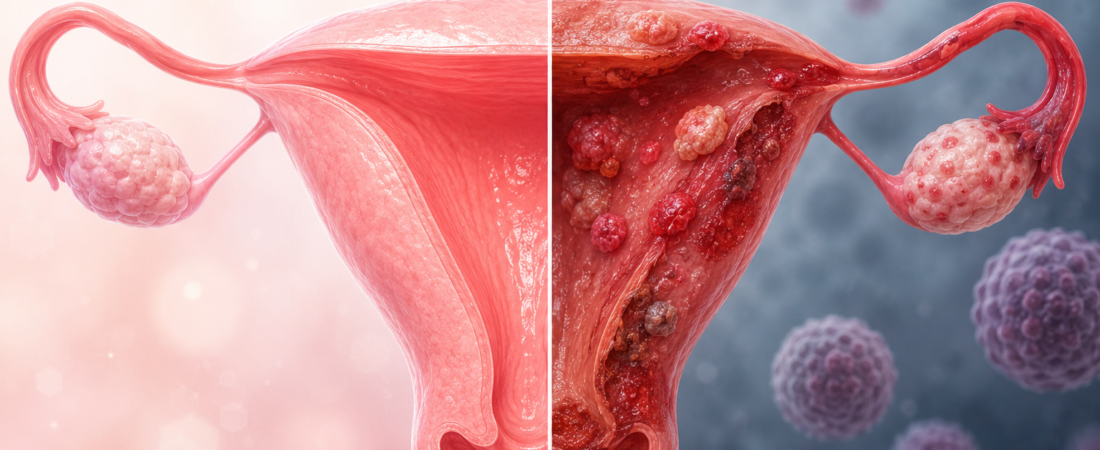
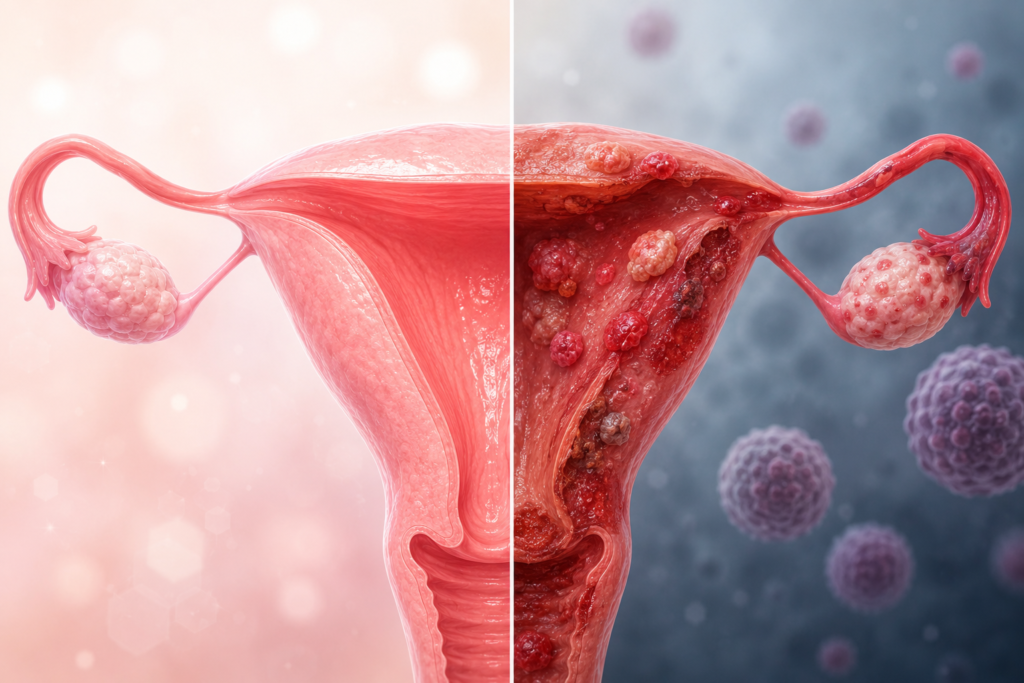
※ Image: Created using generative AI (ChatGPT, OpenAI); depicts fictional individuals, not real people.